Table of Contents
- What Preventive Maintenance Means for Agricultural Hauling Fleets
- Why Preventive Maintenance Saves Money and Keeps You Moving
- Building Your Heavy-Duty Truck Maintenance Checklist
- Fleet Downtime Reduction Strategies That Work
- Mobile Diesel Repair Benefits for On-Site Maintenance
- Predictive Maintenance vs. Preventive: Which Approach Fits Your Fleet
- Regulatory Compliance and Safety Standards for Commercial Hauling
- Conclusion: Your Preventive Maintenance Action Plan
- Frequently Asked Questions
Last Updated: September 2, 2026
What Preventive Maintenance Means for Agricultural Hauling Fleets
Preventive maintenance for agricultural hauling fleets is a systematic approach to servicing and inspecting heavy-duty trucks before problems develop, rather than waiting for breakdowns to occur. For owner-operators and fleet managers, a radiator failure at mile marker 45 on I-80 costs you a tow, lost revenue, and potential load spoilage. Preventive maintenance catches that issue during routine inspection, before it strands you.
In agricultural hauling, where seasonal intensity spikes and trucks operate under heavy loads, preventive maintenance becomes a competitive necessity. Trucks fail predictably when you can least afford it, during harvest season or on tight delivery schedules.
At Mudhollow Diesel Mechanics, we’ve worked with owner-operators and small fleets across western Iowa who shifted from reactive (fix-it-when-it-breaks) to preventive maintenance. The pattern is consistent: fewer roadside emergencies, more predictable downtime, and dramatic reduction in total cost of ownership over time.
Why Preventive Maintenance Saves Money and Keeps You Moving
The financial case is straightforward: a scheduled service interval costs less than an emergency repair. More importantly, avoiding a breakdown eliminates the cascade of costs that follow, towing, lost revenue while the truck sits in a shop, potential load damage, and rushed repairs that cost more than planned ones.
If your truck breaks down during peak season, you’re not just paying for the repair; you’re paying for loads you can’t haul and customers you disappoint.
Preventive maintenance also extends equipment longevity. Heavy-duty diesel engines, turbochargers, and radiators are designed to last hundreds of thousands of miles with consistent maintenance (peer-reviewed research). A truck that could run 500,000 miles with proper care might fail at 300,000 miles without it.
Preventive maintenance shifts your operations from crisis management to planned maintenance, freeing up capital and reducing hidden costs of downtime.
Building Your Heavy-Duty Truck Maintenance Checklist
A solid maintenance checklist ensures nothing gets overlooked and creates a clear service record. The checklist should cover three timeframes: daily pre-trip inspections, weekly and monthly intervals, and seasonal deep maintenance.
Daily Pre-Trip Inspection Tasks
Daily inspections take 15-20 minutes and catch problems before they escalate. Check coolant level in the overflow tank, look for visible leaks under the engine and around hoses, and verify oil level with the dipstick. Inspect belts and hoses for cracks or loose connections; a belt failure at highway speed can disable the alternator or water pump.
Test all gauges during startup: water temperature, oil pressure, ammeter, and fuel gauge. Listen for unusual noises; a grinding sound suggests starter issues, a knock suggests internal engine problems. Verify warning lights extinguish after startup.
Check lights and wipers. Test brake lights, turn signals, and clearance lights. Fill washer fluid.
Walk around the truck. Inspect tires for adequate tread depth using the penny test: insert a penny into the tread; if you see the top of Lincoln’s head, tread is too low (nhtsa.gov). Check lug nuts for tightness; vibration from heavy loads can loosen them. Look for obvious damage: bent fenders, cracked windows, loose mirrors.
Inspect the cargo area and connections. Ensure the trailer is properly connected, lights function, and tie-downs are secure.
Weekly and Monthly Service Intervals
Weekly checks expand on daily inspections. Check tire pressure; under-inflated tires generate heat and fail prematurely. Monthly intervals should include:
- Engine air filter inspection (replace if clogged)
- Cabin air filter check
- Battery terminals for corrosion
- Brake fluid level and condition (should be clear to slightly amber)
- Transmission fluid level and color (should be bright red)
- Coolant concentration using a hydrometer
- Differential fluid level and condition
- Brake pad wear
- Suspension components for leaks or damage
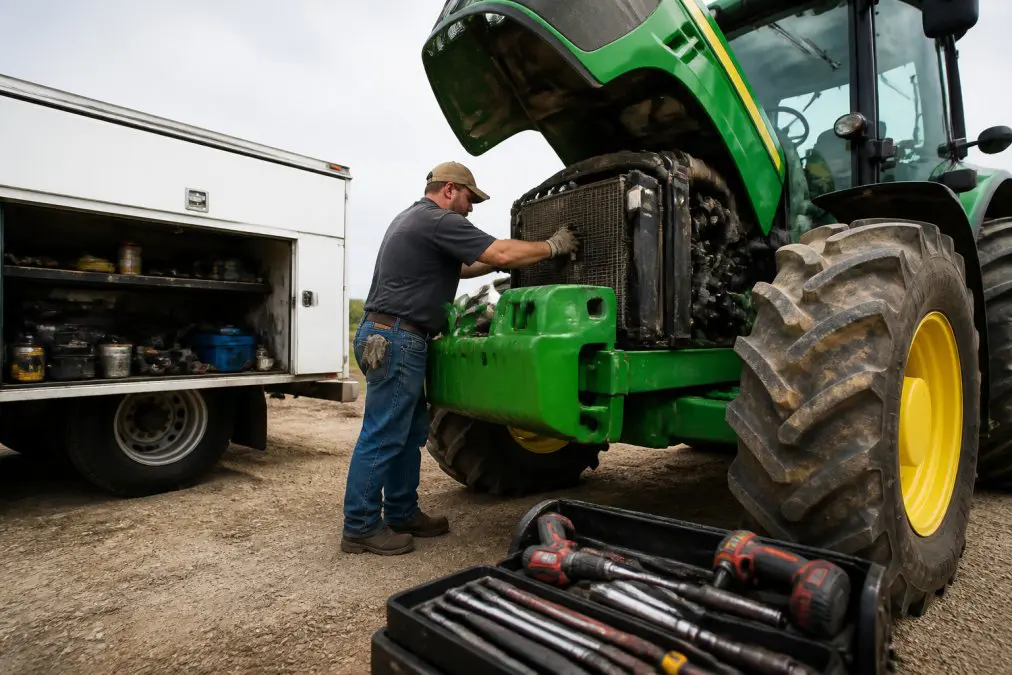
For agricultural hauling, pay attention to the cooling system. Heavy loads and hot weather push diesel engines hard. Degraded coolant loses its ability to protect against corrosion and boiling. A failed radiator during a haul can strand you in remote areas.
Keep a simple log of every service and inspection. Record the date, mileage, what was checked, and any issues found. This log is invaluable when troubleshooting recurring problems.
Seasonal Maintenance for Agricultural Hauling
Before harvest season, perform comprehensive inspection: full fluid changes (oil, coolant, transmission, differential), brake system inspection, tire assessment, and electrical system check.
Winter brings different demands. Diesel fuel can gel in cold temperatures, requiring winter-grade fuel or additives. Coolant freeze protection becomes critical. Battery capacity drops in cold; an older battery may not crank a diesel engine reliably in winter. Check battery condition and replace if more than three years old.
Spring and early summer are ideal for addressing wear discovered during winter. Potholes and salt-treated roads damage suspension and wheels. Inspect for bent rims, damaged shocks, and worn control arm bushings.
After hauling loads with abrasive materials, wash the truck thoroughly, especially the undercarriage and engine compartment. Dried grain dust traps moisture and accelerates rust.
Fleet Downtime Reduction Strategies That Work
Downtime is the enemy of agricultural hauling profitability. Plan major maintenance during your slowest operational period, typically late winter or early spring, after harvest and before spring planting.
If you run multiple trucks, one failure is manageable; you can shift loads while repairs happen. If you run a single truck, consider building redundancy into critical systems.
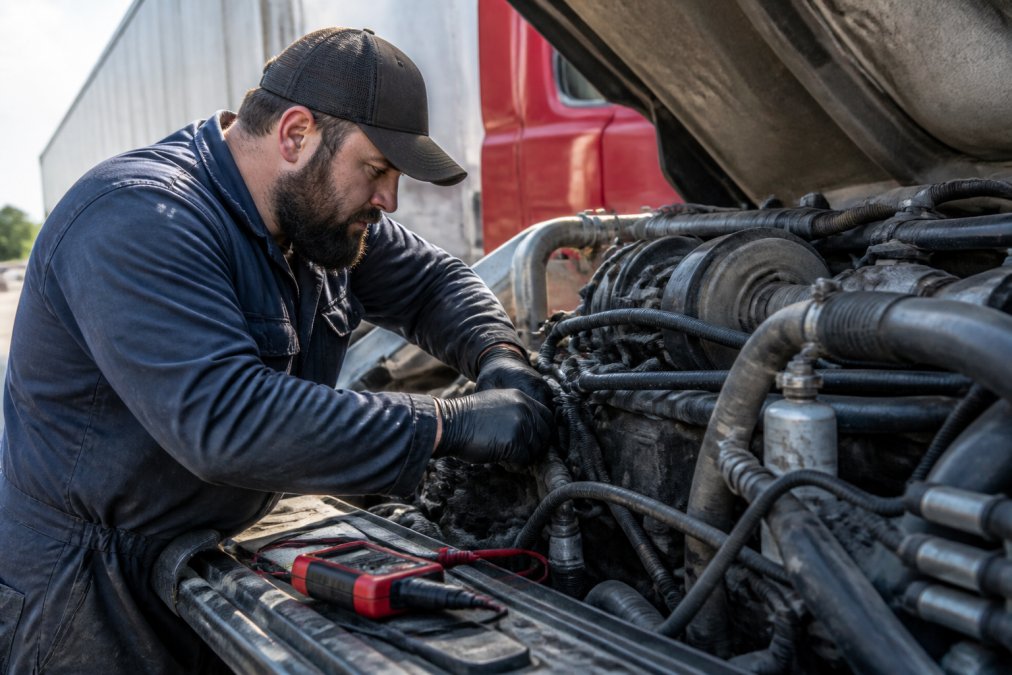
Rapid diagnostics determine whether you can fix issues on the road or need shop service. Modern diesel engines are computer-controlled; a proper diagnostic scan reveals the exact issue in minutes. Without diagnostics, you’re guessing, leading to wrong repairs and extended downtime.
Mudhollow Diesel Mechanics provides mobile diagnostics that come to you, no tow needed. For many issues, diagnosis is 80% of the repair; once you know what’s wrong, fixing it is straightforward.
Carry spare serpentine belts, hoses, fuses, and filters. These are cheap compared to downtime. If a belt fails at mile marker 60, a spare belt and 30 minutes of work gets you back on the road.
Mobile Diesel Repair Benefits for On-Site Maintenance
Mobile diesel repair changes the economics of preventive maintenance. Instead of driving your truck to a shop and losing productivity, mobile service comes to you, at your yard, a rest stop, or roadside.
For preventive maintenance, scheduled service can happen during brief windows without disrupting operations. A radiator flush, belt replacement, or fluid service can happen while you’re loading or unloading cargo. For owner-operators, it means avoiding dealership markup and long wait times.
CALL or TEXT NOW:712-827-0207 →
For emergency repairs, mobile diagnostics eliminate guessing. A truck with electrical gremlins that “even the Peterbilt dealer couldn’t figure out” often responds to proper diagnostic scanning and systematic troubleshooting.
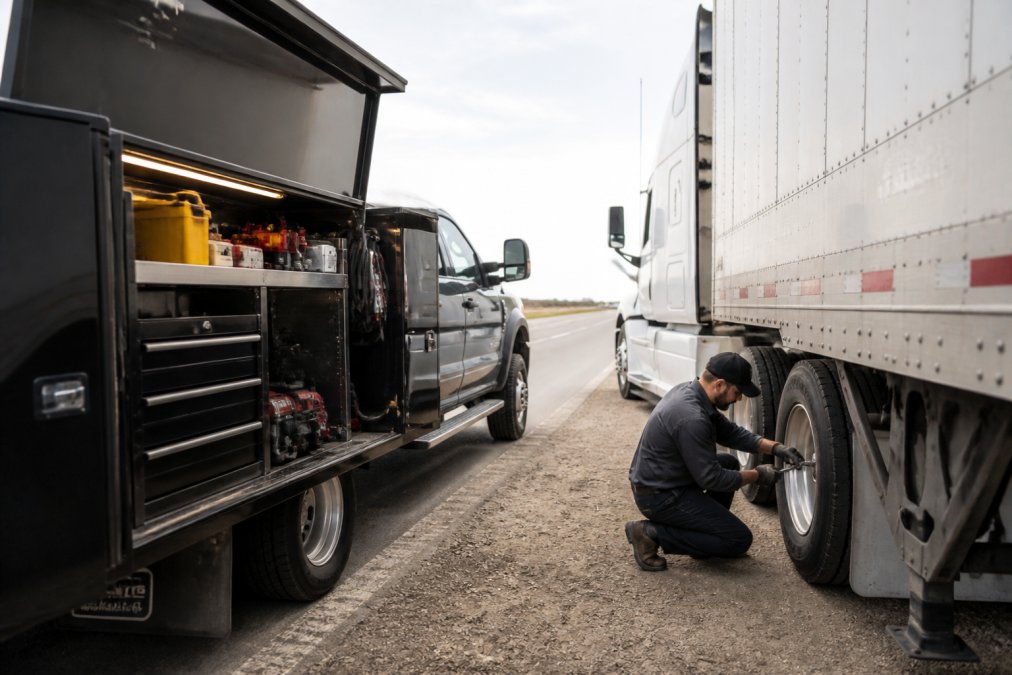
Roadside repairs often resolve faster on-site because there’s no queue, no waiting for parts, and no shop overhead. Mudhollow Diesel Mechanics resolves roughly 99% of roadside calls without a tow, the truck leaves under its own power.
Mobile service preserves flexibility. You’re not locked into a shop’s schedule or location. If you break down at 2 AM, mobile technicians with 24/7 availability can meet you and diagnose the issue immediately.
For fleets, mobile service at your yard means technicians come to you for routine maintenance, reducing time your trucks spend away from operations.
Predictive Maintenance vs. Preventive: Which Approach Fits Your Fleet
Preventive maintenance is time or mileage-based: you service at set intervals regardless of how the truck is performing. Predictive maintenance uses real-time data and engine sensors to determine when service is actually needed.
For agricultural hauling, preventive maintenance is the practical starting point. It doesn’t require expensive monitoring equipment, and it works.
Predictive maintenance becomes relevant as you scale. If you run a 10-truck fleet, investing in telematics can optimize maintenance timing. Instead of servicing every truck every 10,000 miles, you service based on actual wear patterns.
The hybrid approach, preventive as baseline, predictive insights for optimization, is increasingly common. Modern trucks log data through their engine computers. A diagnostic scan reveals oil condition, coolant health, fuel system efficiency, and component wear. Using that data to adjust intervals is smarter than a one-size-fits-all schedule.
For most agricultural hauling operations running 1-5 trucks, preventive maintenance is sufficient.
If you skip a scheduled maintenance interval because predictive data looks good, you risk missing issues that haven’t yet triggered a sensor alarm. Preventive maintenance is conservative by design; it prevents problems before they show up in data. Use preventive as your foundation.
Regulatory Compliance and Safety Standards for Commercial Hauling
Commercial trucking is heavily regulated. The Federal Motor Carrier Safety Administration (FMCSA) requires that every commercial vehicle be maintained in safe operating condition, including brakes, lighting, tires, steering, and coupling devices (fmcsa.dot.gov). Violations can result in fines, out-of-service orders, or liability if your truck causes an accident.
The Commercial Vehicle Safety Alliance (CVSA) conducts roadside inspections and assigns violations based on FMCSA standards. A vehicle with brake violations, lighting defects, or tire issues can be placed out of service immediately.
Insurance companies require maintenance documentation. If your truck is involved in an accident and records show neglected maintenance, your claim can be denied. Detailed maintenance logs demonstrate responsibility and support your claim if an accident occurs.
The practical benefit: a well-maintained truck passes CVSA inspections consistently. You avoid out-of-service orders, fines, and insurance complications.
| Regulatory Area | Key Requirement | Impact on Maintenance |
|---|---|---|
| Brake Systems | Minimum braking performance standards | Regular brake inspections and service required |
| Lighting | All lights functional and visible | Monthly light checks prevent violations |
| Tires | Minimum tread depth and no damage | Weekly tire pressure and condition checks |
| Steering | Safe steering response with no excessive play | Annual steering component inspection |
| Coupling Devices | Secure connection and proper function | Pre-trip coupling inspection mandatory |
| Engine Emissions | Compliance with emissions standards | Proper fuel quality and engine tuning required |
Conclusion: Your Preventive Maintenance Action Plan
Preventive maintenance for agricultural hauling fleets is the single most effective way to keep your trucks reliable, your operations predictable, and your costs under control. It requires discipline, sticking to a schedule even when nothing seems broken, but the payoff is substantial.
Start with a basic checklist: daily pre-trip inspections, monthly fluid and component checks, and seasonal deep maintenance. Document everything. Use that history to identify patterns and adjust intervals if needed.
As you grow, consider adding predictive elements like telematics or oil analysis to optimize maintenance timing. But don’t let the perfect be the enemy of the good. A preventive maintenance program you actually follow beats a sophisticated system you don’t.
When preventive maintenance breaks down, when you’re stranded on I-80 with a radiator leak or a turbocharger issue that won’t respond to basic troubleshooting, you need diagnostics and repair that come to you. Mudhollow Diesel Mechanics brings advanced computer diagnostics and 15+ years of experienced technicians directly to your location. We resolve roughly 99% of roadside calls without a tow, getting you back on the road quickly and keeping your operation moving. Call or text 712-827-0207 for fast, expert mobile diesel repair across western Iowa.
Frequently Asked Questions
Q: What should be included in a daily pre-trip inspection for hauling trucks?
A: Daily pre-trip inspections should cover tire condition and pressure, fluid levels (engine oil, coolant, brake fluid, fuel), brake operation and pad wear, lighting and reflectors, coupling devices, cargo securement, and steering responsiveness. Check for leaks under the truck and listen for unusual engine sounds. Document findings in your maintenance logs. This 10-minute routine catches problems before they strand you on the highway and supports your DOT compliance record.
Q: How does preventive maintenance reduce downtime for agricultural hauling fleets?
A: Preventive maintenance identifies wear and degradation before catastrophic failure occurs. By replacing worn belts, servicing turbochargers, flushing radiators, and rotating tires on schedule, you avoid unexpected breakdowns that force expensive tows and lost hauling days. Mobile on-site repair further cuts downtime by eliminating travel time to a shop, allowing your trucks to return to work faster.
Q: What’s the difference between preventive and predictive maintenance?
A: Preventive maintenance follows a fixed schedule: change oil every 15,000 miles, inspect brakes every 30 days, service radiators annually. Predictive maintenance uses telematics and condition monitoring to trigger service only when sensors detect degradation, such as rising coolant temperature or abnormal vibration. Predictive approaches reduce unnecessary service but require upfront investment in monitoring equipment. For agricultural hauling fleets with variable seasonal intensity, a hybrid approach combining routine preventive checks with telematics alerts optimizes both safety and cost.
Q: How often should heavy-duty hauling equipment undergo preventive inspections?
A: Daily pre-trip inspections are non-negotiable for safety and DOT compliance. Weekly checks should cover fluid levels, lighting, and cargo equipment. Monthly inspections include brake pad depth, tire tread and pressure, and hose condition. Seasonal inspections before peak hauling season address cooling system flush, transmission service, and trailer coupling integrity. Major service intervals typically occur every 15,000-30,000 miles depending on manufacturer specs and your fleet’s duty cycle. Document all inspections to build your maintenance logs and support CSA scoring.
Q: Why is mobile diesel repair preferred for agricultural fleet maintenance?
A: Mobile diesel repair brings advanced diagnostics and heavy-duty tools directly to your truck, yard, or loading dock, eliminating costly tow fees and long shop wait times. Technicians with 15+ years of experience can diagnose complex electrical and mechanical issues on-site using computer diagnostics, then perform repairs immediately. This approach keeps your fleet operational and ready for the next haul, reducing asset downtime and protecting your seasonal revenue during peak hauling periods.
Q: What regulatory compliance standards apply to agricultural hauling fleet maintenance?
A: The Federal Motor Carrier Safety Administration (FMCSA) mandates that commercial haulers maintain vehicles in safe operating condition and conduct regular inspections per 49 CFR Part 396. Your CSA score reflects inspection and maintenance compliance; poor maintenance records increase violations and can threaten your operating authority. Maintenance logs must document all repairs, service intervals, and pre-trip inspections. Staying current on preventive maintenance protects your compliance record and keeps your fleet roadworthy.
Q: How do I track and organize a preventive maintenance schedule for multiple trucks?
A: Use a maintenance log system (digital or paper) that records each truck’s mileage, service date, work performed, and technician name. Schedule services by calendar date and mileage threshold, whichever comes first. For a fleet of three or more trucks, assign responsibility for pre-trip inspections to drivers and conduct monthly reviews to spot patterns (e.g., one truck needing frequent radiator service). Telematics systems can automate service reminders based on real-time mileage and engine hours, reducing manual tracking burden and ensuring no truck falls behind on its maintenance interval.
This article was written using GrandRanker