Table of Contents
- What Mobile Fleet Maintenance Means for Your Operation
- Preventive Maintenance Checklist for Commercial Trucks
- Reducing Fleet Downtime with On-Site Service
- DOT Inspection Requirements for Commercial Fleets
- Mobile Fleet Maintenance: Mobile Truck and Trailer Repair
- Cost-Benefit Analysis: Mobile Service vs. Shop Towing
- Preparing Your Yard for Mobile Diesel Service
- Frequently Asked Questions
Last Updated: August 21, 2026
What Mobile Fleet Maintenance Means for Your Operation
Mobile fleet maintenance brings repair and diagnostic services directly to your trucks, in your yard, on the highway, or at a loading dock, eliminating expensive tows and shop queues. Your vehicles get serviced on-site with fully equipped mobile service trucks carrying computer diagnostics, heavy-duty tools, and experienced technicians.
For fleet operators across western Iowa, this approach eliminates downtime that costs money every hour. This guide covers what mobile fleet maintenance delivers, how to structure preventive maintenance, and how to prepare your operation for mobile service providers.
Preventive Maintenance Checklist for Commercial Trucks
Preventive maintenance keeps trucks running and prevents costly failures that strand you on I-80 at 2 AM. A structured checklist ensures nothing gets overlooked and helps you track service intervals across your fleet.
Commercial trucks require systematic checks on fluid levels, brake systems, electrical components, tires, and batteries. Mobile fleet maintenance services handle these checks at your yard, eliminating the need to coordinate shop appointments or arrange transportation.
Fluid Analysis and Oil Change Intervals
Oil changes form the backbone of engine longevity. Most commercial diesel engines require oil changes every 15,000 to 25,000 miles, depending on operating conditions and oil type (the CDC). Fluid analysis reveals wear patterns, contamination, and early signs of mechanical problems before they become expensive failures.
Your checklist should include coolant levels, transmission fluid condition, hydraulic fluid inspection, and differential fluid checks. Mobile technicians can perform fluid analysis on-site, identifying problems that might not show symptoms for thousands of miles.
Brake System and Lighting Inspections
Brake system failures represent one of the most dangerous and costly failure modes in commercial trucking. Federal regulations require specific brake inspection intervals, and compliance is non-negotiable (fmcsa.dot.gov). Your preventive maintenance schedule must include pad thickness measurement, rotor condition assessment, air brake pressure testing, and antilock brake system diagnostics.
Lighting system failures often seem minor until they result in a DOT citation or safety incident. Mobile technicians can inspect and repair lighting systems on-site, replacing bulbs, repairing wiring faults, and testing electrical circuits without removing the truck from service.
Tire Maintenance and Battery Testing
Tire condition directly impacts fuel efficiency, handling, and safety. Preventive maintenance includes tread depth measurement, pressure monitoring, and rotation schedules. Uneven wear patterns often signal alignment issues or suspension problems that mobile diagnostics can identify before tire failure occurs.
Battery testing should happen seasonally and whenever you notice slow cranking or electrical issues. Mobile technicians can load-test batteries on-site and replace them before they leave you stranded.
Reducing Fleet Downtime with On-Site Service
Fleet downtime costs money in direct ways (lost revenue, missed deliveries) and indirect ways (driver frustration, customer dissatisfaction, scheduling complications). On-site service dramatically reduces downtime by eliminating tow time, shop wait time, and travel time.
A typical tow from I-80 to a shop 40 miles away takes 1.5 to 2 hours. Add another 2 to 4 hours waiting for a service bay. A mobile technician can often diagnose and repair the same problem in 45 minutes to 1.5 hours, at your location.
How On-Site Diagnostics Accelerate Repairs
Modern diesel engines are controlled by computer logic. A check engine light requires a diagnostic scanner to identify the actual problem. Mobile fleet maintenance services bring that diagnostic capability to you, reading fault codes, performing system tests, and identifying the issue in real time.
On-site diagnostics accelerate repair decisions. If a problem requires parts ordering, you know that immediately and can arrange alternatives. If the issue is something a mobile technician can fix on the spot, the repair happens without delay.
Scheduled Yard Service vs. Emergency Roadside Calls
Scheduled preventive maintenance at your yard costs significantly less than emergency roadside service. When you schedule maintenance, you control the timing and can coordinate around your operational schedule. Emergency roadside calls demand immediate response, often at inconvenient hours, and typically involve higher urgency pricing.
The goal of preventive maintenance is to eliminate emergency calls entirely. Mudhollow Diesel Mechanics maintains 24/7 emergency dispatch because breakdown timing doesn’t follow business hours.
Schedule your preventive maintenance during slow operational periods, early morning, late evening, or seasonal downtime. This maximizes your fleet’s uptime and gives mobile technicians access to your yard when you’re not in peak operation mode.
DOT Inspection Requirements for Commercial Fleets
The Department of Transportation sets mandatory inspection requirements for commercial vehicles. These aren’t suggestions, they’re regulatory requirements backed by penalties and liability exposure. Non-compliance can result in citations, out-of-service orders, and legal liability if a vehicle failure causes an incident.
DOT inspections cover vehicle condition, equipment functionality, and documentation. The inspection focuses on safety-critical systems: brakes, lights, tires, steering, coupling devices, and cargo securement.
Pre-Inspection Compliance Checklist
Before a DOT inspection, conduct your own pre-inspection to identify and correct obvious defects. This checklist catches problems before an official inspector does, preventing out-of-service orders.
Brake System:
- Brake pad thickness meets minimum standards
- Brake fluid level and condition acceptable
- Air brake pressure holds steady
- Antilock brake system functions properly
- Brake lights illuminate on demand
Lighting and Electrical:
- All required lights present and functional (headlights, taillights, marker lights, brake lights, turn signals)
- Wiring intact with no exposed connections
- Battery secure and terminals clean
- Alternator charging properly
Tires and Wheels:
- Tread depth minimum 2/32 inch (4/32 inch preferred) (fmcsa.dot.gov)
- No cuts, bulges, or sidewall damage
- Wheels secure with no missing lug nuts
- Tire pressure within specification
Steering and Suspension:
- Steering wheel free play within limits
- No excessive play in steering linkage
- Suspension components secure
- No leaks from shock absorbers or suspension fluid lines
Coupling and Cargo:
CALL or TEXT NOW:712-827-0207 →
- Fifth wheel secure and properly lubricated
- Kingpin and drawbar intact
- Cargo secured and weight distributed properly
- Restraint systems functional
Mirrors and Visibility:
- All required mirrors present and secure
- Mirrors provide adequate visibility
- Windshield and windows clean with no major damage
- Wipers and washers functional
Mobile technicians can conduct this pre-inspection at your yard, identify defects, and correct them before an official DOT inspection.
A single out-of-service violation can ground your truck for days while you correct the defect and arrange a re-inspection. The cost of preventive compliance is trivial compared to the cost of downtime from a failed inspection.
Mobile Fleet Maintenance: Mobile Truck and Trailer Repair
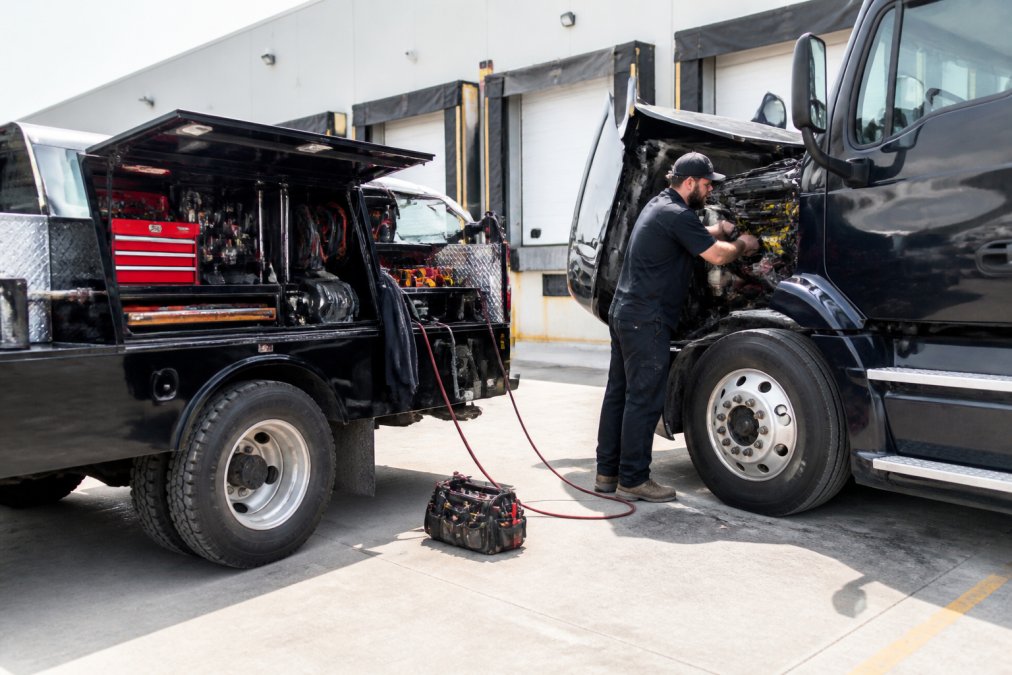
Mobile truck and trailer repair brings the full capability of a service facility to your location. Modern mobile service trucks carry computer diagnostic equipment, hydraulic tools, welding capability, and specialized repair equipment. The scope of mobile repair includes engine diagnostics, transmission work, brake system repair, electrical troubleshooting, hydraulic system service, and structural repairs.
Roadside Electrical Diagnostics and Mechanical Repair
Electrical problems are often intermittent and difficult to diagnose. Mobile technicians arrive with computer diagnostic scanners that read fault codes, test circuits, and identify electrical problems systematically.
For mechanical issues, on-site diagnosis reveals the actual problem, not just the symptom. Your technician can observe the problem in context, a noise under load, a vibration at specific speeds, or a performance issue under certain conditions becomes obvious when the truck is being worked on at your location.
What You Can Expect from 24/7 Emergency Dispatch
Emergency dispatch means a technician responds to your call around the clock. Response times depend on location, current dispatch load, and distance from your breakdown point. When you call for emergency service, provide your location, the problem description, and your contact number. Most emergency calls are resolved on-site, but if parts are needed or the problem exceeds mobile capability, dispatch can arrange towing or alternative solutions.
Cost-Benefit Analysis: Mobile Service vs. Shop Towing
The decision to use mobile fleet maintenance versus traditional shop service comes down to economics. Towing costs money. Shop wait time costs money. Travel time costs money. Mobile service eliminates all three.
A typical tow from I-80 costs $500 to $1,500 depending on distance. A shop visit adds $150 to $300 in diagnostic time before any repairs begin. A mobile technician performing the same repair on-site typically costs less than the tow alone.
The real financial advantage is in downtime avoidance. Every hour your truck is down costs you revenue. For a truck generating $200 to $400 per hour in revenue, a 6-hour shop visit costs $1,200 to $2,400 in lost revenue. A mobile repair that takes 1.5 hours costs $300 to $600 in lost revenue. That’s a $900 to $1,800 difference per incident.
Over a year, a fleet that experiences even two or three breakdowns sees significant savings from mobile service. A fleet that uses mobile service for preventive maintenance eliminates most breakdowns entirely.
The cost advantage of mobile fleet maintenance compounds over time. Preventive maintenance eliminates most emergencies. Emergency mobile service costs less than towing plus shop repair. Over a year, most fleets save thousands by switching to mobile-first maintenance.
Preparing Your Yard for Mobile Diesel Service
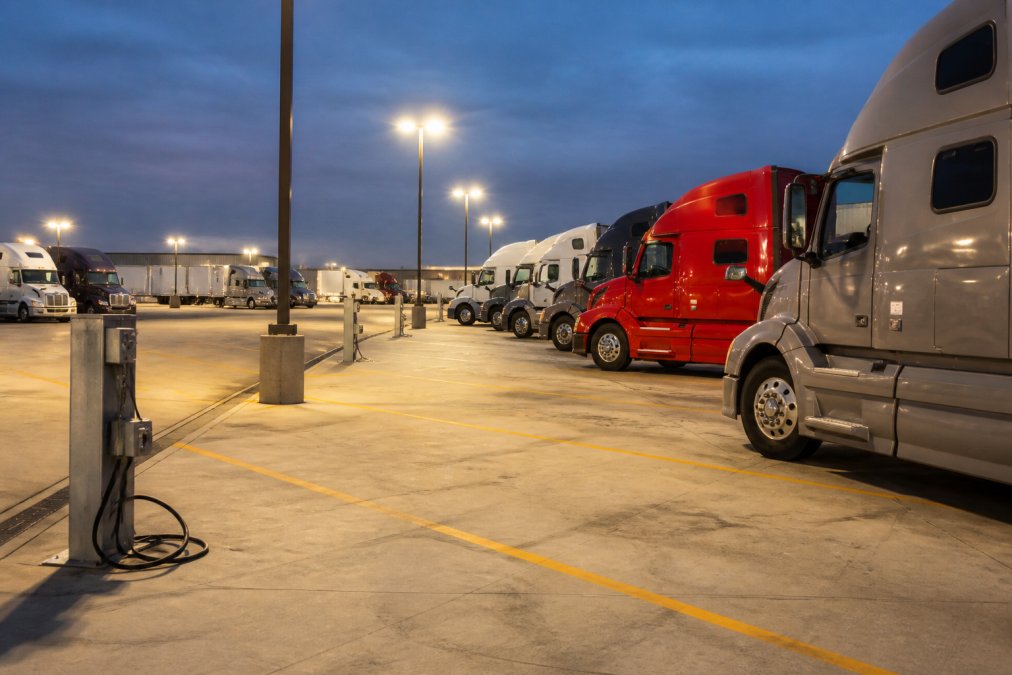
Mobile technicians need specific conditions to work safely and effectively. Preparing your yard for mobile service means ensuring adequate space, lighting, power access, and safety clearance.
Space Requirements: Mobile technicians need enough room to position their service truck alongside your fleet truck. Minimum clearance is typically 15 to 20 feet on either side.
Lighting: Work quality depends on visibility. If you don’t have adequate yard lighting, mobile technicians bring portable work lights, but having your own lighting available accelerates work.
Power Access: Some diagnostics and repairs require electrical power. If your yard has 120-volt or 240-volt outlets available, let the technician know. Mobile service trucks carry generators, so lack of power isn’t a barrier.
Safety Clearance: Ensure the work area is clear of obstacles, other vehicles, and personnel. Technicians need safe working space and clear egress in case of emergency.
Documentation: Have your vehicle’s maintenance records available. Service history, previous repairs, and known issues help the technician understand your truck’s condition. Provide the vehicle identification number and engine serial number so the technician can access manufacturer specifications.
Communication: Designate a contact person who can meet the technician, explain the problem, and authorize work. Clear communication about what needs service and what the budget is prevents misunderstandings.
Mobile fleet maintenance transforms how commercial fleets approach downtime and reliability. By combining preventive maintenance at your yard with 24/7 emergency support on the road, you eliminate the tow trucks, the shop queues, and the lost revenue that plague traditional maintenance approaches.
Mudhollow Diesel Mechanics specializes in exactly this model: fully equipped mobile service trucks with computer diagnostics, experienced technicians who understand commercial diesel engines, and 24/7 dispatch across western Iowa. We handle preventive maintenance at your yard, emergency roadside repairs on I-80 and I-29, and complex diagnostics that other shops miss.
When downtime costs money and every hour matters, mobile fleet maintenance isn’t optional, it’s the only approach that makes economic sense. CALL or TEXT NOW: 712-827-0207 to discuss your fleet’s maintenance needs and see how mobile service can reduce your downtime and costs.
Frequently Asked Questions
Q: What is the typical response time for mobile fleet maintenance emergency calls?
A: Response times depend on your location relative to our service area and current call volume. For roadside emergencies on I-80 and I-29 corridors, we prioritize rapid dispatch to minimize your downtime. Contact us at 712-827-0207 to discuss your specific needs and learn about response times for your operation.
Q: How does mobile fleet maintenance reduce downtime compared to traditional shop repairs?
A: Mobile fleet maintenance eliminates tow time, waiting room delays, and shop scheduling bottlenecks. Our technicians arrive equipped with computer diagnostics and heavy-duty tools to perform repairs on-site at your yard, terminal, or roadside location. Many roadside fixes are completed in less time than it would take to arrange towing and check into a shop, keeping your trucks operational and revenue moving.
Q: What should be included in a preventive maintenance checklist for commercial trucks?
A: A comprehensive preventive maintenance checklist for commercial trucks covers fluid analysis and oil changes at manufacturer intervals, brake system and lighting inspections, tire condition and pressure checks, battery testing, filter replacement, and electrical diagnostics. Scheduled preventive maintenance catches wear before catastrophic failure occurs, reducing emergency breakdowns and extending vehicle life. Our team can build a customized schedule for your fleet.
Q: How do I prepare my yard for a mobile diesel mechanic visit?
A: Ensure adequate space for the service truck to position safely near your vehicles, provide clear access to the units requiring service, and confirm reliable power and lighting are available. Remove obstacles and schedule the visit during daylight hours when possible. Let us know about any specific mechanical issues beforehand so we arrive with the right parts and tools. Call 712-827-0207 to coordinate details.
This article was written using GrandRanker