Table of Contents
- Why On-Site Fleet Maintenance Matters
- Reduced Vehicle Downtime and Fleet Uptime
- Cost Savings Through Eliminating Towing and Shop Wait Times
- Preventive Maintenance Checklist for Commercial Fleets
- Reducing Fleet Downtime Costs with Scheduled Service
- DOT Inspection Requirements for Commercial Trucks and On-Site Compliance
- Extended Vehicle Lifecycle and Asset Use
- On-Site Fleet Maintenance vs. Traditional Shop Repairs
- Frequently Asked Questions
Last Updated: August 25, 2026
Why On-Site Fleet Maintenance Matters
When a semi-truck breaks down on I-80 at 2 AM, every hour of downtime costs money in lost revenue, fuel, labor, and missed deliveries. Traditional fleet maintenance forces a reactive cycle: wait for a tow truck, sit in a shop queue for days, and watch operational costs climb. On-site fleet maintenance flips that script entirely.
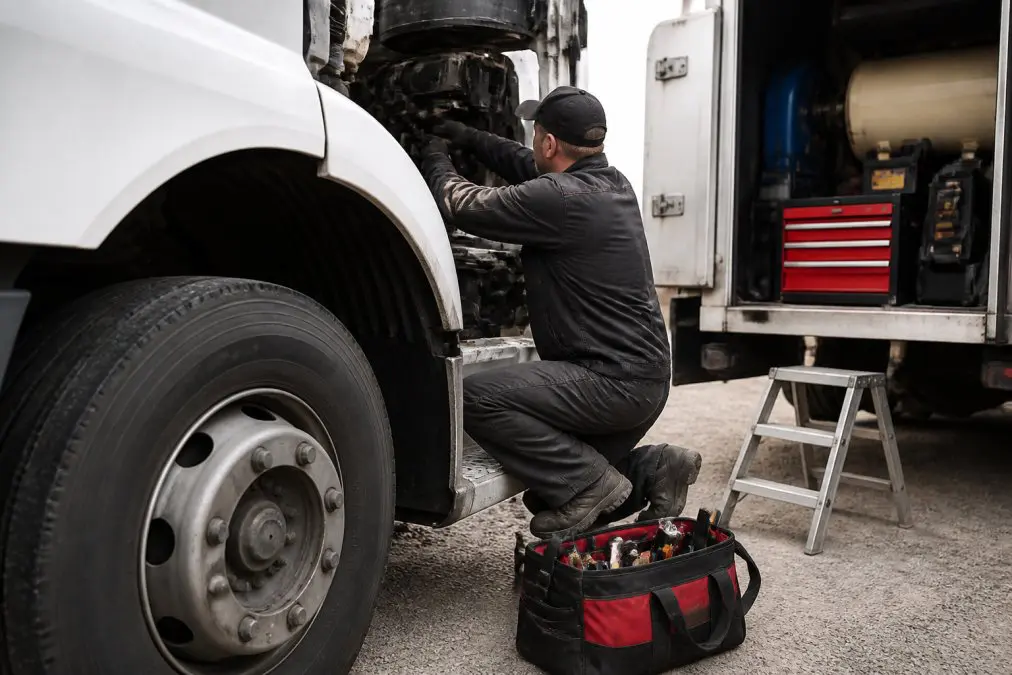
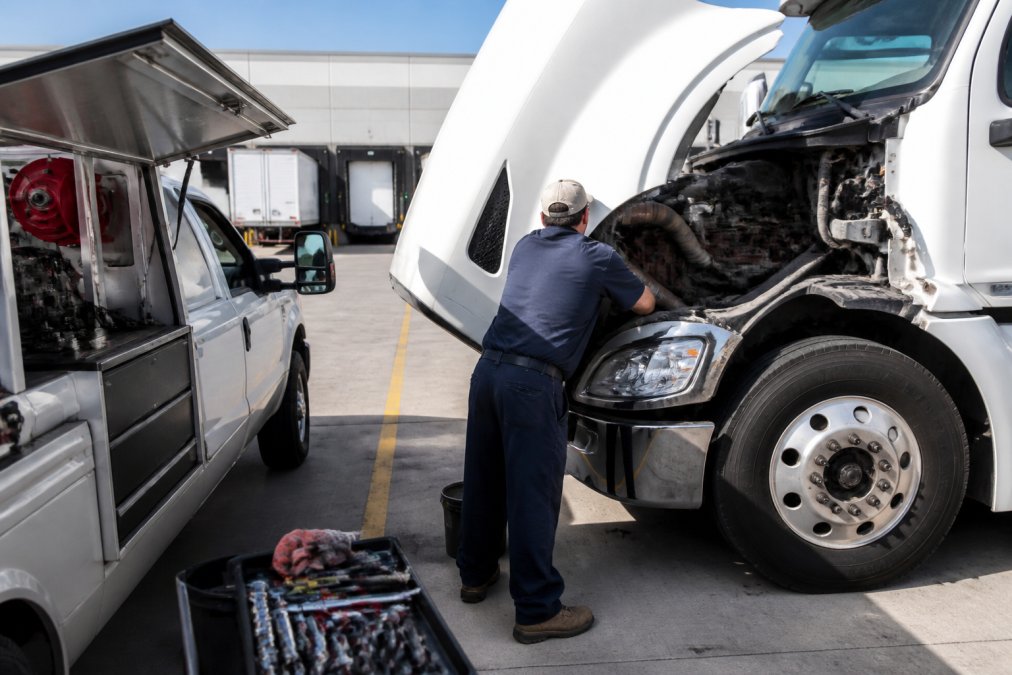
On-site fleet maintenance brings fully equipped repair and maintenance services directly to your vehicles, whether stranded on the highway, parked at a loading dock, or stationed at your yard. Instead of towing and waiting, you get expert diagnostics and fixes where your fleet operates. At Mudhollow Diesel Mechanics, this approach transforms how fleets manage downtime and costs.
The real value emerges when you examine what happens during those lost hours. A tow truck arrival, shop queue delays stretching from hours into days, and the labor cost of getting a driver to the shop and back, these aren’t minor inconveniences (fmcsa.dot.gov). They’re compounding expenses that fleet managers rarely track until they’ve spiraled out of control. On-site fleet maintenance eliminates most of this friction. Your vehicles get serviced where they need to be, your operations keep moving, and your team stays focused on deliveries.
Reduced Vehicle Downtime and Fleet Uptime
The single biggest advantage of on-site fleet maintenance is simple: your vehicles stay operational. When a repair happens at your location instead of a distant shop, you eliminate travel time, shop queue delays, and administrative overhead.
Consider the math. A typical tow from a remote highway location takes 1-2 hours. The shop queue adds another 4-8 hours before a technician even looks at your vehicle. Then there’s the actual repair, which could take anywhere from 30 minutes to multiple days depending on parts availability. Finally, you’re waiting for the vehicle to be towed back. That’s easily 12-24 hours of downtime for what might be a 45-minute repair if a mobile technician had arrived on-site.
Fleet uptime directly correlates to revenue. Every hour your delivery truck sits idle is an hour it’s not generating income. For agricultural hauling companies running tight seasonal schedules, that lost time can mean missed contracts or penalty fees. On-site fleet maintenance compresses that timeline dramatically. Most roadside repairs are resolved in less time than in-shop repairs take just to get started.
Mobile mechanics with modern service trucks equipped with computer diagnostics can handle complex repairs on-site that would’ve required a dealership visit five years ago. Electrical issues, transmission problems, and engine tuning are often resolved roadside, keeping your fleet productive instead of sitting in a waiting room.
Cost Savings Through Eliminating Towing and Shop Wait Times
Towing is expensive. A single tow from a remote location can run $300-$800 depending on distance and the towing service. Multiply that across a fleet that experiences even occasional breakdowns, and you’re looking at thousands of dollars annually in towing charges alone.
But towing cost is only the visible expense. The hidden costs are often larger. When a vehicle sits in a shop queue, you’re paying for the driver’s time and losing the revenue that vehicle would’ve generated. If the breakdown happens during critical delivery windows, you might face penalty fees from clients. For agricultural operations, a breakdown during harvest season can cost entire contracts if you can’t meet delivery deadlines.
On-site fleet maintenance eliminates the tow entirely. That’s a direct savings of $300-$800 per incident. The real savings come from reduced downtime. A vehicle that’s back in operation 12-18 hours faster generates revenue during those hours. For a commercial truck averaging $150-$250 per day in net revenue, that’s $75-$500 in recovered income per repair. Scale that across a fleet experiencing 5-10 breakdowns per year, and on-site maintenance pays for itself many times over.
Additionally, on-site maintenance reduces administrative overhead. No coordinating tow times, no calling shops for status updates, no arranging alternative transportation for drivers. Your fleet manager’s time is freed up for actual fleet management instead of logistics coordination.
Preventive Maintenance Checklist for Commercial Fleets
Preventive maintenance is the foundation of fleet reliability, and on-site service makes it dramatically easier to execute consistently. Mobile technicians can visit your yard on a regular schedule and execute a comprehensive maintenance plan.
A preventive maintenance checklist for commercial fleets should include:
- Oil and filter changes at manufacturer-recommended intervals (typically every 15,000-25,000 miles for diesel engines)
- Fluid inspections and top-ups including coolant, transmission fluid, brake fluid, and power steering fluid
- Brake system inspections including pad wear, rotor condition, brake line integrity, and air brake functionality
- Tire inspections and rotations to extend tire life and ensure even wear
- Battery testing and replacement before seasonal stress periods
- Air filter and cabin filter replacements to maintain engine efficiency
- Belt and hose inspections for cracks, wear, or deterioration
- Lighting system checks including headlights, brake lights, and clearance lights for regulatory compliance
- Suspension and steering component inspections for wear or damage that affects safety
- Engine diagnostics using computer tools to identify emerging issues before they become failures
- Undercarriage and corrosion inspection especially critical in winter months or salt-heavy environments
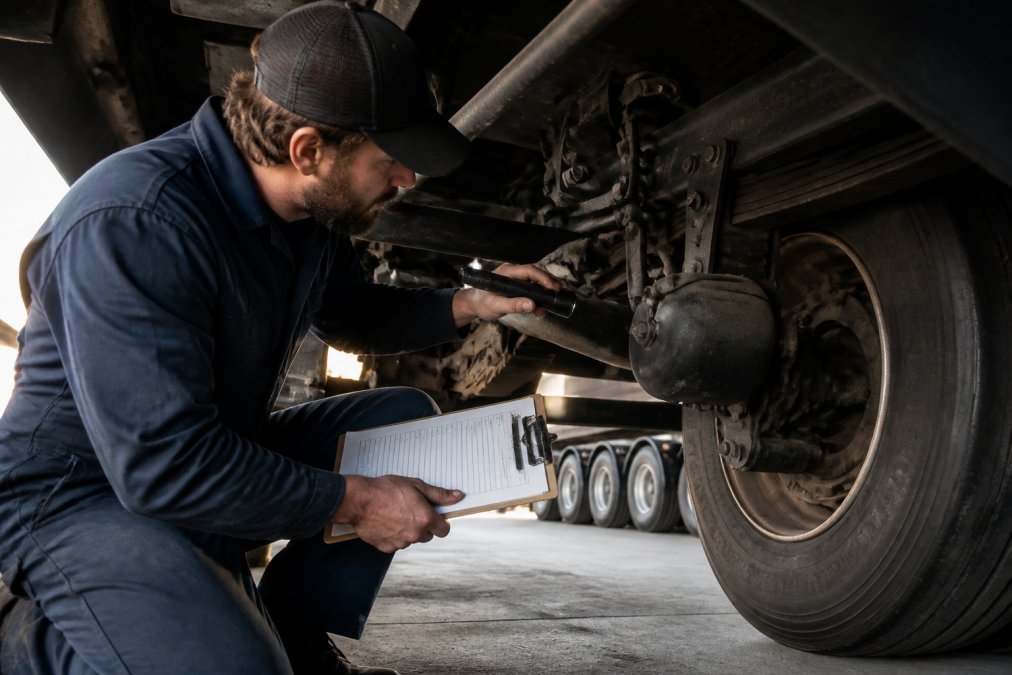
The advantage of on-site maintenance is consistency. When a technician visits your yard on a fixed schedule, they can execute this entire checklist without your vehicles leaving the property. Drivers aren’t losing time traveling to a shop, and you’re not paying tow charges.
Create a digital maintenance log for each vehicle and share it with your on-site technician before each visit. Fleets using maintenance tracking systems see 20-30% fewer unexpected breakdowns compared to fleets that rely on informal tracking ([peer-reviewed research](https://pmc.ncbi.nlm.nih.gov/articles/PMC11057655/)).
Most fleet managers find that preventive maintenance executed consistently on-site costs less than reactive repair after breakdowns occur.
Reducing Fleet Downtime Costs with Scheduled Service
Scheduled service, planned maintenance executed on a predictable calendar, is the operational lever that transforms fleet economics. Instead of reacting to breakdowns, you’re controlling when maintenance happens and minimizing the impact on operations.
The key to successful scheduled service is coordination. On-site fleet maintenance makes this simple because you’re not competing for shop appointments. You and your mobile technician agree on a maintenance schedule, and they arrive at your yard on that schedule.
For a three-truck agricultural fleet, scheduled service might look like this: one truck receives preventive maintenance the first week of each month while the other two remain operational. By rotating vehicles through maintenance, you maintain fleet capacity while ensuring every vehicle receives consistent care.
Scheduled service also enables better forecasting. You know exactly when each vehicle will be down for maintenance, so you can plan routes and commitments accordingly. You can communicate with customers about any potential delays before they become problems.
The real cost of downtime isn’t the repair itself, it’s the lost revenue and operational disruption. Scheduled on-site maintenance costs money upfront but eliminates the far larger costs of unplanned downtime. Most fleets see positive ROI within 6-12 months.
The scheduling benefit extends to parts management. If your technician knows they’re visiting on a specific date, they can order parts in advance and have them on-site for the maintenance visit. Parts are already there, work gets completed in one visit, and your vehicle returns to service on schedule.
DOT Inspection Requirements for Commercial Trucks and On-Site Compliance
Commercial trucks operating on public highways must comply with Department of Transportation regulations, and on-site fleet maintenance is an efficient way to ensure compliance. The Federal Motor Carrier Safety Administration (FMCSA) requires commercial vehicles to pass regular inspections covering brakes, lighting, tires, steering, and other critical safety systems.
A vehicle out of compliance isn’t just a regulatory violation, it’s a liability. An accident involving a non-compliant vehicle exposes you to increased insurance claims, potential legal action, and regulatory penalties. On-site maintenance allows you to address compliance issues before they become violations.
CALL or TEXT NOW:712-827-0207 →
On-site technicians can execute comprehensive DOT compliance inspections at your yard or terminal, identify any defects, and resolve them immediately. No towing required. No shop delays.
Failing a roadside DOT inspection can result in out-of-service orders that ground your vehicle immediately. The cost includes not just the repair but lost revenue while the vehicle is down and potential fines. Preventive on-site compliance inspections eliminate this risk entirely.
Many fleets coordinate their scheduled maintenance with DOT compliance inspections. A monthly on-site visit includes preventive maintenance plus a comprehensive DOT inspection. For agricultural haulers and owner-operators, this is especially important because compliance violations can result in operating restrictions that devastate seasonal revenue.
According to FMCSA regulations on vehicle maintenance, carriers are responsible for ensuring all vehicles are properly maintained and comply with safety standards. On-site maintenance provides documented proof that maintenance is being executed consistently.
Extended Vehicle Lifecycle and Asset Use
Commercial trucks and equipment represent significant capital investments. A semi-truck can cost $100,000-$150,000 new. The longer you can keep these assets operational and productive, the better your return on that investment.
On-site fleet maintenance extends vehicle lifecycle by catching small issues before they become catastrophic failures. A technician inspecting your fleet regularly will spot early signs of wear, a belt showing cracks, a hose losing elasticity, brake pads wearing thin, and address them before they fail. That preventive approach means your vehicles last longer. For commercial trucks, that’s an additional 3-5 years of productive life.
Extended vehicle lifecycle translates directly to asset use. Instead of replacing a truck every 5-6 years, you might keep it operational for 8-10 years if maintenance is consistent and proactive. That’s a massive improvement in total cost of ownership.
A well-maintained truck with documented service history commands a better price when you’re ready to sell or trade it. A truck with 250,000 miles but comprehensive maintenance records might sell for 15-20% more than an equivalent truck with spotty maintenance history.
On-Site Fleet Maintenance vs. Traditional Shop Repairs
The comparison between on-site fleet maintenance and traditional shop repairs highlights why on-site service is transforming fleet operations.
| Factor | On-Site Maintenance | Traditional Shop Repair |
|---|---|---|
| Travel time | Eliminated | 1-2 hours each way |
| Shop queue wait | None | 4-8+ hours typical |
| Repair timeline | Often same-day | 1-3 days average |
| Towing cost | $0 | $300-$800 per incident |
| Lost revenue during downtime | Minimal | $150-$500+ per day |
| Scheduling flexibility | High (your schedule) | Low (shop’s schedule) |
| Preventive maintenance | Consistent on-site | Deferred or reactive |
| Compliance documentation | Immediate | Delayed |
| Cost per repair | Lower due to efficiency | Higher with overhead |
Traditional shop repairs work when you have time and flexibility. But for active fleets operating on tight schedules, shop repairs are operationally disruptive and financially inefficient.
On-site maintenance eliminates the friction. Your technician arrives at your location, executes the work, and your vehicles stay in your control. For semi-truck owner-operators stranded on I-80, the difference is survival, a mobile technician can get you back on the road in hours instead of days. For agricultural fleets during harvest season, on-site maintenance means you don’t lose critical equipment during peak revenue periods.
The cost comparison is stark when you factor in all expenses. A $500 on-site repair that takes 2 hours is far cheaper than a $200 shop repair that requires a $400 tow, 8 hours of driver time, and 2 days of lost revenue.
Mudhollow Diesel Mechanics specializes in this model because we understand that fleet downtime costs more than repair costs. We bring fully equipped mobile service trucks with modern computer diagnostics directly to your location, whether that’s I-80, your yard, or a loading dock. Most roadside fixes are resolved in less time than in-shop repairs take just to get started.
The choice between on-site fleet maintenance and traditional shop repairs becomes clear once you’ve experienced the operational difference. On-site service keeps your vehicles productive, your fleet moving, and your costs predictable. For owner-operators stranded on I-80 or fleet managers running agricultural hauling operations, on-site maintenance is the foundation of reliable operations. Call or text Mudhollow Diesel Mechanics now at 712-827-0207 to schedule preventive maintenance or get emergency roadside support. We bring expert diesel diagnostics and heavy-duty repairs directly to you, eliminating expensive tows and shop wait times so you can get back on the road quickly.
=== FAQ ANSWERS (audit these too, same rules) ===
[1] Q: What are the primary benefits of on-site fleet maintenance over shop-based service?
A: On-site fleet maintenance eliminates towing costs, reduces vehicle downtime, and allows technicians to service vehicles at your yard or roadside location with fully equipped mobile service trucks. Technicians bring advanced diagnostics and heavy-duty tools directly to you, avoiding high dealership prices and long shop wait times. Most roadside repairs are completed faster than traditional in-shop service, keeping your fleet operational and your delivery deadlines on track.
[2] Q: How does on-site maintenance help with DOT compliance requirements for commercial trucks?
A: On-site maintenance services can schedule preventive inspections and address compliance issues before they become roadside violations. Mobile technicians perform brake inspections, lighting checks, and other DOT-required maintenance at your location, maintaining detailed maintenance logs that demonstrate regulatory compliance. This proactive approach prevents costly fines and keeps your fleet operating within federal safety standards.
[3] Q: How does mobile fleet maintenance reduce total cost of ownership?
A: On-site service eliminates expensive towing charges, reduces vehicle downtime that costs you lost revenue and operational delays, and prevents costly on-road failures through preventive maintenance. By addressing issues before they cause breakdowns, you extend your vehicle lifecycle and reduce emergency repair expenses. Faster repair turnaround also contributes to reduced total cost of ownership.
[4] Q: Can on-site maintenance handle complex diesel diagnostics, or just basic roadside fixes?
A: Modern mobile service trucks are equipped with computer diagnostics and advanced tools capable of handling complex diesel issues like electrical gremlins, engine faults, and transmission problems. Experienced technicians can diagnose and repair many complex issues on-site, and if parts need ordering, you avoid the delay of towing to a shop. This combination of expertise and mobile capability means fewer vehicles sit idle waiting for diagnosis.
Frequently Asked Questions
What are the primary benefits of on-site fleet maintenance over shop-based service?
On-site fleet maintenance eliminates towing costs, reduces vehicle downtime, and allows technicians to service vehicles at your yard or roadside location with fully equipped mobile service trucks. Technicians bring advanced diagnostics and heavy-duty tools directly to you, avoiding high dealership prices and long shop wait times. Most roadside repairs are completed faster than traditional in-shop service, keeping your fleet operational and your delivery deadlines on track.
How does on-site maintenance help with DOT compliance requirements for commercial trucks?
On-site maintenance services can schedule preventive inspections and address compliance issues before they become roadside violations. Mobile technicians perform brake inspections, lighting checks, and other DOT-required maintenance at your location, maintaining detailed maintenance logs that demonstrate regulatory compliance. This proactive approach prevents costly fines and keeps your fleet operating within federal safety standards.
How does mobile fleet maintenance reduce total cost of ownership?
On-site service eliminates expensive towing charges, reduces vehicle downtime that costs you lost revenue and operational delays, and prevents costly on-road failures through preventive maintenance. By addressing issues before they cause breakdowns, you extend your vehicle lifecycle and reduce emergency repair expenses. Faster repair turnaround also contributes to reduced total cost of ownership.
Can on-site maintenance handle complex diesel diagnostics, or just basic roadside fixes?
Modern mobile service trucks are equipped with computer diagnostics and advanced tools capable of handling complex diesel issues like electrical gremlins, engine faults, and transmission problems. Experienced technicians can diagnose and repair many complex issues on-site, and if parts need ordering, you avoid the delay of towing to a shop. This combination of expertise and mobile capability means fewer vehicles sit idle waiting for diagnosis.
This article was written using GrandRanker