Table of Contents
- Diesel Fuel System Airlock Symptoms: Know What You’re Dealing With
- Tools for Bleeding Diesel Fuel Lines
- How to Bleed Air from a Diesel Fuel System: Step-by-Step
- Bleeding After Running Out of Fuel or a Filter Change
- Preventing Air in Diesel Fuel Lines
- Common Mistakes and Post-Bleeding Verification
- Conclusion
- Frequently Asked Questions
Last Updated: September 18, 2026
Diesel Fuel System Airlock Symptoms: Know What You’re Dealing With
A bleed air diesel problem is the most common reason a healthy engine cranks but won’t fire. This guide from Mudhollow Diesel Mechanics walks you through how to bleed air from a diesel fuel system, step by step.
Why Air Gets Trapped in Fuel Lines
Air enters the system through the low pressure side, usually after a repair or a fuel runout.
Common entry points include:
- A loose or cracked fuel filter housing seal
- A worn gasket on the fuel filter
- Running the tank dry, which pulls air into the lines
- A leaking fuel line or return line connection
- A failed primer pump or hand primer
Tools for Bleeding Diesel Fuel Lines
You don’t need a full shop to bleed a diesel fuel system. A basic kit handles most roadside jobs.
Gather these tools before you start:
- A wrench that fits your bleed screw (often 10mm or 12mm)
- A clear plastic hose to route fuel away from the engine
- A container for spilled fuel
- Rags and a spill tray
- Gloves and eye protection
- A hand primer or primer pump, if your engine has one
Never crank a dry injection pump for long stretches. The pump relies on fuel for lubrication, and running it dry can score internal parts. Bleed the low pressure side first, then crank.
How to Bleed Air from a Diesel Fuel System: Step-by-Step
The full procedure takes about 15 to 30 minutes on most engines. Work methodically and don’t skip the low pressure side. Steps change depending on whether your engine uses a mechanical injection pump or common rail, so identify your setup first.
Identify Your Injection System First
Mechanical injection (older 12-valve and 24-valve engines, many pre-2003 trucks): You’ll find a manual primer plunger on the fuel filter housing or lift pump, and a bleed screw on the injection pump. These systems respond well to hand priming.
Locating the Bleed Screw and Primer Pump
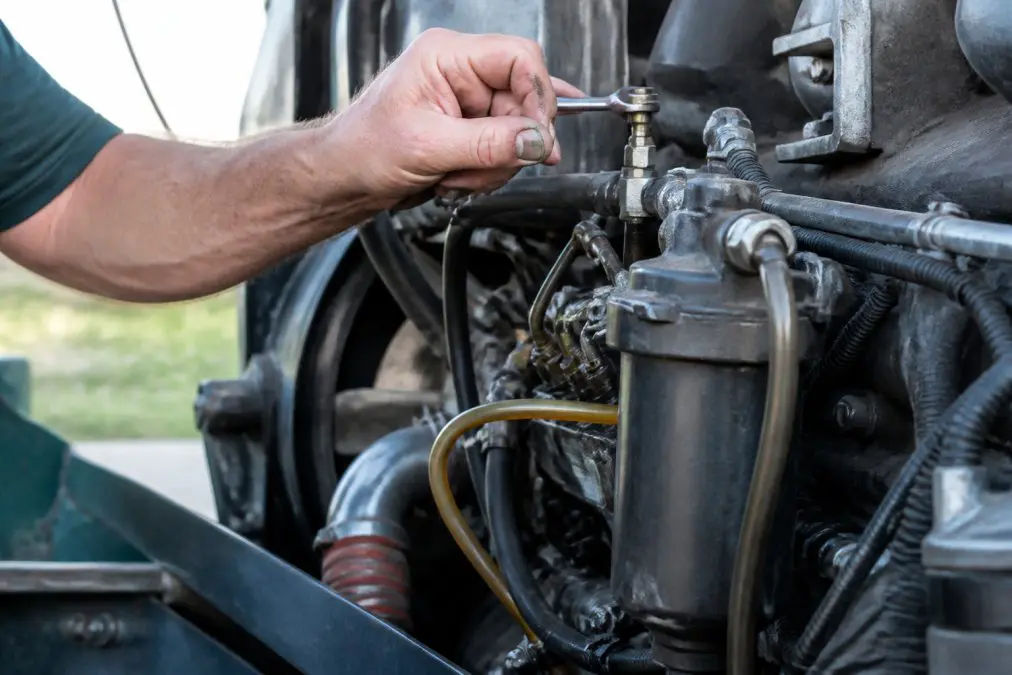
The bleed screw sits on the fuel filter housing or the injection pump, depending on your engine. It looks like a small hex-head bolt, often near the top of the housing. On common rail systems, you’ll usually find a hand-operated primer pump on the filter housing too.
To find yours:
- Follow the fuel lines from the tank to the filter
- Look for a small bolt on top of the filter housing
- Trace onward to the injection pump for a second bleed point
Manual Priming and Cranking the Engine
Start with the low pressure side. This is where manual priming does its best work.
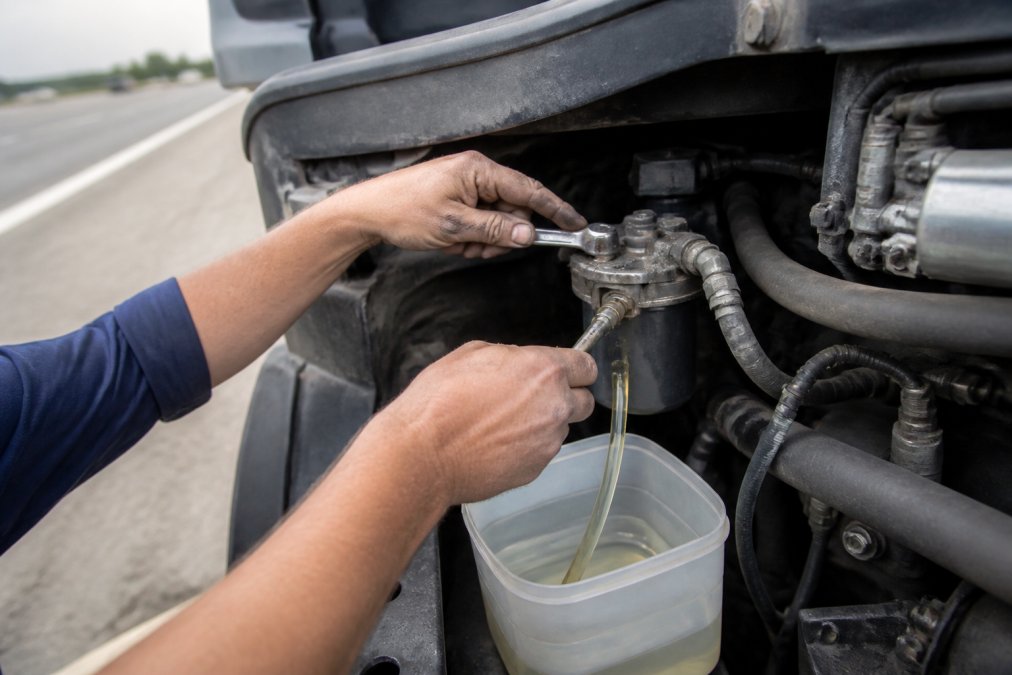
- Open the bleed screw a half turn to one full turn
- Press the hand primer or primer pump until fuel flows with no air bubbles
- Close the bleed screw while fuel is still flowing
- Move to the next bleed point and repeat
- Crank the engine in short bursts, 10 to 15 seconds each
- Let the starter cool between attempts
If your engine has no hand primer, cycle the key to run the lift pump for a few seconds before cranking. On many trucks, this pressurizes the low pressure side and pushes air out through the open bleed screw.
Mechanical Injection: Full Bleed Sequence
On a mechanical system, air can travel to the injection pump and high pressure lines, so you must bleed in stages.
- Bleed the filter housing first using the hand primer until bubble-free fuel flows
- Move to the injection pump bleed screw and prime until clear
- Crack the high pressure lines at the injectors one at a time, a quarter turn is enough
- Crank the engine in short bursts until fuel weeps (not sprays) from each cracked fitting
- Tighten each fitting as soon as fuel appears, then move to the next
- Once all lines are tight, crank until the engine fires
Common Rail: Full Bleed Sequence
Common rail systems are simpler to bleed because the high pressure side is sealed and self-purging.
- Confirm the tank has at least a quarter tank of fuel
- Open the filter housing bleed screw
- Cycle the key to RUN for 10 to 15 seconds, then off. Repeat three to five times
- Watch for bubble-free fuel at the bleed screw, then close it
- Crank the engine. It may take two or three attempts to fire
- If it won’t start after five attempts, stop and check for a clogged filter or failed lift pump
Never crack a high pressure common rail line while cranking. Common rail pressures can exceed 20,000 psi and the fuel jet can cut through skin and clothing. Bleed only the low pressure side on these systems.
Post-Bleed Check Before You Drive
Once the engine idles, hold it at a steady 1,500 rpm for 30 seconds and listen for a miss. Shut it down, wait a minute, and restart. A clean restart means the system is fully purged. If it stumbles, repeat the low pressure bleed, air is still trapped between the tank and the filter.
Bleeding After Running Out of Fuel or a Filter Change
Running out of fuel and changing a filter are the two most common reasons air enters the system. Both need the same fix, but order matters.
CALL or TEXT NOW:712-827-0207 →
After a fuel runout:
- Add fuel to the tank first, and never crank a dry system
- Open the bleed screw on the filter housing
- Prime until bubble-free fuel flows
- Close the screw and crank in short bursts
After a fuel filter change:
- Fill the new filter with clean diesel before installing it
- Check the gasket seal sits flat and clean
- Prime the housing and bleed the low pressure side
- Crank and confirm the engine holds idle
Preventing Air in Diesel Fuel Lines
Most airlock problems are preventable. A few habits keep your fuel system sealed.
- Keep the tank above a quarter full to avoid pulling air
- Replace fuel filters on schedule, not just when they clog
- Inspect fuel lines and return lines for cracks
- Check the gasket seal every time you change a filter
- Watch for seepage around the filter housing and bleed screws
Common Mistakes and Post-Bleeding Verification
The biggest bleed air diesel mistake is cranking endlessly and hoping the air works itself out. It won’t, air has to be pushed out through an open bleed point. Before assuming you have an airlock, run a quick diagnostic to confirm.
Decision Tree: Is It Actually Air?
Engine cranks but won’t fire, and you recently ran the tank dry or changed a filter? → Airlock is likely. Proceed with bleeding.
Common Mistakes to Avoid
- Opening the bleed screw too far and letting fuel spray
- Closing the bleed screw before fuel stops bubbling
- Forgetting the second bleed point on the injection pump
- Over-torquing the bleed screw and stripping the housing
- Skipping the gasket seal check after a filter change
- Cranking more than 15 seconds at a time and overheating the starter
- Cracking high pressure lines on a common rail system
Post-Bleeding Verification Checklist
Once the engine runs, verify the job before you drive. A five-minute check prevents a repeat breakdown.
- Steady idle: Let it idle for three to five minutes. Any surging or loping means air is still in the system.
- No seepage: Check every bleed screw, the filter housing, and any line you cracked. Even a slow weep will pull air back in.
- Clear return line: If your engine has a transparent return line, watch for bubbles. Steady bubble-free flow confirms a sealed low pressure side.
- Restart test: Shut the engine off, wait 60 seconds, and restart. A clean restart on the first try confirms the system is purged.
- Load test: Drive a short loop with moderate acceleration. Stumbling under load means air is still trapped.
- No warning lights: A persistent water-in-fuel or fuel filter light after bleeding points to a sensor or filter issue, not air.
Post-bleeding verification matters as much as the bleed itself. A five-minute idle check, a restart test, and a short test drive catch leaks before they strand you again.
Handling Spilled Diesel
Spilled fuel needs proper handling. Catch it in a tray, wipe up what you can, and dispose of soaked rags and fuel at a licensed facility. Never pour diesel on the ground or into a drain, improper disposal can carry fines. Keep a spill kit in your truck if you do your own service.
When to Stop and Call for Help
If the engine won’t fire after three full bleed cycles, or if you find fuel in the crankcase oil, stop. Those symptoms point to a failed injection pump, a cracked injector body, or an internal seal failure, none of which roadside bleeding will fix. A mobile diesel mechanic with diagnostic tools can pinpoint the failure on site and get you back on the road without a tow in most cases.
Conclusion
An airlock can stop a truck cold, often on the shoulder. Knowing the symptoms, carrying the right tools, and bleeding the low pressure side first turns a stressful breakdown into a quick roadside fix.
Frequently Asked Questions
How do I purge air from the fuel lines in a diesel engine?
Start by locating the bleed screw on the fuel filter housing and opening it a quarter to half turn. Operate the primer pump or hand primer until fuel flows out with no air bubbles, then close the screw. If your engine has a mechanical fuel pump, crank it briefly with the bleed screw open until it fires, then tighten the screw. For common rail systems, follow the manufacturer’s manual priming sequence before cranking to avoid damage to the high pressure side.
What are the symptoms of airlock in a diesel fuel system?
The most common diesel fuel system airlock symptoms are hard starting, rough idling, engine stalling, and a loss of power under load. You may also notice excessive white smoke, a surging idle, or the engine dying shortly after it starts. These signs point to air bubbles interrupting fuel flow from the tank to the injectors. If the engine runs fine cold but stalls once warm, an air leak on the low pressure side is likely pulling air in through a loose fitting or worn gasket seal.
Do I need special tools to bleed a modern common rail diesel system?
Most common rail systems can be bled with basic hand tools, but a few extras help. You will want a flare nut wrench set, a clear plastic hose for routing fuel, a catch container, and shop rags. Some engines have a Schrader valve or a specific priming port that requires an adapter. If the system uses a high pressure fuel pump, never crack the high pressure lines while cranking. Air in the high pressure side can damage the pump and injectors, so follow the OEM procedure or call a mobile diesel technician.
Is it possible to damage a diesel engine by running it with air in the fuel lines?
Yes. Air in the fuel system causes lean running and erratic combustion, which raises cylinder temperatures and stresses the injection pump and fuel injectors. On common rail engines, air on the high pressure side can score the pump and cause metal debris to travel to the injectors. Persistent air leaks also lead to fuel starvation, hard starting, and eventually engine stalling at the worst possible time. Bleeding the system correctly and fixing the source of the leak prevents this kind of damage.