Table of Contents
- Why Your RV Diesel Engine Overheats on the Highway
- Low Coolant Levels and System Leaks
- Faulty Thermostat and Temperature Gauge Issues
- Radiator Obstructions and Debris Buildup
- Signs of a Failing Water Pump in Diesel RV
- Diesel Engine Cooling System Maintenance to Prevent Overheating
- Mobile Diesel Repair Roadside Assistance When You Overheat
- Conclusion
- Frequently Asked Questions
Last Updated: August 19, 2026
Why Your RV Diesel Engine Overheats on the Highway
A diesel engine overheating on the highway is one of the most dangerous situations an RV owner can face. When your temperature gauge climbs into the red zone while cruising at highway speeds, you’re looking at potential engine damage, a stranded rig, and expensive repair bills. At Mudhollow Diesel Mechanics, we’ve diagnosed thousands of overheating cases across RVs traveling western Iowa corridors, and the causes are more predictable than most owners realize.
Highway overheating often strikes suddenly, even when your engine ran fine in town. This happens because highway driving exposes cooling system weaknesses that lower speeds mask. At sustained highway RPMs, your diesel engine generates tremendous heat that accumulates faster than a compromised cooling system can shed it.
Most overheating problems stem from one of six core issues: low coolant levels, thermostat failure, radiator obstruction, water pump degradation, excessive engine load, or airflow restriction. Many can be caught during preventive maintenance before they strand you miles from help.
Low Coolant Levels and System Leaks
Low coolant is the single most common cause of highway overheating in diesel RVs. Your cooling system operates under pressure, and even small leaks accumulate over time. A loss of just one quart of coolant can trigger overheating symptoms during sustained highway driving.
Coolant leaks develop in predictable places: rubber hoses deteriorate with age and heat cycles, the water pump seal can fail, radiator leaks appear as white or green staining on the fins, and the thermostat housing can develop pinhole leaks. By the time your gauge climbs, your cooling capacity is already severely compromised.
Check your coolant level before any highway trip, a five-minute inspection prevents hours of trouble. If you find low coolant, determine where it went. Look under the rig for drips, inspect hoses for cracks, and check the radiator fins for debris or damage. If the level drops again within a few hundred miles, a mobile diesel repair service can perform a pressure test to find hidden leaks.
Always carry extra coolant on long highway trips, at least two gallons. In an emergency, you can add it to buy time to reach help, but this is a temporary fix only.
Faulty Thermostat and Temperature Gauge Issues
Your thermostat controls how much coolant flows through the engine. A stuck-closed thermostat blocks circulation, causing rapid overheating. A stuck-open thermostat prevents the engine from reaching proper operating temperature, masking other cooling problems until you’re on the highway under load.
The tricky part is distinguishing a bad thermostat from a bad temperature gauge. If your gauge reads high but the engine isn’t actually overheating, you’ve got a gauge problem, usually a faulty sender unit. Temperature gauge fluctuations during highway driving indicate the thermostat may be sticking intermittently due to mineral buildup or corrosion.
Diesel engines run hotter than gasoline engines by design. Over time, coolant loses its ability to resist corrosion and scaling. If you haven’t flushed your system in three years, mineral deposits can accumulate on the thermostat valve, restricting its movement. This is why diesel engine cooling system maintenance prevents many thermostat failures before they happen.
If you suspect thermostat trouble, have it tested with a mobile diagnostic service before the next long highway trip. Replacement is straightforward and inexpensive compared to engine damage from sustained overheating.
Radiator Obstructions and Debris Buildup
Your radiator sheds engine heat by passing hot coolant through thousands of thin aluminum fins. When those fins get clogged with road debris, bugs, leaves, or dirt, airflow is restricted and cooling efficiency plummets. On the highway at sustained speeds, a partially blocked radiator can’t dissipate heat fast enough.
Debris buildup is especially common in RVs because you’re often traveling through varied terrain and seasons. Spring brings pollen, summer highway driving coats the radiator with bug splatter and dust, fall leaves get sucked into the cooling fins, and winter mud accumulates. A dirty radiator also traps heat against the engine, diverting air around it rather than through it.
A visual inspection of your radiator fins should be part of every pre-trip check. Look at the front of your radiator from the side, you should see clean aluminum fins with visible spacing between them. If the fins look caked with debris, you’ve found your overheating culprit.
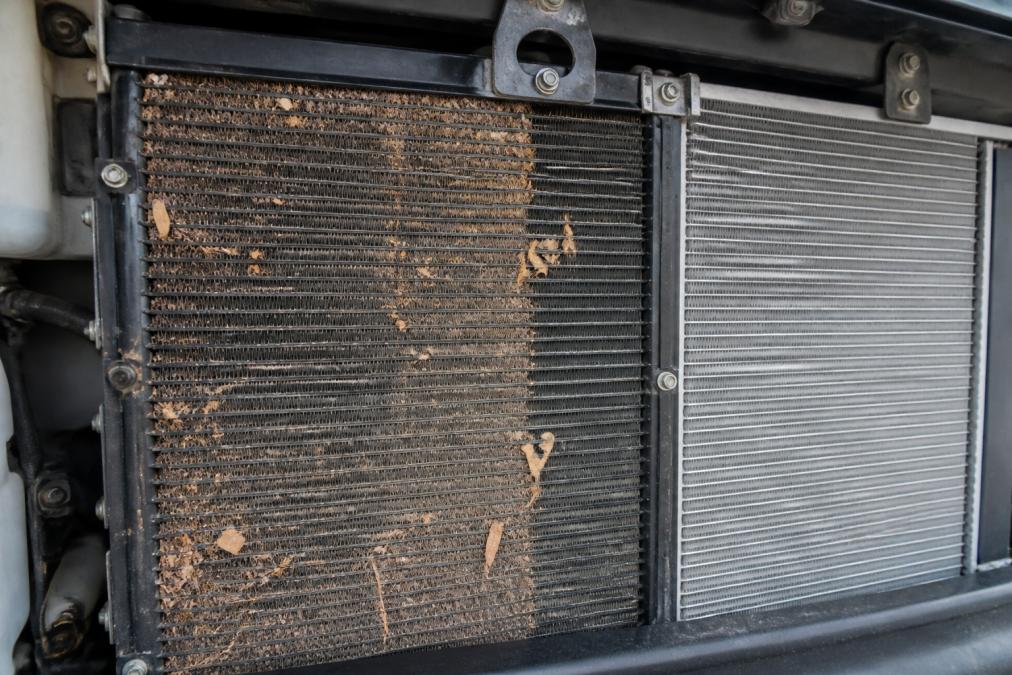
Cleaning a radiator requires care. Compressed air works well for loose debris, but high-pressure water can bend the delicate fins. A soft brush and gentle water spray from a garden hose is safer. For stubborn buildup, a radiator flush removes internal deposits that also restrict coolant flow. Many RV owners see temperature drops of 10-15 degrees after cleaning.
If you suspect a blocked radiator, pull over safely and let the engine cool. Once cooled, inspect the fins and use compressed air to clear loose debris. This simple roadside action often prevents further overheating.
Never use a pressure washer on radiator fins, the force will bend or puncture them, making the problem worse.
Signs of a Failing Water Pump in Diesel RV
Your water pump circulates coolant through the engine. When it fails, circulation stops and overheating happens within minutes. A failing water pump is one of the most dangerous cooling system failures because there’s no gradual warning.
The water pump is driven by a serpentine belt. Before any highway trip, check your belt for cracks, fraying, or glazing. Press on the belt midway between pulleys, it should deflect about half an inch under moderate thumb pressure. If it’s loose or cracked, have it replaced.
The pump’s internal seal can also fail. A weeping water pump shows coolant dripping from the small drain hole at the pump’s center. A slow weep can progress to complete failure within days or weeks. If you notice coolant under your rig near the pump, don’t delay, have it replaced before you’re stranded.
The pump’s internal impeller can corrode or break, stopping circulation even though the belt is turning. This is why diesel engine cooling system maintenance includes periodic coolant flushes. Fresh coolant with proper SCA (Supplemental Coolant Additives) protects pump seals and impellers from corrosion.
CALL or TEXT NOW:712-827-0207 →
If your engine overheats suddenly on the highway with no warning and you see no coolant leaks, a water pump failure is likely. Pull over immediately, shut off the engine, and do not attempt to drive further. Call for roadside assistance.
Diesel Engine Cooling System Maintenance to Prevent Overheating
Preventive maintenance is the most effective defense against highway overheating. A well-maintained cooling system rarely fails, and when problems develop, they’re caught before they strand you.
Start with coolant. Diesel engines require specific coolant types with proper SCA additives. Using the wrong coolant or letting it degrade causes corrosion inside the cooling system. Flush your coolant every three years or per your engine manufacturer’s schedule.
Inspect hoses and belts annually. Look for cracks, soft spots, or areas where the hose has hardened with age. Squeeze a hose, it should be firm but slightly flexible. If it’s rock hard or mushy, replacement is overdue. Check where hoses connect to fittings for weeping or staining.
Your serpentine belt deserves attention too. Cracks mean replacement is near. A glazed belt (shiny, slick appearance) is slipping and reducing water pump speed. Have your belt inspected and tensioned before long trips.
The radiator should be cleaned annually, especially if you travel dusty roads or during high-pollen seasons. A compressed air cleaning removes surface debris. A professional radiator flush removes internal deposits. Both improve cooling efficiency measurably.
Check your temperature gauge during short drives before highway trips. The needle should climb smoothly to the normal operating range and stay there. If it fluctuates, climbs slowly, or sits unusually high, investigate before heading to the highway.
The single most important maintenance action is keeping your coolant fresh and at the proper level. A simple coolant check before each highway trip prevents the majority of overheating emergencies.
Mobile Diesel Repair Roadside Assistance When You Overheat
If your RV diesel engine overheats on the highway despite preventive care, roadside assistance becomes critical. Mudhollow Diesel Mechanics provides fully equipped mobile diesel repair service across western Iowa, reaching stranded RVs on I-80, I-29, and surrounding highways.
When you overheat on the highway, pull over to the shoulder, activate hazard lights, and shut off the engine immediately. Do not attempt to drive further or open the radiator cap while hot. Let the engine cool for at least 15-20 minutes. Never open a hot radiator, steam and boiling coolant can cause severe burns.
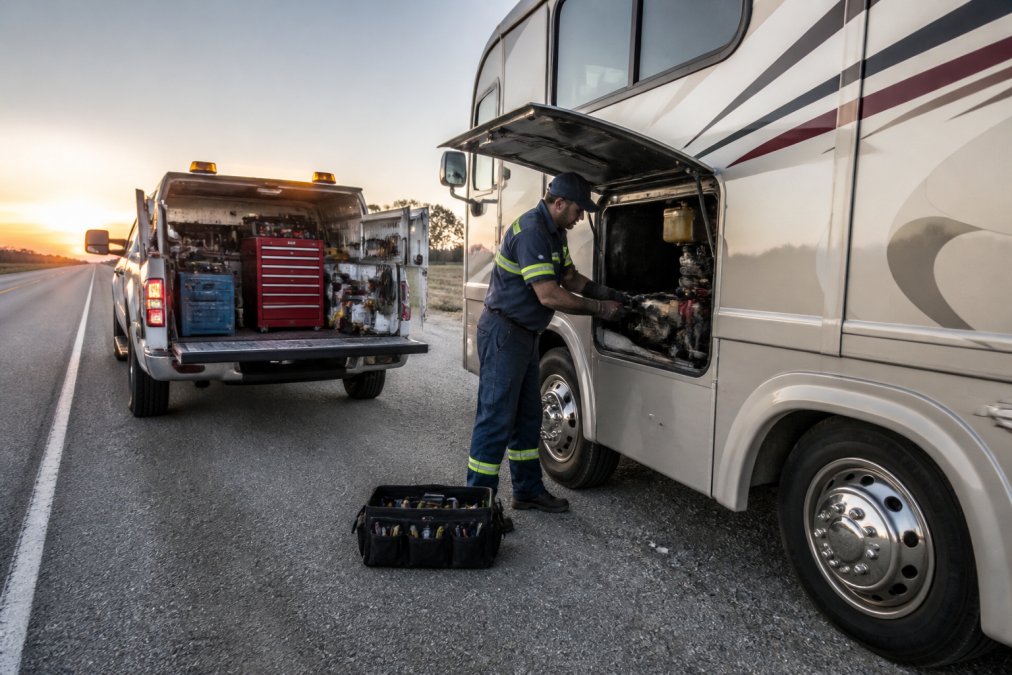
Once cooled, call for mobile diesel repair assistance. A mobile service arrives with full diagnostic capability. Unlike a tow truck that simply hauls you away, a mobile repair service can often diagnose and fix the problem on-site, saving the cost of a long tow and wait time at a distant shop.
Mobile technicians bring computer diagnostics that pinpoint cooling system failures. They can pressure-test the system to find leaks, test the thermostat, check water pump operation, and inspect radiator condition. Most common overheating causes are fixable roadside.
The advantage of mobile service is speed and convenience. You don’t spend hours in a tow truck or wait in a shop waiting room. A mobile service comes to you, diagnoses the issue, and often has you back on the road the same day.
When choosing a mobile diesel repair provider, verify they have the diagnostic equipment to handle complex cooling system failures. Computer diagnostics distinguish between thermostat failures, water pump issues, and electrical problems that a basic roadside mechanic might miss. Mudhollow Diesel Mechanics operates modern service trucks equipped with full diesel diagnostics, allowing accurate diagnosis of what causes RV diesel engine to overheat on the highway.
Response time matters when you’re stranded. A reliable mobile service commits to rapid dispatch and arrival. Mudhollow Diesel Mechanics serves I-80 and I-29 corridors with aggressive response times, minimizing your time on the shoulder.
Conclusion
Your RV diesel engine overheating on the highway is preventable through maintenance and understanding root causes. Low coolant, thermostat failure, radiator obstruction, and water pump degradation account for the vast majority of cases. Regular inspection of coolant levels, hoses, belts, and radiator condition catches problems before they strand you. When overheating does occur, mobile diesel repair service with computer diagnostics resolves most issues quickly and cost-effectively. Mudhollow Diesel Mechanics brings expert cooling system diagnosis and repair directly to your location across western Iowa, eliminating expensive tows and long shop waits. Call or text 712-827-0207 for rapid roadside assistance when you need it most.
Frequently Asked Questions
What are the immediate steps to take if your RV diesel engine overheats on the highway?
Turn off the air conditioning immediately, shift to neutral, and gradually reduce speed to allow the engine to cool. Pull over safely away from traffic. Do not turn off the engine, let it idle for 10-15 minutes to cool naturally. Check the coolant reservoir level only after the engine cools. If the temperature gauge remains in the danger zone or the engine continues to overheat, call for mobile diesel repair assistance rather than risk engine damage by driving further.
Can a faulty thermostat cause intermittent overheating in a diesel pusher?
Yes. A faulty thermostat can stick partially open or closed, causing the engine to run hotter than normal or trigger false high-temperature readings on your dashboard gauge. This is especially problematic on highway drives where sustained engine load and RPM management demand consistent thermal regulation. A stuck-open thermostat reduces cooling system pressure, while a stuck-closed one prevents coolant circulation. Have your thermostat tested during routine diesel engine cooling system maintenance to catch this early.
What causes diesel engine overheating specifically at highway speeds?
Highway driving creates sustained high RPM and engine load, which generates more combustion temperature and heat than city driving. Combined with aerodynamic drag and the heat exchanger working at full capacity, even small cooling system problems become critical at highway speeds. Steep grades and towing capacity demands amplify this further. Faulty fan clutch operation, radiator fins clogged with debris, or low coolant levels that go unnoticed in town quickly cause overheating when sustained highway speeds demand peak cooling performance.
How does mountain driving or steep grades affect diesel RV engine temperatures?
Climbing steep grades forces your diesel engine to work harder, dramatically increasing combustion temperature and engine load. The transmission temperature also rises as the engine struggles to maintain speed. Your cooling system must work at maximum capacity, and any existing weakness, a weak fan clutch, low coolant, or partial radiator blockage, will cause overheating. High altitude also reduces air density, making it harder for the radiator and charge air cooler to shed heat efficiently. Always check your coolant level, hose integrity, and fan shroud condition before mountain driving.
This article was written using GrandRanker