Table of Contents
- Why RV Owners Look Beyond a Single Repair Provider
- Mobile vs. Shop Repair: Cost-Benefit Analysis
- Emergency RV Roadside Assistance Options
- Heavy-Duty Diesel Engine Diagnostics: What to Expect
- Mobile Truck Repair Warranty Coverage Explained
- Turnaround Time: Mobile Service vs. Traditional Shops
- DIY vs. Professional Repair: Where to Draw the Line
- Conclusion
- Frequently Asked Questions
Last Updated: August 23, 2026
Why RV Owners Look Beyond a Single Repair Provider
When you’re stranded on I-80 with a broken water heater or a diesel engine that won’t turn over, you don’t have the luxury of brand loyalty. RV owners and fleet operators increasingly realize that relying on a single repair provider creates risk. A shop might be backed up for weeks. A dealership charges triple what independent mechanics do. A roadside towing service gets you to a facility, but you’re still stuck waiting.
This is why exploring raccoon valley rv alternative for repairs options has become essential. Mobile repair services now compete directly with traditional shops. Emergency roadside assistance networks rival dealership response times. Fleet operators who once accepted two-week repair windows now demand same-day diagnostics.
Mudhollow Diesel Mechanics serves this exact need across western Iowa. Different repair situations call for different approaches. A water system leak might be fixed faster by a mobile technician at your location. A complex electrical problem might require the diagnostic depth of a full shop. Understanding your options separates operators who stay on schedule from those who lose days to poor decisions.
The biggest mistake fleet operators make is treating all repairs the same. Emergency roadside fixes, preventive maintenance, and major diagnostics each have an optimal solution. Knowing which is which cuts your downtime in half.
Mobile vs. Shop Repair: Cost-Benefit Analysis
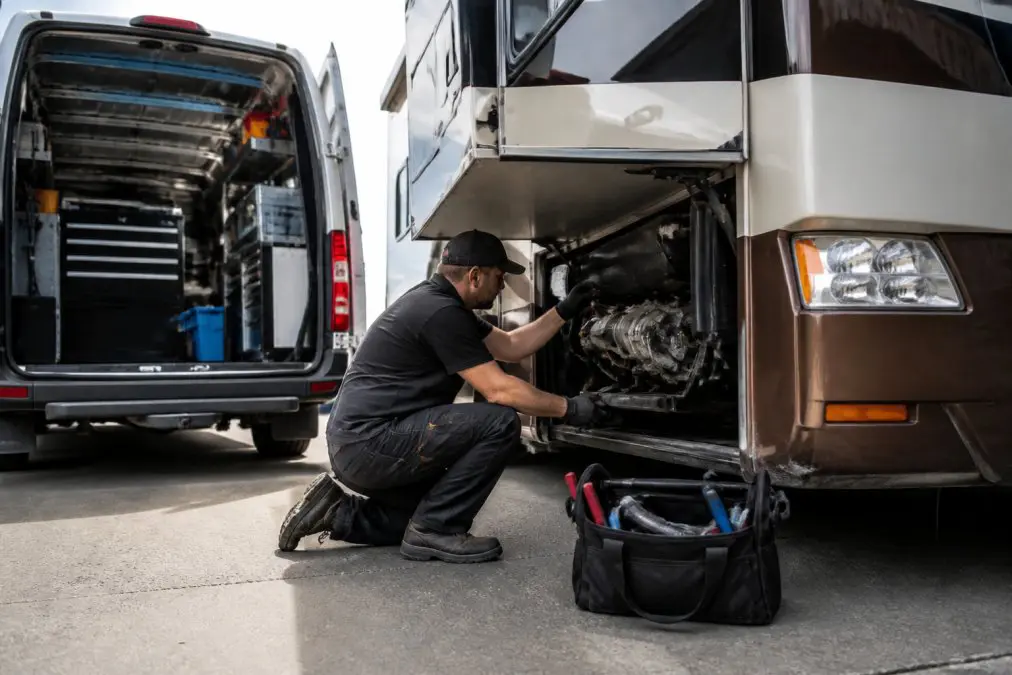
Mobile service eliminates towing costs and reduces travel time, which matters enormously for roadside emergencies. But mobile technicians operate within constraints. They carry limited inventory and can’t perform major overhauls in a parking lot. They handle diagnostics and field repairs better than extensive fabrication work.
Shop-based repair offers depth. A full service center has every tool and part category, and can keep your vehicle through multi-day jobs. The trade-off is cost and time. You’re paying for facility overhead and waiting for appointment slots.
For RV repair alternatives, the math depends on what’s broken. A blown water pump? Mobile wins. A complete electrical system failure requiring rewiring? Shop wins. A fuel injector problem needing computer diagnostics? Mobile handles it faster if the technician has the right scanner.
Mudhollow Diesel Mechanics operates mobile units equipped with modern computer diagnostics, which changes the equation. You get shop-level diagnostic capability at roadside. But if diagnosis reveals you need parts not in stock, you’re still waiting.
The real opportunity is using mobile for emergencies and diagnostics, then moving to shop services for major work once you know what needs doing.
Assuming mobile is always cheaper is a trap. If your repair needs parts ordering and multi-day work, a shop’s flat rate might actually cost less than mobile’s hourly rate plus towing plus shop time. Get the diagnosis mobile, then compare total costs before committing.
Emergency RV Roadside Assistance Options
When your RV fails on the highway at 2 AM, you need response speed above all else. Traditional roadside assistance gets a wrecker to you and hauls you to the nearest facility. This solves immobility but enters the waiting game. The facility might not open until morning. The repair might take days.
Mobile repair services flip this. A fully equipped service truck arrives instead of a tow truck. The technician diagnoses and repairs on-site if possible. Many roadside failures, fuel system issues, electrical problems, water system leaks, appliance malfunctions, resolve in 30 minutes to two hours (rvda.org). You’re back on the road without entering a facility.
Mudhollow Diesel Mechanics operates this model across I-80 and I-29 corridors in western Iowa. An on-site repair taking 90 minutes beats a facility with a three-day backlog.
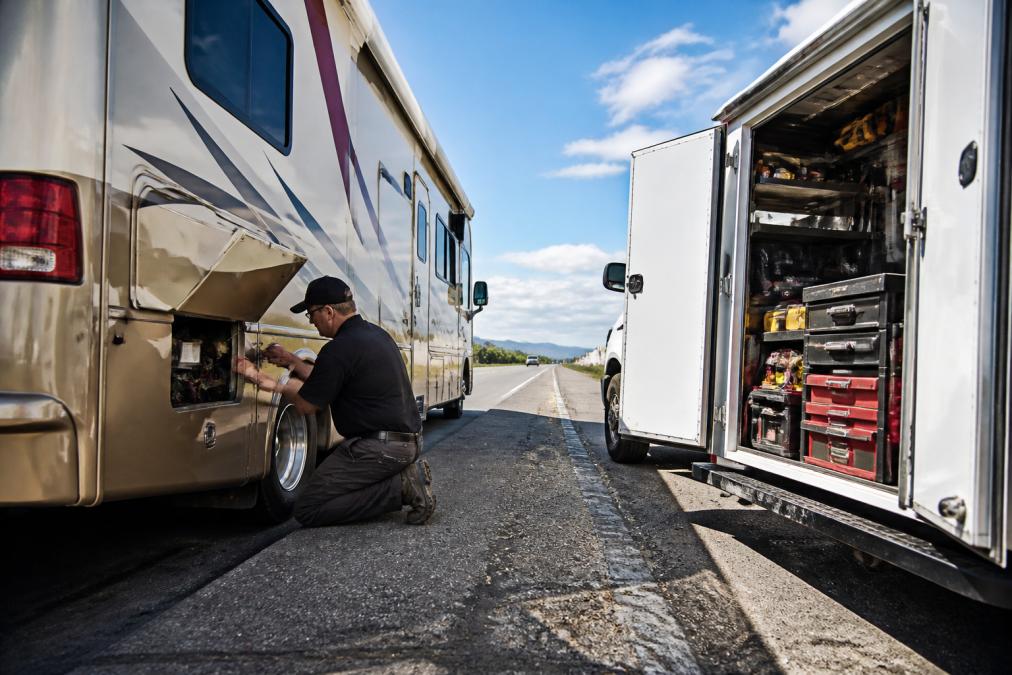
The limitation of mobile assistance is scope. Not every failure can be fixed roadside. Transmission rebuilds, engine replacements, and major structural repairs require shop facilities. But many roadside failures fall into the “diagnostics and field repair” category where mobile excels.
Emergency response memberships typically charge annual fees or per-call rates. Mobile repair services usually charge labor rates plus parts. Mobile typically costs less because you’re not paying towing plus facility markups. Confirm service area and response time commitments before relying on any provider.
Heavy-Duty Diesel Engine Diagnostics: What to Expect
Diesel engines are complex systems. A single symptom, rough idle, loss of power, excessive fuel consumption, can trace to dozens of root causes. Computer diagnostics become essential. Modern diesel engines integrate fuel injection, emissions systems, turbochargers, and transmission controls into networked systems.
Heavy-duty diesel engine diagnostics involves connecting specialized computer equipment to your engine’s control modules. The scanner reads fault codes, live data streams, and system parameters. A technician interprets these readings against their knowledge of diesel engine behavior. Good diagnostics take 45 minutes to two hours (diesel.org).
Mudhollow Diesel Mechanics carries modern service trucks equipped with computer diagnostics capable of reading multiple manufacturer platforms. A technician who can access Cummins, Duramax, and Powerstroke platforms is more useful than one limited to a single manufacturer.
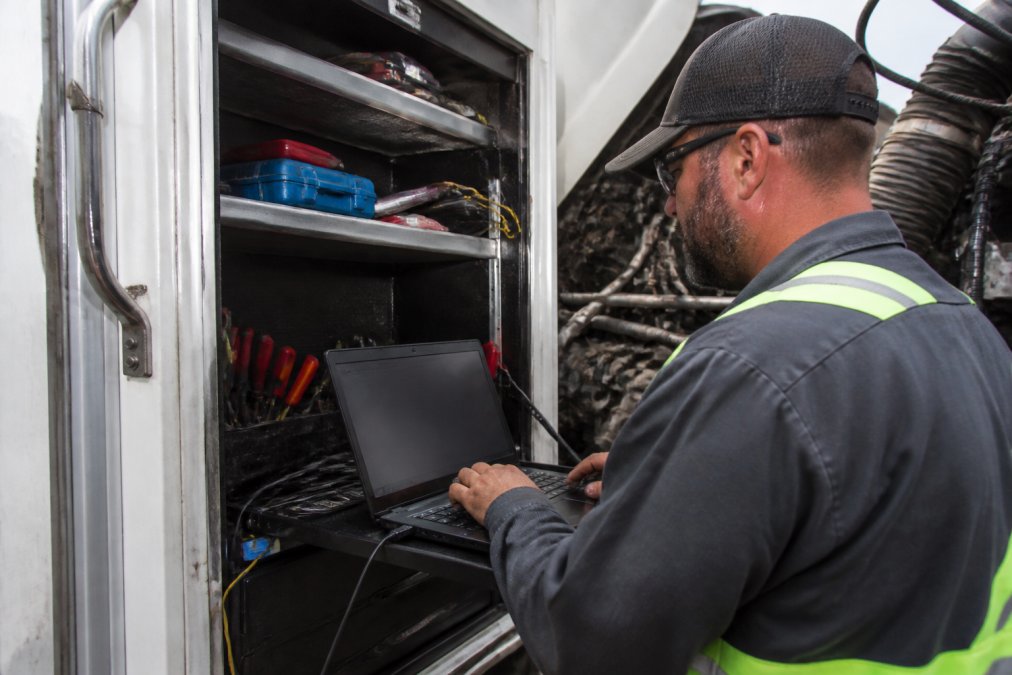
What you should expect: The technician connects the scanner and reads all active and historical fault codes in 10-15 minutes. Then they perform live data capture, monitoring fuel pressure, injection timing, turbo boost, and coolant temperature while the engine runs. This takes another 20-30 minutes. They compare the data against manufacturer specifications. Fuel pressure 50 PSI low means fuel pump failure. Injection timing off by 2 degrees means sensor calibration drift.
The diagnostic fee varies by service complexity. The value of good diagnostics is avoiding misdiagnosis. A shop that replaces a fuel pump without confirming fuel pressure wastes your money. A technician who reads codes and confirms diagnosis before ordering parts saves hundreds.
If diagnostics reveal a part needing ordering, you’re entering a waiting period. Mobile diagnostics accelerate discovery but don’t solve availability.
Mobile Truck Repair Warranty Coverage Explained
When a mobile technician repairs your truck on the shoulder of I-80, what warranty covers that work? Mobile truck repair warranty coverage depends entirely on the service provider’s policy. There’s no industry standard. Some mobile operators offer 30-day warranties on parts and labor. Others offer 12 months. Some offer nothing.
Mudhollow Diesel Mechanics stands behind their work. Their business model depends on reputation across a relatively small service area. A roadside repair that fails creates a repeat service call, which costs them time and resources. This aligns their incentive with yours.
What you should ask any mobile repair provider before they start work:
CALL or TEXT NOW:712-827-0207 →
- What warranty applies to parts they install?
- What warranty applies to their labor?
- If the repair fails, do they return at no charge to fix it?
- Are there conditions that void the warranty?
- How long does the warranty last?
Traditional shops typically offer 12-month warranties on parts and labor (nada.org). Mobile services vary more widely. A reputable mobile operator should offer at least 30 days on parts and labor, with the understanding that major failures within that window get addressed at no charge.
A mobile repair without warranty is a gamble. If the provider won’t stand behind their work with at least a 30-day warranty, find another provider. Reputable operators offer warranties because they’re confident in their diagnostics and execution.
Turnaround Time: Mobile Service vs. Traditional Shops
Time is money in the trucking and RV business. Every hour your vehicle is out of service costs you revenue.
Mobile service typically resolves roadside issues in 1-3 hours. The technician arrives, diagnoses, and repairs on-site. You’re mobile again. This is genuinely faster than towing to a facility, waiting for the shop to open, and waiting for work to complete. For emergency breakdowns, mobile turnaround is often faster than traditional shop turnaround.
Traditional shops operate on appointment schedules. You might wait 2-7 days for an opening. Once work starts, it depends on complexity. A simple repair takes a few hours. Major work might take 3-5 days. Shops also experience parts delays.
The tradeoff is that shops handle complexity better. A repair requiring specialized equipment or multiple systems integration happens faster in a shop than roadside. A technician can’t rebuild a transmission in a parking lot. A shop can have you done in 1-2 days.
For RV repair alternatives, turnaround time depends on repair type. Water system work, appliance diagnostics, and electrical troubleshooting, mobile handles these in 2-4 hours. Structural repairs, major plumbing overhauls, and full electrical system rewiring, shops handle these in 1-3 days.
Mudhollow’s advantage is rapid response combined with on-site capability. A 45-minute response window plus 90-minute repair window means you’re mobile in under two hours from the moment you call.
DIY vs. Professional Repair: Where to Draw the Line
DIY repairs make sense for routine maintenance and simple diagnostics. Changing oil, replacing air filters, inspecting hoses, and topping off coolant are low-risk tasks. You save labor costs.
DIY repairs become risky once systems interact or require specialized knowledge. Water system repairs are deceptively complex. A leak might be a simple fitting tightening or a hidden crack. Electrical repairs are even riskier. An incorrectly grounded wire creates fire hazard. An incorrectly connected component can damage the entire electrical system.
Engine diagnostics are firmly in the professional category. You need specialized equipment to read fault codes and knowledge of how different engine systems interact. A technician with proper tools diagnoses in two hours. A DIY attempt takes days and often leads to misdiagnosis.
The rule: if the repair requires specialized diagnostic equipment or involves safety-critical systems, hire a professional. If the repair involves water systems, electrical systems, or engine components, hire a professional. Mudhollow Diesel Mechanics handles the complex diagnostics and repairs that DIY attempts often botch.
Conclusion
RV owners and fleet operators no longer face a binary choice between dealership service and hoping for the best. Raccoon valley rv alternative for repairs options now include mobile diagnostics, emergency roadside assistance, traditional shops, and preventive maintenance networks. The optimal strategy uses each appropriately.
For roadside emergencies, mobile repair services eliminate towing delays. For complex diagnostics, computer-equipped mobile units provide depth. For major work, traditional shops remain superior. For preventive maintenance, scheduled service keeps vehicles operational without disrupting revenue.
Mudhollow Diesel Mechanics addresses the emergency and diagnostic side of this equation. When you’re broken down on I-80 or need rapid on-site diagnostics, they bring modern equipment and experienced technicians directly to you. They eliminate expensive tows and long shop waits.
Get started with Mudhollow Diesel Mechanics and eliminate roadside downtime. Call or text 712-827-0207 to discuss your service needs, response time requirements, and coverage area.
Call or TEXT NOW: 712-827-0207
Mudhollow Diesel Mechanics provides expert, fully equipped mobile diesel repair services directly to your location. Whether you’re on the shoulder of the highway, at a rest stop, or at a loading dock, we bring advanced diagnostics and heavy-duty tools to you. Rapid roadside repairs, modern computer diagnostics, and scheduled preventive maintenance keep your semi-trucks, commercial fleets, and RVs operational across western Iowa. Avoid high dealership prices and long wait times. Get back on the road quickly and efficiently with Mudhollow Diesel Mechanics.
Frequently Asked Questions
Q: What makes mobile RV repair alternatives better than towing to a shop?
A: Mobile repair services eliminate expensive towing costs and reduce downtime by bringing diagnostics and heavy-duty tools directly to your RV’s location, whether on I-80, a rest stop, or your yard. Most mobile repairs complete in hours rather than days, avoiding the shop wait times that plague traditional dealership service. You stay with your vehicle and avoid the risk of additional damage during transport.
Q: Do mobile mechanics offer warranty coverage for RV repairs?
A: Warranty coverage varies by provider. Mudhollow Diesel Mechanics stands behind their work. Before selecting a mobile service, ask directly about their warranty policy, coverage duration, and what happens if an issue reoccurs after repair. Written warranty terms protect you and ensure accountability for roadside work quality.
Q: How quickly can emergency RV roadside assistance reach me on I-80?
A: Response time depends on your location and the service provider’s coverage area. Mudhollow Diesel Mechanics aims to get you back on the road in under an hour. Ask about their typical response time, after-hours availability, and whether they cover your specific route before breakdown occurs. Having this information beforehand prevents panic during an actual emergency.
Q: What systems can heavy-duty diesel engine diagnostics identify that basic roadside checks cannot?
A: Modern computer diagnostics detect electrical gremlins, fuel injection timing issues, transmission problems, and emissions system faults that visual inspection alone misses. Mobile service trucks equipped with advanced diagnostic tools can pull fault codes, run load tests, and identify intermittent issues that even dealership shops sometimes overlook. This capability matters when you’ve had repeated problems that previous shops couldn’t solve.
Q: Should I attempt DIY repairs on my RV, or always call a professional?
A: Simple tasks like replacing filters, checking tire pressure, or topping off fluids are safe DIY jobs. Complex work involving plumbing, electrical systems, propane lines, or engine components requires professional expertise. If a repair requires diagnostic equipment, specialized tools, or involves safety systems, call a professional. The cost of fixing a DIY mistake typically exceeds the original service charge.
This article was written using GrandRanker