

Table of Contents
- Is On-Site RV Furnace Repair Safe During Winter?
- RV Furnace Troubleshooting: Common Winter Heating Problems
- RV Furnace Carbon Monoxide Safety During Repair
- Mobile RV Furnace Repair: When On-Site Service Works
- Safe Work Setup in Snow, Wind, and Subfreezing Temperatures
- What to Do If Your Furnace Cannot Be Repaired Immediately
- Protecting Tanks, Pipes, and Pumps While You Wait
- Conclusion: Safe Winter RV Furnace Repair Starts With the Right Call
- Frequently Asked Questions
Last Updated: October 6, 2026
Is On-Site RV Furnace Repair Safe During Winter?
On-site RV furnace repair can be safe during winter, but only when the technician controls three things: propane leaks, carbon monoxide, and the work conditions themselves.
Here is the short answer. A furnace that will not ignite, blows cold air, or short-cycles is usually fixable on site.
Our technicians have worked on diesel rigs and RVs for more than 15 years.
Below, we break down the common winter failures, the carbon monoxide rules that govern any repair, and a clear guide for deciding whether to call a certified technician or open the panel yourself.
RV Furnace Troubleshooting: Common Winter Heating Problems
Most winter furnace failures trace back to one of four causes: no ignition, blocked airflow, a dirty burner, or a propane supply problem. Cold weather makes each one worse.
Start with the thermostat and the propane valve. A surprising number of “dead furnace” calls end with a tank that ran dry or a valve that was never reopened after a refill.
If propane is flowing and the thermostat is calling for heat, the problem is inside the unit. That is where RV furnace troubleshooting gets more serious.
Ignition and Pilot Light Failures in Cold Weather
Ignition failures are the most common winter complaint we see. The furnace clicks, the blower runs, and no heat comes out.
Three things cause this in cold weather:
- A weak or dead house battery, since the igniter needs steady voltage
- Moisture or corrosion on the igniter or flame sensor
- A propane regulator that cannot hold pressure in freezing temperatures
Check the battery first. A furnace that clicks but never lights is often just starved of voltage. Charge or replace the battery, then try again.
If the battery is fine and the unit still will not light, stop. Repeated ignition attempts push unburned propane into the combustion chamber. That is how you get a flash or a small explosion. Call a certified technician instead of trying again.
Airflow, Heat Distribution, and Burner Issues
Airflow problems show up as weak heat, noisy operation, or hot spots near the vents. The furnace runs, but the coach never gets warm.
Common causes include:
- Clogged return air filters or blocked return vents
- Obstructed floor registers covered by rugs or gear
- A dirty burner that burns unevenly
- Ductwork that has come loose or crushed
Clean or replace the filter first. It is the cheapest fix and the most overlooked. Then walk the coach and confirm every register is open and clear.
A dirty burner needs professional cleaning. Do not pull the burner assembly apart on the shoulder of a highway in the dark.
Never run a furnace with the burner compartment cover removed to “see if it works.” That cover is part of the combustion seal. Running the unit open lets exhaust into the coach, and carbon monoxide builds fast in a closed RV.
RV Furnace Carbon Monoxide Safety During Repair
Carbon monoxide is the single biggest reason furnace repair is dangerous when done wrong. The furnace burns propane and vents exhaust outside the coach. Any break in that path sends odorless gas into the space where you sleep.
Before any repair, confirm three things:
- The exhaust vent is clear of snow, ice, and debris
- The combustion chamber and heat exchanger show no cracks
- A working carbon monoxide alarm is inside the coach
A cracked heat exchanger is a stop-work condition. It cannot be repaired on site. The unit must be replaced, and until then, the furnace stays off.
Propane Leaks, Ventilation, and Exhaust Checks
A propane leak turns a repair call into an evacuation. Propane is heavier than air, so it pools low in the coach and finds any ignition source.
We check for leaks with a soap solution at every fitting we touch, and we confirm the exhaust path is clear before we start the unit. If you smell gas at any point, do this:
- Shut off the propane at the tank
- Open windows and the door
- Leave the coach
- Do not flip any switches on your way out
Ventilation matters during the repair itself. Even a small amount of exhaust while the cover is off needs cross-flow air. We work with the door open and the furnace off until the combustion side is sealed and verified.
According to the U.S. Consumer Product Safety Commission guidance on carbon monoxide, carbon monoxide kills hundreds of people each year and sickens thousands more, and generators and fuel-burning appliances in enclosed spaces are a leading cause. An RV furnace is a fuel-burning appliance.
Mobile RV Furnace Repair: When On-Site Service Works
Mobile RV furnace repair works well for most winter breakdowns, because the fault is usually in the ignition, airflow, or control side rather than the sealed combustion chamber.
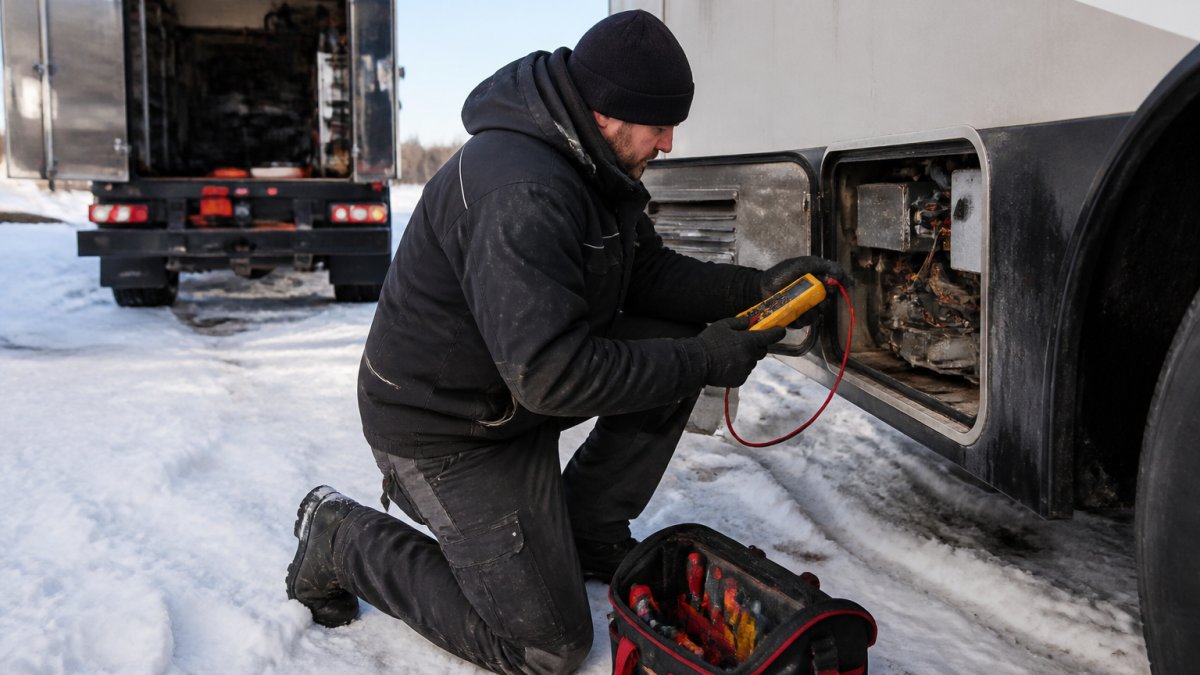
What we can fix on site:
- Ignition and flame sensor faults
- Blower and airflow problems
- Thermostat and control board failures
- Propane pressure and regulator issues
- Dirty burners and blocked vents
What we cannot fix on site: a cracked heat exchanger or a failed combustion chamber. Those need a replacement unit, and that means a shop or a parts order.
CALL or TEXT NOW:712-827-0207 →
The advantage of on-site work is simple. You skip the tow, and you skip the wait for a shop bay. Most roadside fixes are done faster than an in-shop repair because there is no queue.
DIY vs. Certified Technician: A Decision Guide
Use this guide to decide who should do the work. If you land in the “call” column on any line, stop and make the call.
| Situation | DIY | Call a certified technician |
|---|---|---|
| Thermostat or battery issue | Yes | No |
| Clogged filter or blocked register | Yes | No |
| Propane smell anywhere in the coach | No | Yes, immediately |
| Repeated ignition clicks with no light | No | Yes |
| Burner or heat exchanger access needed | No | Yes |
| Carbon monoxide alarm has sounded | No | Yes, and evacuate first |
The rule we give customers: you can clean, inspect, and reset. You should not open the combustion side. Anything past the access panel belongs to a certified technician with a manometer and a combustion analyzer.
Photograph the model and serial plate on your furnace before you call. That one photo lets the technician check parts availability before they roll, which saves a second trip if a part needs ordering.
Safe Work Setup in Snow, Wind, and Subfreezing Temperatures
Safe work setup in winter comes down to four things: visibility, stability, warmth for the technician, and a clear escape path.
We set up this way on every winter call:
- Park the service truck upwind and behind the RV to block wind and traffic
- Use wheel chocks and a stable mat, since snow hides ice and soft ground
- Light the work area with truck-mounted LEDs, because a headlamp is not enough
- Keep the coach door clear so the occupant can exit fast
- Cycle the technician inside the cab to warm hands, since cold hands drop tools and make mistakes
Wind is the factor most people underestimate. It blows exhaust back toward the coach and it makes an open flame test unreliable. On a windy day, we test propane pressure with a gauge, not a flame.
Darkness is the other one. A repair done by phone light on a highway shoulder is not a repair, it is a gamble.
What to Do If Your Furnace Cannot Be Repaired Immediately
If the furnace cannot be repaired right away, your goal shifts from comfort to survival and safety.
First, do not improvise with a propane heater or a generator inside the coach. Both produce carbon monoxide.
Second, use safe supplemental heat. An electric heater rated for indoor use is fine when you have hookups. Check the cord and the outlet, and keep the heater clear of bedding and curtains.
Third, protect the water system. A hard freeze can crack tanks, lines, and the water pump, and that repair costs far more than the furnace fix.
A furnace that cannot be fixed today is a safety problem, not just a comfort problem. Heat the coach safely, protect the plumbing, and lock in a parts plan before the next cold night.
Protecting Tanks, Pipes, and Pumps While You Wait
Protecting the water system is the second job once the heat is out.
Do this while you wait for the furnace repair:
- Drain the fresh water tank and the water heater if you are not using them
- Blow out the lines with compressed air, or run RV antifreeze through them
- Open cabinet doors under sinks so warm air reaches the pipes
- Keep a small electric heater near the wet bay if you have power
- Run the water pump briefly each day to keep it from seizing
If you are staying in the coach and need water, keep the interior above freezing with supplemental heat and leave cabinet doors open.
Tank heaters help, but they draw power. Watch your battery voltage. A dead battery turns a furnace repair into a no-heat, no-water, no-power situation.
For guidance on freeze protection and winterizing, the RV Industry Association resources for owners publishes checklists that cover tanks, lines, and pumps.
Conclusion: Safe Winter RV Furnace Repair Starts With the Right Call
The hardest part of a winter furnace failure is deciding what is safe to touch and what is not. Ignition, airflow, and thermostat faults are fair game for a careful owner.
That is the line we hold on every call.
If your furnace is dead and the temperature is dropping, do not wait for it to get worse. Call or text us at 712-827-0207 and get a real diagnosis before the next cold night.
Frequently Asked Questions
Can an RV furnace be repaired outside in freezing weather?
Yes, with the right setup. Most furnace components, including the burner, ignitor, and control board, can be accessed from inside the RV or through an exterior panel. A mobile technician works efficiently in subfreezing conditions by keeping the work area sheltered, using diagnostic tools that tolerate cold, and limiting how long the furnace is exposed. The bigger safety concern is ventilation: propane appliances need proper airflow to prevent carbon monoxide buildup, so repairs should never block exhaust or intake ports, even temporarily.
What are the most common winter RV heating problems?
The most frequent issues include ignition failures, clogged burner orifices, weak airflow from dirty filters or blocked vents, and thermostat malfunctions. Cold weather makes propane less volatile, which can cause pilot light or ignition problems. A furnace inspection often reveals dust, insect nests, or spider webs in the burner tube. Regular cleaning and service before temperatures drop prevents most of these failures, but when they happen on the road, RV furnace troubleshooting starts with checking propane supply, thermostat settings, and airflow before assuming a major part failed.
Is it safe to leave an RV furnace on overnight in winter?
A properly maintained furnace with a working carbon monoxide detector is designed for overnight use. The danger comes from neglected units: cracked heat exchangers, blocked exhaust, or propane leaks can let carbon monoxide into the cabin. Before relying on your furnace for overnight heat, have it inspected by a certified technician. Keep vents and exhaust ports clear of snow, test your CO detector monthly, and never run a furnace you suspect is damaged. RV furnace carbon monoxide safety depends on both the equipment and the person maintaining it.
How do I prepare my RV for an on-site furnace repair?
Clear snow and ice from around the furnace access panel and exhaust vent so the technician can work safely. Turn off the propane supply at the tank before the technician arrives. Make sure the interior is accessible and pets are secured. If you have the furnace manual or model number, have it ready. For mobile RV furnace repair in winter, also confirm your location is safe for a service truck to park, such as a rest stop, campground, or wide shoulder. Good preparation shortens the repair and reduces time spent in the cold.
What should I do if my RV furnace stops working in winter?
First, check the basics: propane level, thermostat settings, and whether the furnace breaker or fuse has tripped. If those are fine, switch to supplemental heat like a safe electric heater to keep pipes from freezing while you arrange service. Do not keep resetting a furnace that repeatedly fails, since that can indicate a gas leak or failed ignitor. Call a mobile technician who can diagnose the issue on-site. If the furnace cannot be repaired immediately, drain water lines or run tank heaters and keep cabinet doors open to protect plumbing.