Table of Contents
- Why Heavy Duty Towing Bills Climb So Fast
- Common Roadside Semi Truck Failures You Can Fix On Site
- Mobile Diesel Repair vs Towing: Which One Actually Saves Money
- Emergency Roadside Diesel Diagnostics: The Tool That Prevents the Hook
- Step-by-Step: What to Do in the First 30 Minutes of a Breakdown
- How to Dispute an Unfair Heavy Duty Towing Charge
- Preventive Maintenance That Keeps You Off the Hook
- Frequently Asked Questions
Last Updated: September 13, 2026
Why Heavy Duty Towing Bills Climb So Fast
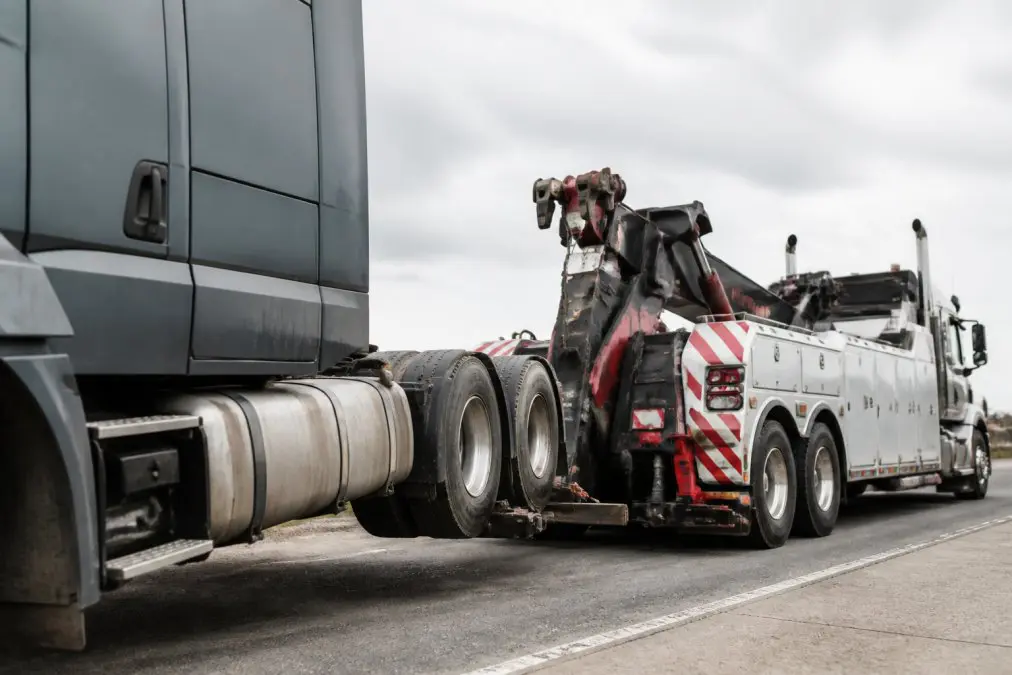
Learning how to avoid heavy duty towing costs starts with understanding that a tow bill is not one charge. It is a stack of charges, and every layer gets added before you ever see the truck move. Mudhollow Diesel Mechanics works these corridors daily, and the pattern is always the same: the hookup fee opens the meter, mileage runs it, and storage keeps it running after you have already left the scene.
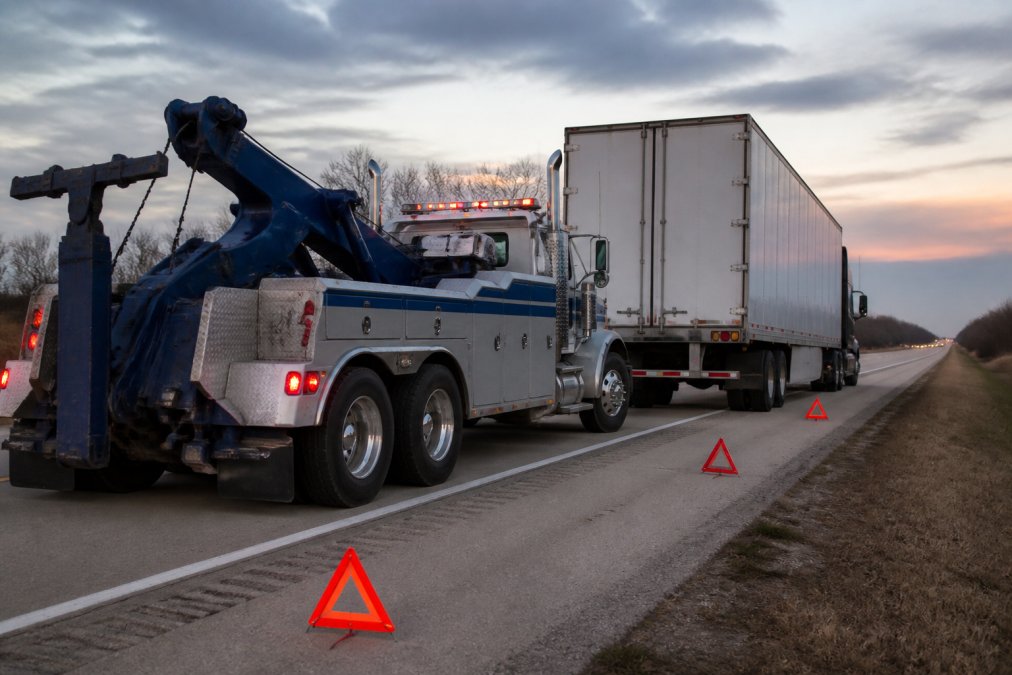
The Fee Stack: Hookup, Mileage, and Storage
The hookup fee is the flat charge for attaching your vehicle to the tow rig. It applies whether you are one mile from the yard or fifty.
Mileage is billed per mile from the hookup point to the destination. Storage is the quiet killer: a daily storage rate accrues at the impound lot for every day your unit sits waiting on payment, parts, or paperwork. Administrative fees and an impound release charge often appear on the same invoice.
Ask for an itemized receipt before you pay anything. If the operator cannot produce one, that is your first signal something is padded.
Weight Classes and Why They Change the Rate
Heavy-duty towing is priced by gross vehicle weight, not by how far you are going. A loaded tractor-trailer needs a winch service and often a second truck, and that equipment carries a towing capacity rating that dictates what can legally lift you. The heavier the class, the fewer rigs in the region can respond, and scarcity sets the rate.
Signing a blank authorization form at the scene is the single most common mistake. Once you sign, you have agreed to whatever the operator writes in later. Read every line, or write “signed under protest” next to your signature.
Common Roadside Semi Truck Failures You Can Fix On Site
Most breakdowns that trigger a tow are repairable where the truck sits. Common roadside semi truck failures cluster into a short list: coolant loss from a failed hose or radiator, turbocharger failure, sensor and wiring faults, air system leaks, and battery or alternator problems. None of these require a flatbed by default.
The distinction matters because a flatbed tow to a dealership means your unit sits in a queue. A mobile technician with the right parts and computer diagnostics can often finish the job on the shoulder.
- Coolant and radiator leaks: pressure-test and repair on site
- Turbocharger failure: diagnose boost loss before condemning the unit
- Electrical gremlins: scan for fault codes the dealer may have cleared
- Air brake leaks: locate and reseal at the fitting
Mobile Diesel Repair vs Towing: Which One Actually Saves Money
Mobile diesel repair vs towing is not a close comparison once you count the full bill. Towing charges you for the hookup, the mileage, and the storage, then hands you a shop invoice on top. Mobile repair charges you once, at your location.
Here is how the two paths stack up:
| Cost Factor | Towing to a Shop | Mobile On-Site Repair |
|---|---|---|
| Hookup and service call | Charged | Not applicable |
| Mileage rate | Charged per mile | None |
| Daily storage rate | Accrues until release | None |
| Shop queue wait | Hours to days | Work starts on arrival |
| Downtime | Extended | Minimized |
The math favors mobile repair whenever the fault is mechanical and reachable. Towing wins only when the unit genuinely cannot be made safe to move, such as structural damage or a seized drivetrain.
Ask the dispatcher one question before you agree to anything: “Can a mobile tech diagnose this at my location?” If the answer is a flat no without any follow-up questions about the failure, you are talking to a tow broker, not a repair service.
Emergency Roadside Diesel Diagnostics: The Tool That Prevents the Hook
Emergency roadside diesel diagnostics is the step that decides whether you get a repair or a tow. A technician connects a laptop to the ECM, pulls active and stored fault codes, and reads live data while the engine cranks. That data tells you whether the problem is a sensor, a fuel delivery issue, or something internal.
This is where experience separates a real diagnosis from a guess. Mudhollow Diesel Mechanics has experienced technicians who understand how to interpret live data, which is crucial for diagnosing complex faults.
A proper diagnostic session answers three questions fast: what failed, can it be fixed here, and what happens if you drive it. Without those answers, you are guessing, and guessing on the shoulder of I-80 at 2 AM usually ends with a hook.
Step-by-Step: What to Do in the First 30 Minutes of a Breakdown
What you do in the first half hour determines your final bill. For a commercial unit, the stakes are higher than a passenger car: the tow operator is looking at a heavier rig, a longer recovery, and a bigger invoice, and every minute you spend without documentation is a minute the meter runs unsupervised.
Move through these steps in order.
CALL or TEXT NOW:712-827-0207 →
- Get the unit and yourself out of live traffic lanes. Set triangles at the distances your state’s commercial vehicle rules require (fmcsa.dot.gov). Safety first, always.
- Note your exact location. Mile marker, direction of travel, nearest exit, and the name of the jurisdiction you are standing in. That last detail matters because towing rules are set locally, and the county line can change which fee schedule applies.
- Photograph everything before anyone touches the unit. Dash warnings, the failed component, the scene from multiple angles, the trailer seal if you are loaded, and any paperwork offered. Timestamped photos are the backbone of any later dispute.
- Call a mobile diesel repair service before you call a tow. Ask what they can diagnose on site. A technician who can read fault codes and live data at your location may resolve the fault without a hook ever being involved.
- If a tow is truly required, request the rate sheet in writing before authorizing anything. Ask specifically for the hookup charge, the per-mile rate, the daily storage rate, and any after-hours or heavy-duty surcharge. Get it in a text or email if the operator will not hand you paper.
- Document the operator. Name, company, truck number, plate, and arrival time. If a second truck is called in for a heavy recovery, log that one too, tandem-truck recoveries are where padded invoices hide.
- Do not sign a blank form. Ever. If you must sign, write “signed under protest” next to your signature and photograph the form before you hand it back.
Expected result: you either get a repair scheduled at your location, or you get a tow with a written, itemized price you agreed to in advance, and a documentation file that makes any later dispute a paperwork exercise instead of a he-said-she-said argument.
For a loaded tractor-trailer, add one more step: note the cargo, the seal number, and whether the trailer is being separated from the tractor. Cargo handling and trailer storage are separate line items on heavy-duty invoices, and they are the easiest charges to inflate when nobody wrote them down at the scene.
How to Dispute an Unfair Heavy Duty Towing Charge
You can dispute a non-consensual tow or an inflated bill, and the process is more straightforward than most operators want you to believe. The key distinction is consent: if you called the tow yourself, you agreed to a service and the dispute is a billing matter. If the tow happened without your authorization, a private-property tow, a police-ordered removal, or a recovery you never signed for, you are dealing with a non-consensual tow, and a different set of rules and remedies applies.
Start by requesting two documents in writing: the itemized invoice and the towing ordinance that governs the jurisdiction where the tow occurred. Local rules and towing regulations often cap fees, require posted rate sheets, and set limits on storage charges. Predatory towing operations rely on you not knowing those caps exist. Check your consumer protection rights at the state and local level, and ask specifically which agency licenses the operator, in many states that is the state transportation department, not the police.
Then build your file:
- Itemized receipt showing every charge, including after-hours and heavy-duty surcharges
- Photos of the scene, the vehicle’s condition, and any posted signage at the tow origin
- Names, company, truck number, and plate of everyone involved
- The signed authorization, if any, and a photo of it before you signed
- A written timeline of events with times for arrival, hookup, and departure
- The rate sheet or posted fee schedule you were shown, or a note that none was provided
With that file, you have three escalation paths. First, a credit card chargeback if you paid by card, most card networks treat an undocumented or unauthorized charge as a strong dispute. Second, a complaint with the state attorney general’s consumer protection division, which is the agency most likely to act on a pattern of predatory billing. Third, for a non-consensual tow, a complaint with the local licensing authority that issued the operator’s permit.
For towing-specific rules and fee caps, check the Federal Trade Commission consumer guidance and your state’s transportation authority. If the tow crossed state lines or involved interstate commerce, the Federal Motor Carrier Safety Administration publishes the commercial rules that apply to the carrier, and a carrier with an active DOT number has a compliance record you can look up.
Documentation beats argument every time. An operator who knows you have photos, names, a written timeline, and the name of the licensing agency is far more likely to correct an inflated bill than one facing a verbal complaint. The dispute is won on paper, not on the shoulder.
Preventive Maintenance That Keeps You Off the Hook
The cheapest tow is the one you never needed. Scheduled dry-land servicing at your yard or terminal catches the failures that strand trucks: worn hoses, failing turbo seals, weak batteries, and sensor faults that have not yet thrown a code.
For fleets, this is a scheduling problem, not a repair problem. A mobile service that comes to your yard on a set rotation keeps units in service instead of in a shop queue. Mudhollow Diesel Mechanics runs those scheduled visits across I-80 and I-29, mile markers 1 through 100, so a truck never has to leave the yard to get ahead of a failure.
What most guides miss is that preventive work on a diesel is not about parts replacement. It is about reading the data before the fault code appears. A technician who tracks coolant temperature trends and boost pressure over time will catch a failing turbo weeks before it strands you.
A breakdown on the shoulder is expensive enough without adding a tow bill and a week of storage on top. Mudhollow Diesel Mechanics brings fully equipped mobile service, computer diagnostics, and 15+ years of diesel experience directly to your location, so most roadside fixes are resolved on site and 99% of customers avoid a tow entirely. Whether you are an owner-operator stranded near a mile marker or a fleet manager who needs scheduled dry-land servicing, the team can reach you. Call or text 712-827-0207 and get your unit moving again.
Frequently Asked Questions
Why is heavy duty towing so expensive?
Heavy duty towing costs more because the equipment is built for weight. A Class 8 tractor and loaded trailer can exceed 80,000 pounds gross vehicle weight, so operators need a rotator or heavy wrecker, not a standard flatbed. Add hookup fees, a per-mile mileage rate, winch service, and daily storage fees at the impound lot, and a single tow can run into four figures before any repair begins. Mobile repair avoids most of that stack.
Can mobile diesel repair prevent the need for a tow?
Many breakdowns that look like tow calls are actually repair calls. Cooling system failures, turbocharger issues, fuel delivery problems, and sensor faults can often be diagnosed and repaired on the shoulder with the right tools and parts. A mobile diesel repair unit with computer diagnostics can confirm the fault on site, and when the fix is within reach, you skip the hookup fee, the mileage rate, and the storage clock entirely.
What are the most common roadside semi truck failures that don’t require a tow?
Common roadside semi truck failures that rarely need a tow include coolant leaks and radiator failures, turbocharger boost loss, clogged fuel filters, faulty sensors, air brake component issues, and electrical gremlins that trip a derate. These are diagnostic problems, not recovery problems. A mobile technician with a laptop and the right parts can often clear the fault and get you rolling without ever calling a wrecker.
How do I dispute an unfair heavy duty towing charge?
Ask for an itemized receipt the moment you pay, then photograph it along with any signage at the impound lot. Compare the charges against your state’s towing regulations and any local fee caps. Send a written dispute letter to the towing company citing the specific line items you contest, and keep a copy. If they refuse, you can file a complaint with your state’s consumer protection office or dispute the charge with your credit card issuer.