

Table of Contents
- Why Choosing the Right Coolant Matters for Your Diesel RV
- Understanding Diesel Engine Coolant Types
- Diesel Coolant Compatibility: What You Need to Know
- Top Coolant Options for Diesel RVs
- Diesel Coolant Testing and Maintenance Procedures
- Diesel Coolant Change Interval and Service Schedule
- Common Mistakes RV Owners Make with Diesel Coolant
- Frequently Asked Questions
Last Updated: October 10, 2026
Why Choosing the Right Coolant Matters for Your Diesel RV
Selecting the best coolant for diesel RV engines isn’t just about topping off your reservoir.
Your diesel RV’s cooling system operates under extreme stress, sustained high temperatures on highway miles and thermal cycling during idle periods degrade inferior coolant chemistry quickly.
The wrong coolant causes engine block cracks from cavitation damage or premature water pump failure. This guide covers coolant types, how to match your engine’s requirements, and maintenance procedures that keep your cooling system reliable.
Understanding Diesel Engine Coolant Types
Diesel engines demand different cooling chemistry than gasoline engines. Heavy-duty diesel coolant formulations include supplemental coolant additives that gasoline coolants lack, protecting against liner cavitation, where tiny bubbles implode against cylinder walls and gradually erode the metal.
Conventional Coolant vs. Extended-Life Coolant
Conventional diesel coolant uses silicate technology and requires replacement every 2-3 years or 100,000 miles.
Extended-life coolants use organic acid technology and last 6+ years or 300,000+ miles. For RVs covering long distances annually, the longer service interval justifies the higher upfront cost.
Organic Acid Technology and Supplemental Coolant Additives
Organic acid technology (OAT) coolants use organic compounds to inhibit corrosion and deliver superior cavitation protection with longer pH stability than conventional coolants.
Supplemental coolant additives (SCA) provide critical protection against cavitation, corrosion, and scale buildup. Some engines require periodic SCA additions even with extended-life coolant. Always verify your engine manufacturer’s requirements.
| Coolant Type | Service Interval | Best For | Key Advantage |
|---|---|---|---|
| Conventional | 2-3 years | Budget-conscious owners | Lower initial cost |
| Extended-Life OAT | 6+ years | Long-haul RV travel | Fewer maintenance stops |
| Heavy-Duty SCA | Varies | Extreme conditions | Superior cavitation protection |
Diesel Coolant Compatibility: What You Need to Know
Mixing incompatible coolants forms sludge that clogs passages and reduces cooling efficiency, especially risky when traveling and needing to top off far from home.
Matching Your RV Engine Manufacturer Specification
Your engine manufacturer specifies the exact coolant chemistry required. Cummins, Ford, Chrysler, and Mercedes diesel engines each have different requirements, some call for low-silicate formulations, others for OAT-only coolants.
Consult your engine’s owner manual or contact the manufacturer directly. The specification matters more than brand reputation, a premium coolant that doesn’t match your engine’s requirements can cause damage.
For older diesel engines, identify a compatible modern equivalent that meets the same specification. Never assume a generic “diesel coolant” will work.
Mixing Coolants: When It Works and When It Doesn’t
Topping off with the same coolant type is always safe. If you need to top off and don’t have the exact coolant, use distilled water as a temporary measure until you can perform a full system flush and refill with the correct coolant.
When traveling, carry a spare gallon of your engine’s specified coolant to prevent roadside decisions that compromise your cooling system.
Top Coolant Options for Diesel RVs
Matching Coolant to Your Engine and RV Use
Diesel RVs span a wide range of engine platforms, each with distinct coolant requirements. Cummins, Ford PowerStroke, Duramax, and Mercedes diesel engines each carry unique chemistry demands.
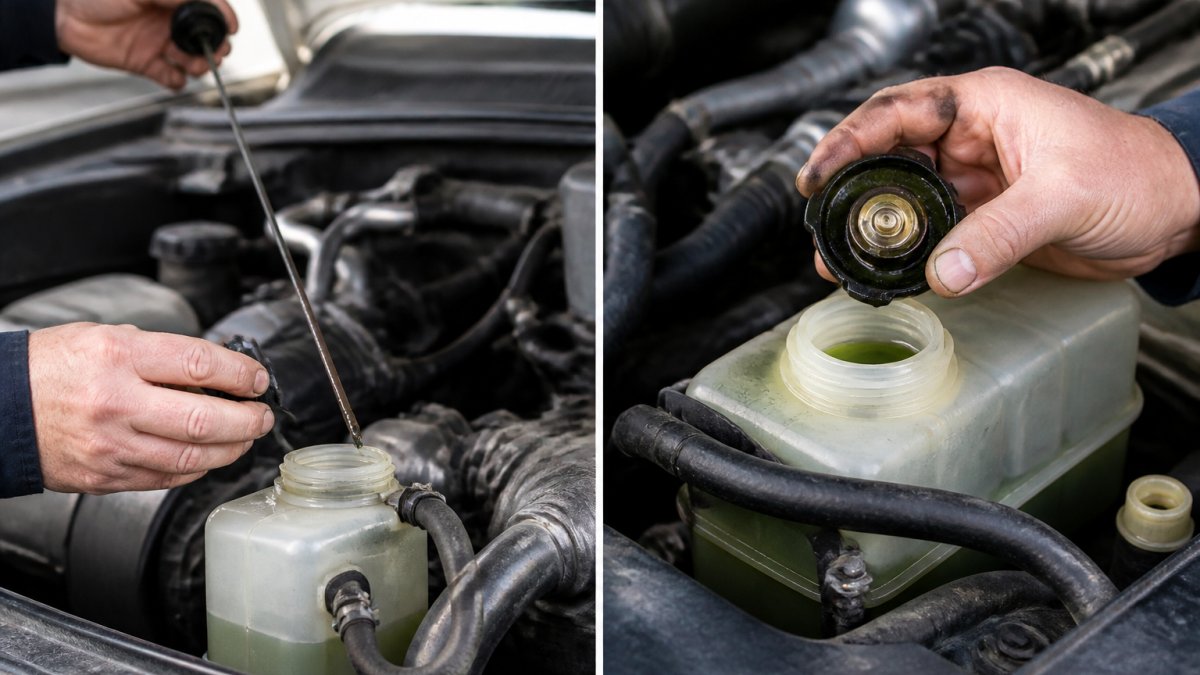
Pull your engine’s owner manual or contact the manufacturer with your engine serial number and model year. The manual will specify the exact coolant chemistry required, for example, “ASTM D6210 OAT coolant” or “Cummins CES 14603 specification.”
Your RV’s duty cycle influences coolant choice. RVs covering 20,000+ miles annually experience different thermal stress than seasonal RVs. Engines running extended idle periods degrade coolant faster than steady highway operation.
Extended-Life Coolants for Long-Haul RV Travel
Extended-life OAT formulations are ideal for RVs logging significant annual mileage. The extended service interval means fewer maintenance stops and reduced risk of running degraded coolant during long road trips.
Always verify on the product label or manufacturer website that the coolant meets your specific engine’s specification before purchase.
Heavy-Duty Coolants for Extreme Conditions and Cavitation Protection
Heavy-duty coolants formulated with supplemental coolant additives (SCA) provide maximum protection against cavitation damage and are essential if your engine manufacturer specifies them.
Heavy-duty SCA coolants excel in engines running extended idle periods, high ambient temperatures, or demanding duty cycles. If your RV operates in hot climates, idles frequently, or has cavitation sensitivity, use a heavy-duty SCA coolant.
Some engines require periodic SCA top-ups even when using extended-life coolant. Check your engine manual for SCA maintenance intervals and factor this into your maintenance schedule.
Practical Selection Workflow
- Consult your engine manual for the exact coolant specification (e.g., ASTM D6210, Cummins CES 14603, Ford WSS-M97B44-D).
- Identify your RV’s duty cycle: annual mileage, climate, idle time, and storage conditions.
- Cross-reference the specification against product labels and manufacturer websites to find approved options.
- Verify SCA requirements: if your engine requires periodic SCA additions, confirm the product includes them or budget for separate additions.
- Purchase and document: buy the approved coolant, record the product name, specification, and date of service for your maintenance log.
When traveling, carry a spare gallon of your engine’s specified coolant to prevent roadside desperation decisions.
Diesel Coolant Testing and Maintenance Procedures
Monitoring your coolant condition catches problems early. Over time, coolant loses protective properties through oxidation, additive depletion, water contamination, and thermal breakdown.
Visual Inspection: The First Line of Defense
Open the radiator cap when the engine is cold and look at the coolant directly. Healthy coolant is bright green, pink, orange, or blue, the key is clarity and consistency.
Red flags that warrant immediate system flushing and refilling:
CALL or TEXT NOW:712-827-0207 →
- Discolored or darkened coolant: Indicates oxidation and additive breakdown.
- Sludge or sediment: Brown or black particles suggest corrosion products or contamination.
- Milky or cloudy appearance: A sign of water contamination, usually from a failed head gasket or cracked block.
- Rust particles or metallic sheen: Indicates corrosion inside the cooling system.
- Oil sheen or greasy film: Suggests oil leaking into the coolant, typically from a failed gasket.
If you observe any of these conditions, perform a full system flush and refill with the correct coolant immediately.
Coolant Test Strips: Measuring pH and Reserve Alkalinity
Coolant test strips measure two critical parameters: pH and reserve alkalinity (Total Alkalinity Reserve or TAR).
pH indicates acidity or alkalinity. Healthy diesel coolant maintains pH between 8.0 and 10.0; below 8.0 indicates end of service life.
Reserve alkalinity measures the coolant’s ability to neutralize acids. Most manufacturers recommend replacing coolant when reserve alkalinity drops below 4.0 meq/L.
How to test:
- Allow the engine to cool completely.
- Open the radiator cap carefully.
- Dip the test strip into the coolant for 1-2 seconds.
- Compare the color blocks to the chart on the package.
- Record the pH and TAR values in your maintenance log.
- If pH is below 8.0 or TAR is below your engine’s minimum specification, schedule a coolant flush and refill.
Many RV owners perform coolant testing annually, especially on engines over 200,000 miles or during extended travel seasons.
Freeze-Point and Boil-Over Protection Testing
Your coolant’s freeze and boil-over protection depends on the concentration of antifreeze mixed with water.
Freeze-point protection is typically rated to -34°F for a 50/50 mix. In colder regions, use higher concentration for protection to -50°F or lower.
Boil-over protection is enhanced by coolant additives and system pressure rating. A properly functioning radiator cap maintains system pressure (typically 13-16 psi), raising the boiling point to 260°F or higher.
To verify freeze-point protection, use a coolant hydrometer or refractometer:
- Draw a small sample of coolant into the tool.
- Read the freeze-point scale.
- If freeze-point protection is inadequate for your climate, the system is either diluted or the wrong coolant type was used.
If freeze protection is low, add more concentrate (if you have the correct coolant on hand) or perform a full flush and refill with the correct concentration.
Coolant Sampling and Professional Analysis
For high-mileage engines or severe conditions, professional coolant analysis provides deeper insight than test strips. Labs measure pH, reserve alkalinity, water content, particle count, and metals (iron, copper, aluminum) that indicate internal wear.
Metal content in coolant is a red flag: iron suggests cylinder liner corrosion, copper indicates water pump erosion, aluminum suggests head gasket degradation. Elevated metal content may indicate internal damage requiring professional diagnosis.
Service Intervals and Replacement Schedule
Service intervals depend on your coolant type and engine specification:
- Conventional silicate-based coolant: Replace every 2-3 years or 100,000 miles.
- Extended-life OAT coolant: Replace every 6+ years or 300,000+ miles.
- Heavy-duty coolant with SCA: Follow the same interval as your base coolant type, adding supplemental additives per your engine manual.
Document every coolant service: record the coolant type, product name, quantity, date, and mileage. This history protects your engine warranty and helps diagnose future issues.
Flushing and System Refill Procedures
A proper flush removes old coolant residue and prevents incompatible chemistry from reacting with new coolant. A partial drain-and-refill leaves old coolant in the block and heater core, which can form sludge.
Basic flush procedure:
- Allow the engine to cool completely.
- Locate the radiator drain plug and the engine block drain plug.
- Place a drain pan underneath and open both plugs to drain the old coolant completely.
- Close the drain plugs.
- Fill the radiator with distilled water only.
- Start the engine and run it at idle for 5-10 minutes to circulate the water through the block and heater core.
- Shut off the engine, allow it to cool, and drain the water again.
- Repeat the water flush 2-3 times until the drained water runs clear.
- Close all drain plugs and refill with the correct coolant concentrate and distilled water at the ratio specified in your engine manual.
- Bleed air from the system by running the engine at idle with the radiator cap off until coolant flows steadily and no air bubbles appear.
- Top off the coolant to the full line on the overflow reservoir.
If you’re switching from one coolant chemistry to another, a complete flush is mandatory.
Diesel Coolant Change Interval and Service Schedule
Service intervals depend on your coolant type and engine specification. Conventional coolant typically requires replacement every 2-3 years or 100,000 miles. Extended-life coolants extend this to 6+ years or 300,000+ miles.
Establish a routine maintenance schedule based on your engine’s requirements and actual usage. Engines running year-round require more frequent monitoring than seasonal RVs. Document every coolant service, record the coolant type, quantity, date, and mileage. This history protects your engine warranty and helps diagnose future cooling system issues.
Common Mistakes RV Owners Make with Diesel Coolant
The most frequent error is assuming all diesel coolants are interchangeable, they’re not. Mixing incompatible chemistries creates sludge and reduces protection. Another mistake is ignoring the engine manufacturer’s specification in favor of what’s available locally. Carry the correct coolant when traveling, or use distilled water temporarily.
Choosing the right coolant for your diesel RV engine is straightforward once you identify your engine’s specification. The wrong choice can cost thousands in repairs. When you’re facing a cooling system diagnosis on the road, Mudhollow Diesel Mechanics brings sophisticated mobile diagnostics directly to your location across I-80 and I-29 in western Iowa.
Frequently Asked Questions
What type of coolant is best for a diesel RV engine?
The best diesel RV coolant depends on your engine manufacturer’s specification. Most modern diesel RVs require extended-life coolant formulated with organic acid technology (OAT) or low-silicate additives. Older diesel engines may need conventional coolant with supplemental coolant additives (SCA). Always check your motorhome’s owner manual or radiator cap for the required specification before selecting a product. Using the wrong coolant type can damage your cooling system and void warranty coverage.
How do you know when diesel RV coolant needs to be changed?
Most diesel RVs require a coolant change every 100,000 to 150,000 miles or every 5 to 7 years, depending on whether you use conventional or extended-life coolant. Check your motorhome’s service manual for the exact diesel coolant change interval. You can also monitor coolant condition using test strips that measure freeze point, boil-over protection, and additive depletion. If your coolant appears discolored, cloudy, or contaminated, have it tested or replaced immediately to prevent engine overheating and damage.
What should you check before adding coolant to a diesel RV?
Before adding coolant to your diesel RV, verify the engine manufacturer specification on your radiator cap or in the owner manual. Check that the new coolant matches the type and brand already in your system to ensure diesel coolant compatibility. Allow the engine to cool completely before opening the radiator cap. Check the coolant concentration, most diesel engines run best on a 50/50 mixture of concentrate and distilled water. If you’re unsure about compatibility or concentration, contact a mobile diesel technician for guidance before topping off.