Table of Contents
- Mobile Diesel Repair vs. Towing: The Core Difference
- Common Roadside Semi Truck Failures and Why They Matter
- Emergency Roadside Semi Repair: What Can Be Fixed On-Site
- Cost-Benefit Analysis: Mobile Repair vs. Towing to a Shop
- Reducing Vehicle Downtime Through On-Site Service
- When Heavy-Duty Towing Is Still Necessary
- Preventative Maintenance: The Long-Term Alternative to Roadside Emergencies
- How to Choose Between Mobile Repair and Traditional Towing
- Frequently Asked Questions
Last Updated: August 20, 2026
Mobile Diesel Repair vs. Towing: The Core Difference
When a semi-truck breaks down on I-80 or I-29, the decision between calling a tow truck and requesting mobile diesel repair shapes everything that happens next: how long you’re stranded, what it costs, and when you’re back in operation.
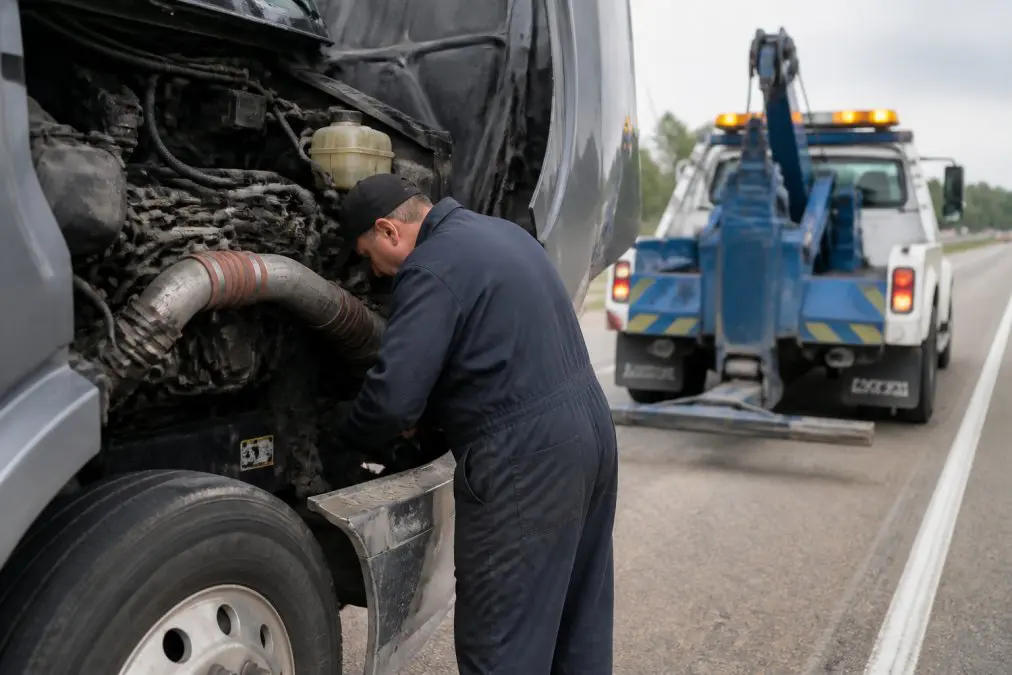
A tow truck hauls your vehicle to a distant shop where you wait in line. Mobile diesel repair brings the shop to you. A fully equipped service truck arrives at your location with computer diagnostics, heavy-duty tools, and experienced technicians ready to work immediately. Most roadside fixes are resolved in less time than it takes to arrange and complete a tow to a distant facility.
At Mudhollow Diesel Mechanics, we’ve seen firsthand how this distinction changes outcomes for owner-operators and fleet managers. Towing assumes your problem requires a full shop environment. Mobile repair starts by diagnosing what’s actually wrong, then fixes what can be fixed on-site. If a component truly needs shop work or parts ordering, you know that immediately instead of discovering it after hours of towing and waiting.
The real advantage of mobile diesel repair vs. towing isn’t speed alone, it’s information. You get an expert diagnosis before committing to expensive transportation. Many breakdowns that look catastrophic turn out to be simple fixes that take 30 minutes roadside.
Common Roadside Semi Truck Failures and Why They Matter
Semi-trucks fail for predictable reasons. Understanding which failures can be addressed roadside and which demand shop facilities helps you make faster decisions when you’re stranded.
Electrical and Diagnostic Issues
Electrical problems are among the most common and fixable roadside failures. Battery failures, alternator issues, starter problems, and wiring faults frequently respond to rapid diagnostics and replacement without requiring a full shop teardown.
Modern semi-trucks rely on complex computer systems. A fault code that appears cryptic to the driver becomes clear to a technician with proper diagnostic equipment. The difference between a $200 roadside alternator replacement and a $2,000 tow plus shop diagnostic fee comes down to whether you have access to computer diagnostics where you are. Mobile service trucks equipped with modern diagnostic tools can read and interpret fault codes on the roadside, isolating electrical problems that might otherwise require a full tow.
Brake and Air System Failures
Brake and air system failures are serious, frequent, and often roadside-repairable. Air leaks, compressor issues, brake line problems, and valve failures account for a significant portion of roadside breakdowns.
These systems are critical for safety and legal operation. A truck with compromised brakes cannot safely operate, and weigh station inspectors will pull trucks with air system violations. But many air and brake failures don’t require a full shop, they require a technician who understands pressure systems, can locate leaks, and has replacement components on hand. An on-site technician can often isolate the issue, make temporary or permanent repairs, and get you back on the road within hours instead of days.
Drivetrain and Mechanical Breakdowns
Drivetrain failures, transmission, driveshaft, clutch, and engine issues vary in complexity. A clutch replacement, transmission fluid leak, or engine issue like loose belts or fuel system problems often have roadside solutions. But a catastrophic transmission failure or major engine damage typically requires shop facilities, parts inventory, and lift equipment that mobile services cannot provide.
Mobile diesel repair technicians understand this distinction and can tell you immediately which category your problem falls into.
The most common roadside failures, electrical issues, air system leaks, brake problems, and minor mechanical faults, are exactly the problems mobile repair is designed to handle. These account for the majority of breakdowns that don’t require a full shop environment.
Emergency Roadside Semi Repair: What Can Be Fixed On-Site
Mobile diesel repair handles a broad range of common failures. Alternator and starter replacement, battery service, air system diagnostics and repairs, brake line issues, fuel system problems, belt and hose replacement, fluid leaks, wiring repairs, and computer diagnostics all fall within roadside scope.
The critical factor is equipment. A mobile service truck equipped with computer diagnostics, pressure testing tools, electrical test equipment, and a reasonable parts inventory can address problems that a roadside tire service cannot. Mudhollow Diesel Mechanics operates fully equipped mobile units specifically configured for heavy-duty diesel diagnostics and repair.
What cannot be done roadside: major engine overhauls, transmission rebuilds, frame-level repairs, welding work that requires a proper shop environment, or any repair requiring parts not in inventory. If your problem falls into this category, the mobile technician will diagnose it quickly and arrange appropriate transportation to a facility equipped to handle the work. You avoid the guesswork of a blind tow and know exactly what’s needed before the truck moves.
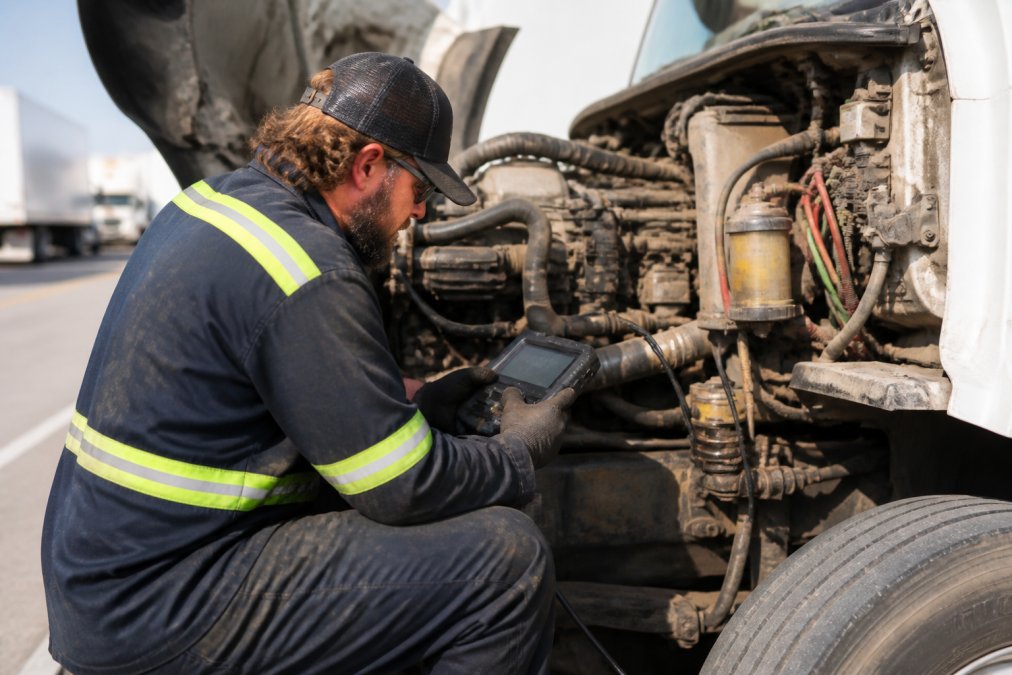
Roadside diagnosis eliminates the most expensive and time-consuming part of traditional towing: the uncertainty. You get expert assessment immediately, which means you make informed decisions about next steps instead of discovering problems after hours of transportation.
Attempting roadside repairs without proper diagnostics is how small problems become expensive ones. Professional on-site diagnostics prevent this costly mistake.
Cost-Benefit Analysis: Mobile Repair vs. Towing to a Shop
The financial comparison between mobile repair and traditional towing requires understanding all the costs involved, not just the service fee.
Towing costs are substantial. A 50-mile tow to a dealership or major repair facility runs into significant expense before any repair work begins. Once the truck arrives at the shop, you face diagnostic fees, shop labor rates, and wait times that can extend the breakdown into days.
Mobile repair eliminates tow costs entirely. For many common roadside failures, the total cost, diagnostics plus repair, is lower than towing alone would be. Even when the repair itself costs the same as it would in a shop, the elimination of tow fees often makes mobile repair the more cost-effective choice.
There’s a secondary cost that traditional towing doesn’t account for: operational downtime. An owner-operator losing a day of freight revenue faces costs far exceeding the repair bill. A fleet manager with three trucks sitting idle while one is at a distant shop loses productivity across the entire operation. Mobile repair that resolves the problem in hours instead of days has financial value that extends beyond the service invoice.
For agricultural haulers operating on tight seasonal schedules, this distinction is critical. A breakdown during harvest season costs more than the same breakdown in off-season. Mobile repair that minimizes downtime directly protects revenue.
Owner-operators and small fleets where downtime costs exceed shop labor rates, and where common roadside failures make up the majority of breakdowns.
Reducing Vehicle Downtime Through On-Site Service
Vehicle downtime is the hidden cost of traditional towing. Every hour your truck sits idle represents lost revenue, missed deliveries, and operational disruption.
On-site mobile repair directly addresses this. Because the technician comes to you, there’s no transportation delay. Diagnosis begins immediately. If the repair can be done roadside, the truck is back in operation while it would still be en route to a distant shop under the towing model.
For fleet operations, this compounds. A fleet manager can schedule preventive maintenance at the yard during off-hours, keeping trucks on the road during peak operation. Emergency roadside repairs can be handled without coordinating tow trucks and managing shop wait times.
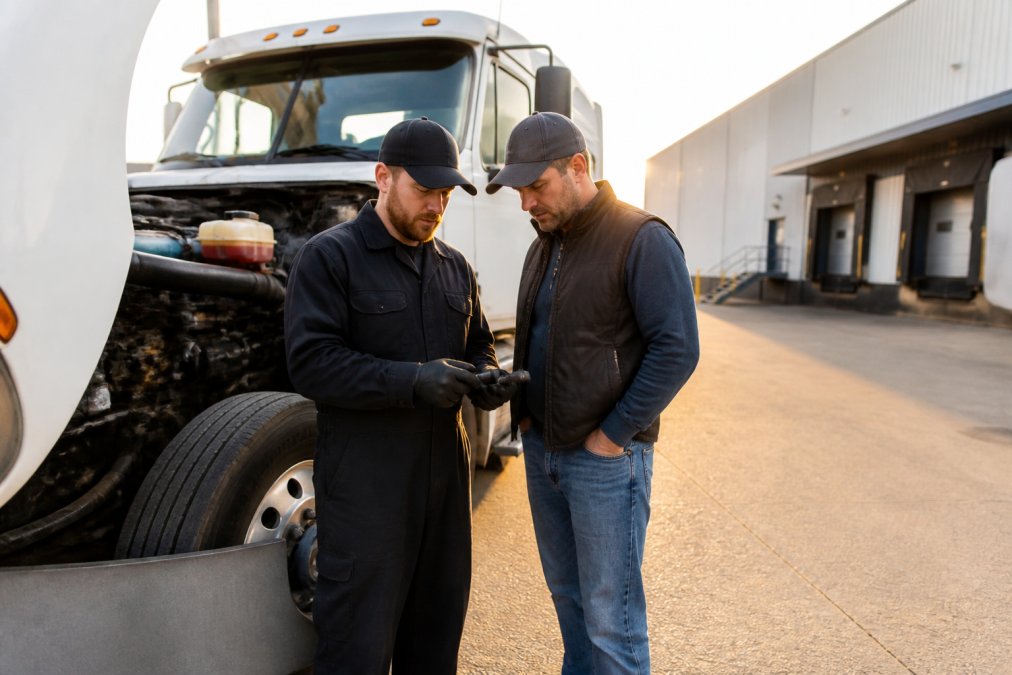
A breakdown that takes 30 minutes to diagnose and repair roadside, then 30 minutes to get back on the road, costs you 1 hour of downtime. The same breakdown under the towing model costs 2-3 hours of tow time plus several hours of shop wait time, often a full day or more. For owner-operators running on thin margins, this difference directly impacts profitability.
CALL or TEXT NOW:712-827-0207 →
Scheduled preventive maintenance through mobile service further reduces emergency downtime. Instead of waiting for failures to occur, you address maintenance on your schedule at your location. This approach is particularly valuable for fleets operating on seasonal schedules where breakdowns during peak season are especially costly.
When Heavy-Duty Towing Is Still Necessary
Mobile repair is not a replacement for towing in all situations. Understanding when towing is the appropriate choice prevents false expectations and poor decisions during emergencies.
Towing remains necessary when the problem exceeds roadside repair scope. A catastrophic engine failure, major transmission damage, frame damage, or any situation requiring extensive parts or shop facilities demands towing to an appropriate facility. If the truck cannot safely operate due to brake failure, steering issues, or structural damage, towing is the only safe option.
Similarly, if a roadside diagnosis reveals that parts must be ordered and the truck cannot operate safely in its current state, towing to a facility where the truck can wait for parts may be more efficient. With mobile diagnostics, you know this upfront instead of discovering it after an expensive blind tow.
Accident recovery and winching situations often require heavy-duty towing services equipped for off-road recovery. A truck that has left the roadway and become stuck requires specialized equipment that mobile service trucks don’t carry.
Geographic limitations also matter. Mobile repair services operate within defined service areas. Understanding your service area before a breakdown occurs prevents surprises during emergencies.
The practical approach: use mobile repair for common roadside failures and preventive maintenance, and use towing for situations that genuinely require shop facilities or specialized recovery equipment.
Preventative Maintenance: The Long-Term Alternative to Roadside Emergencies
The most cost-effective alternative to roadside breakdowns is preventing them in the first place. Many roadside failures are predictable and preventable. Air system leaks, electrical issues, brake wear, and fluid leaks develop gradually. A truck that receives regular preventive maintenance catches these developing problems before they strand you on the highway.
Mobile service providers like Mudhollow Diesel Mechanics offer scheduled maintenance at your yard or terminal. Instead of waiting for failures to occur, you address maintenance on your schedule when trucks are not in operation.
Preventive maintenance also extends equipment life. A transmission that receives regular fluid service lasts longer than one that operates with degraded fluid. An engine that receives timely belt and hose replacement avoids catastrophic failures. The upfront cost of preventive maintenance is typically lower than the combined cost of emergency roadside repair plus the operational downtime it prevents.
For fleet operations, preventive maintenance becomes a strategic advantage. Fleets with strong maintenance programs experience fewer breakdowns, maintain better on-time delivery records, and avoid the cascade of operational disruption that emergency repairs create. Over a multi-year ownership period, the financial difference is substantial.
Schedule preventive maintenance during off-peak seasons or overnight when trucks are not generating revenue. This approach addresses maintenance needs without sacrificing operational capacity, and it prevents the expensive emergency repairs that occur during peak season.
How to Choose Between Mobile Repair and Traditional Towing
When you’re broken down, the decision between mobile repair and towing should be based on practical factors, not default assumptions.
Start with diagnosis. If you have any doubt about what’s wrong, request a mobile technician for on-site assessment. The diagnostic fee is typically far lower than towing costs, and you gain critical information before committing to expensive transportation.
Consider your location and service availability. If you’re within the service area of a mobile repair provider, mobile repair is almost always the faster and more cost-effective first response. Know your service areas before breakdowns occur.
Evaluate the severity of the problem. If the truck cannot operate safely, towing to a safe facility is appropriate. If the truck is mechanically sound but has a specific failure, mobile repair is likely the better choice.
Factor in downtime costs. For owner-operators and fleets where downtime is expensive, mobile repair’s speed advantage often justifies choosing it even if shop labor rates might be slightly higher.
Build a relationship with a mobile repair provider before emergencies occur. When you’re stranded, you want to call someone you know and trust, not search for options while under stress.
Roadside breakdowns don’t follow schedules, but your response to them should follow a clear strategy. When your semi-truck fails on the highway, mobile diesel repair eliminates the costly assumption that towing is your only option. Mudhollow Diesel Mechanics brings fully equipped diagnostics and repair capability directly to your location across I-80 and I-29 corridors. For owner-operators and fleets where downtime costs exceed shop labor rates, rapid on-site service resolves most common failures in hours instead of days. Call or text 712-827-0207 to discuss your roadside emergency plan and preventive maintenance needs.
Frequently Asked Questions
What are the primary benefits of mobile diesel repair over towing?
Mobile diesel repair eliminates expensive tow truck costs, reduces vehicle downtime by hours or days, and brings expert diagnostics directly to your location. Many roadside failures can be fixed on-site in less time than it takes to arrange a tow and wait in a shop. You avoid dealership markups and can stay near your cargo. For semi-truck operators on I-80 or I-29, this means faster revenue recovery and lower operational costs.
Can most semi-truck roadside failures be fixed on-site?
Most common roadside semi truck failures, electrical gremlins, air system leaks, brake adjustments, and drivetrain diagnostics, can be diagnosed and repaired on-site with modern mobile service trucks equipped with computer diagnostics. However, catastrophic engine failure, frame damage, or issues requiring extended parts fabrication still need shop facilities. A qualified mobile technician can assess what’s fixable roadside within the first 15 minutes.
How much can I save by choosing mobile repair instead of towing?
Savings depend on repair complexity and distance to the nearest shop. A standard tow can cost $500-$1,500 plus potential shop wait time that extends downtime by 24-48 hours. On-site mobile repair eliminates tow costs and typically resolves issues in 1-3 hours, getting you back on the road faster. For fleet operators, preventing even one unnecessary tow per month covers multiple preventive maintenance visits. Contact your mobile repair provider for a specific quote based on your situation.
When is a heavy-duty tow truck absolutely necessary?
Heavy wrecker service is essential when the truck cannot move under its own power due to catastrophic mechanical failure, frame damage, accident recovery, or off-road situations requiring winching. If diagnostics reveal a problem that needs parts ordering or extended shop work, towing becomes necessary. A roadside technician can determine within minutes whether your situation requires towing or can be resolved on-site with emergency roadside semi repair.
This article was written using GrandRanker