Table of Contents
- The Most Common Roadside Semi Truck Failures Ranked
- Driver-Led Roadside Troubleshooting for Semi Truck Failures
- DOT Roadside Inspection Common Violations to Know
- Semi Truck Roadside Assistance Checklist
- Preventative Maintenance Schedule for Semi Trucks
- Roadside Repair vs. Towing: What Actually Pencils Out
- Frequently Asked Questions
Last Updated: August 16, 2026
The Most Common Roadside Semi Truck Failures Ranked
Semi truck failures don’t announce themselves. One minute you’re making time on the interstate, the next you’re on the shoulder with hazard lights blinking and a dispatcher waiting on a delivery ETA you can’t give. At Mudhollow Diesel Mechanics, we respond to these breakdowns daily, and the same failure categories show up again and again. Understanding them before they strand you is the difference between a 45-minute fix and a full-day ordeal.
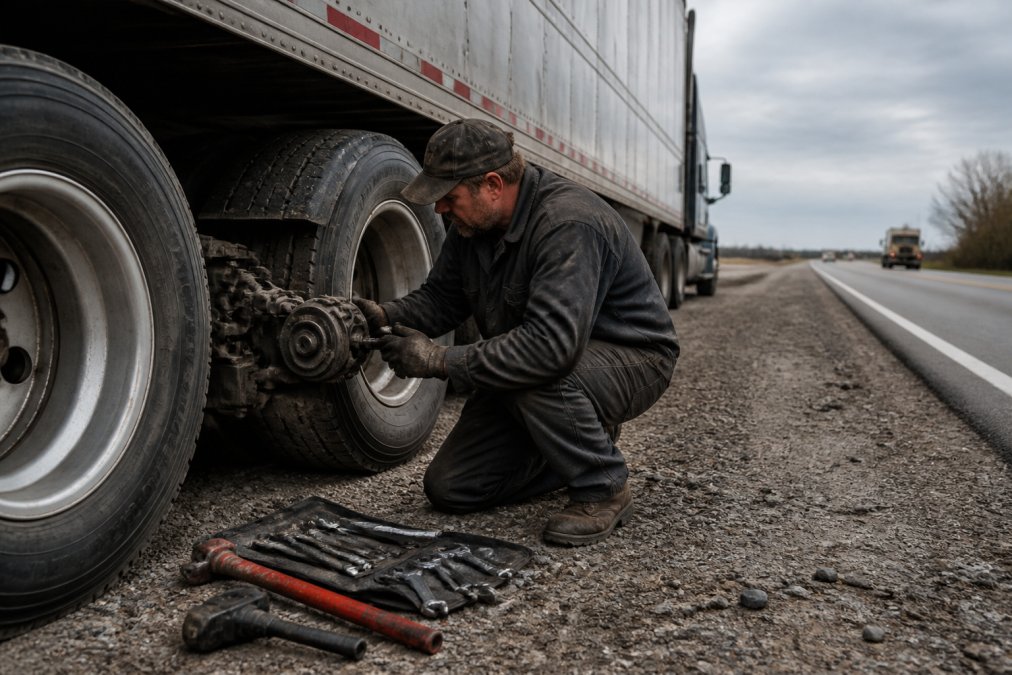
The Federal Motor Carrier Safety Administration tracks out-of-service violations across the country, and tire and brake defects consistently top the list. According to FMCSA’s Large Truck and Bus Crash Facts, mechanical failure is a contributing factor in a significant share of commercial vehicle incidents each year. The failures below are ranked by how frequently they generate emergency roadside calls.
Tire Underinflation and Blowouts
Tire underinflation is the single most common cause of roadside semi truck failures. A steer tire running low on pressure generates excess heat, which turns a manageable situation into a blowout at highway speed. Drive and trailer tires are equally vulnerable under heavy loads on summer asphalt.
What to watch for:
- Tire pressure monitoring system alerts or dashboard warnings
- Visible sidewall bulging during pre-trip inspection
- Unusual pull to one side while driving
- Vibration through the steering wheel at highway speed
Check pressures at every stop. Underinflation accelerates wear on wheel bearings and suspension, creating secondary failures. A tire pressure monitoring system is worth the investment if your rig doesn’t have one.
Air Brake System Failures and Frozen Air Lines
Air brake system failures are the most dangerous category on this list. A brake system that won’t hold pressure or releases unexpectedly puts the driver, load, and everyone on the highway at risk.
Common air brake failure points include:
- Air dryer failure: A failed air dryer allows moisture into the system. In winter, that moisture freezes in lines and valves, causing loss of braking pressure.
- Brake pad and shoe wear: Worn brake pads reduce stopping power before failing outright. DOT inspectors flag this immediately.
- Air compressor failure: No compressor output means no air pressure and eventual brake lockup.
- Leaking air fittings: A slow leak drains the system over time, with the compressor cycling more frequently than normal.
Cold weather impact on air systems is severe. When temperatures drop below freezing, any moisture the air dryer missed will freeze at critical points in the circuit. Alcohol evaporators and line antifreeze are inexpensive insurance.
Never attempt to drive with a known air brake pressure loss. Federal regulations require minimum system pressure before a loaded vehicle can legally move. Driving on a compromised air brake system is an out-of-service violation and a serious safety hazard.
Electrical Faults, Battery Voltage, and Alternator Failure
Electrical system malfunctions are frustrating because they’re hardest to diagnose without proper equipment. A no-start condition could be a dead battery, failed alternator, corroded ground strap, or body control module fault.
Battery voltage is the first check. A healthy 12V system reads 12.4 to 12.7 volts at rest. Below 12.0 volts, starting reliability drops sharply. Under load, alternator output should be 13.5 to 14.5 volts. An alternator failure lets the truck run until batteries drain, then everything goes dark.
Digital diagnostic tools cut diagnostic time dramatically. Modern service trucks with manufacturer-level scan tools pull diagnostic trouble codes from the ECM, TCM, and ABS modules simultaneously.
If your truck has unexplained warning lights, don’t clear the codes and hope they stay off. Those diagnostic trouble codes tell you exactly where to look. Clearing them before a mechanic reads them erases the most useful diagnostic information available.
Engine, Cooling System, and Powertrain Malfunctions
Engine and powertrain issues most commonly involve cooling system failures and fuel system problems. An overheating engine caught too late can cause head gasket failure or liner damage requiring full engine rebuild.
Cooling system failure points:
- Coolant hose failure (check for soft spots and swelling during pre-trip)
- Thermostat stuck closed (engine overheats quickly after startup)
- Water pump failure (loss of coolant circulation)
- Low coolant from slow leaks
Fuel system issues, including clogged fuel filters and failed fuel lift pumps, are common in cold weather when diesel gels or water contamination builds up in tanks. Exhaust leaks can mask turbocharger problems and create carbon monoxide hazards in the cab.
Powertrain malfunction codes from the ECM often precede breakdown by days or weeks. Regular scanning for stored fault codes during preventative maintenance catches these before they strand you.
Trailer Coupling, Refrigeration Unit, and Airbag Suspension Issues
Trailer coupling failures range from a fifth wheel that won’t release cleanly to a broken kingpin that separates trailer from tractor. A proper coupling check before departure takes 90 seconds and catches most failures before they happen.
Refrigeration unit failures involve their own systems: fuel supply issues, refrigerant leaks, electrical faults, and condenser problems. For temperature-sensitive loads, a reefer failure is a cargo loss event.
Airbag suspension failures show up as a truck riding low on one corner or a trailer tilting under load. A ruptured air bag is a roadside repair, but a failed height control valve or damaged air line fitting can sometimes be addressed on the shoulder.
Driver-Led Roadside Troubleshooting for Semi Truck Failures
The gap between a 30-minute fix and a 3-hour wait often comes down to what the driver does in the first 10 minutes. Effective driver-led troubleshooting means gathering accurate information so a mechanic can arrive prepared.
Safety Protocols for Roadside Breakdowns
Safety protocols for roadside breakdowns are not optional. According to OSHA highway work zone safety guidelines, struck-by incidents involving stopped vehicles are a leading cause of roadside fatalities. The first priority is always distance from traffic.
Immediate steps when a breakdown occurs:
- Get the vehicle as far off the travel lane as possible, even if it means damaging a tire further
- Activate four-way hazard flashers immediately
- Set out reflective triangles at 10 feet, 100 feet, and 200 feet behind the vehicle (required by FMCSA regulations for vehicles over 10,000 lbs)
- Stay behind the guardrail or barrier when possible, never stand between the vehicle and traffic
- Call for assistance before attempting any diagnosis under the vehicle
Once the scene is secure, document what you observed: warning lights, unusual sounds, smoke color, loss of power, and recent maintenance. This information cuts diagnostic time significantly.
Using Digital Diagnostic Tools on the Shoulder
Modern semi trucks are rolling computers. Most post-2010 commercial vehicles have an OBD port or proprietary diagnostic connector that stores fault codes even after shutdown. A Bluetooth-enabled diagnostic adapter paired with a tablet app can read these codes before a mechanic arrives.
What drivers can check with basic tools:
- Active and stored fault codes from the engine ECM
- Battery voltage with a simple multimeter
- Air pressure gauge readings from the dash
- Coolant temperature and oil pressure from the instrument cluster
A service truck with manufacturer-level diagnostic software closes the gap fast when interpretation is needed.
The most valuable thing a driver can do during a roadside breakdown is document everything: the fault codes displayed, the conditions when failure occurred, and any warning signs from preceding hours. This information directly reduces mechanic diagnostic time on-site.
DOT Roadside Inspection Common Violations to Know
DOT roadside inspection violations fall into predictable categories. The Commercial Vehicle Safety Alliance publishes annual inspection results, and the same defects generate the majority of out-of-service orders year after year.
Top violation categories by inspection frequency:
| Violation Category | Common Defect | Out-of-Service Risk |
|---|---|---|
| Brake system | Brake adjustment, air leaks, worn linings | High |
| Tires | Underinflation, tread depth, sidewall damage | High |
| Lights | Inoperative required lamps | Medium |
| Cargo securement | Insufficient tie-downs, load security | High |
| Driver documents | Hours of service, medical certificate | High |
| Coupling devices | Kingpin wear, fifth wheel latch | High |
| Suspension | Airbag suspension damage, spring cracks | Medium |
Brake system and tire defects account for the largest share of out-of-service orders. A truck that fails inspection loses revenue for every hour it sits. Pre-trip inspections done correctly catch most defects before a DOT officer does.
Semi Truck Roadside Assistance Checklist
A semi truck roadside assistance checklist belongs in every cab. This is the minimum equipment and information set that makes a breakdown manageable.
Equipment to carry:
- Reflective triangles (minimum 3, required by law)
- High-visibility safety vest
- Fire extinguisher (mounted and accessible)
- Heavy-duty jumper cables or jump starter pack
- Basic hand tools (adjustable wrench, pliers, screwdrivers)
- Tire pressure gauge
- Spare fuses and electrical tape
- Coolant and oil (at least 1 gallon each)
- Flashlight and spare batteries
- Wheel chocks
Information to have ready when calling for assistance:
- Exact mile marker and highway direction (eastbound/westbound)
- Vehicle year, make, model, and VIN
- Current fault codes displayed on dash
- Description of symptoms and when they started
- Load type and weight (relevant for tow capacity decisions)
- Fleet manager or dispatch contact number
Having this information ready cuts the first call to a mechanic from 10 minutes to 2 minutes and gets the right parts rolling toward you faster.
Preventative Maintenance Schedule for Semi Trucks
A preventative maintenance schedule for semi trucks is the most cost-effective tool in fleet management. Most failures follow predictable wear patterns that inspection and scheduled service catch before they become roadside events.
According to FMCSA’s preventive maintenance guidance for commercial vehicles, carriers are required to maintain a systematic inspection and maintenance program.
Recommended preventative maintenance intervals:
| Service Interval | Key Tasks |
|---|---|
| Daily (pre-trip) | Tire pressure, lights, fluid levels, coupling check, brake test |
| Every 15,000 miles | Oil and filter change, fuel filter inspection, belt and hose check |
| Every 25,000 miles | Air dryer service, brake adjustment check, coolant system inspection |
| Every 50,000 miles | Full brake inspection, wheel bearing repack, transmission fluid |
| Every 100,000 miles | Injector service, clutch inspection, full electrical system check |
| Annual | DOT annual inspection, full drivetrain inspection, refrigeration unit service |
The most common mistake owner-operators make is treating preventative maintenance as optional during busy seasons. Component wear doesn’t pause because you’re running hard. A missed air dryer service in September becomes a frozen air line call in January.
Mudhollow Diesel Mechanics handles scheduled yard and terminal servicing for fleets that can’t afford shop wait times.
Roadside Repair vs. Towing: What Actually Pencils Out
Most drivers call a tow truck out of habit. The calculus is worth examining before you dial.
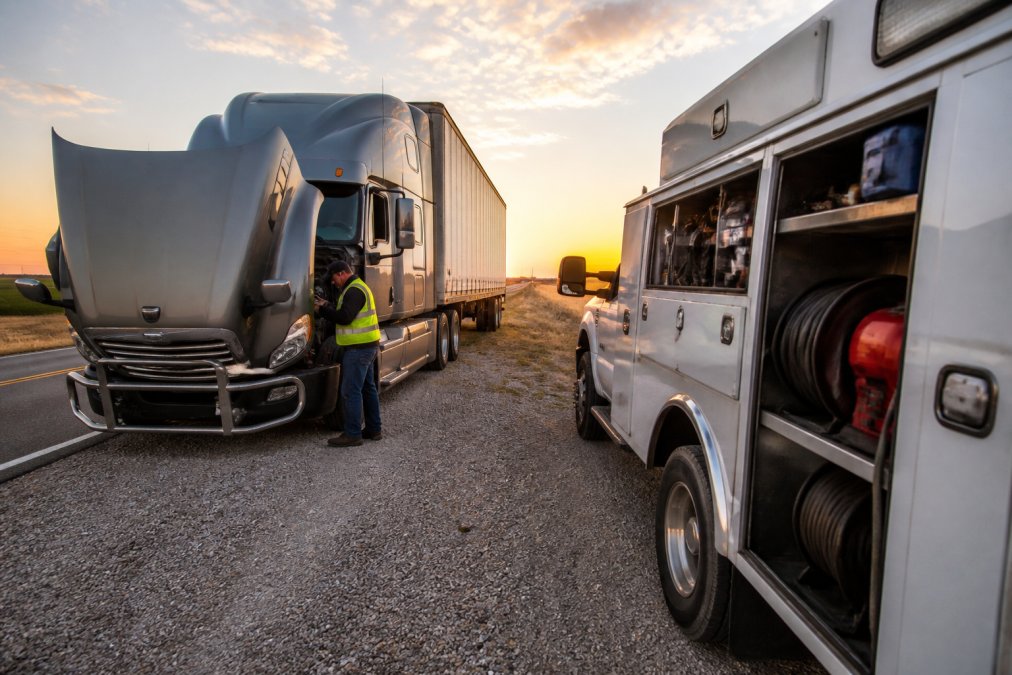
Towing a loaded semi is expensive. Heavy-duty tow rates vary by region, but a loaded tractor-trailer tow adds up fast before factoring in the shop’s diagnostic fee, wait time for a bay, and getting the driver back to the truck once repaired. For many common roadside failures, tow costs exceed repair costs.
When roadside repair makes more sense:
- Air brake air leaks at fittings or lines
- Electrical faults and battery replacement
- Coolant hose failures
- Fuel filter replacement
- Tire changes and minor suspension repairs
- Refrigeration unit electrical faults
When towing is the right call:
- Engine internal failure requiring teardown
- Transmission failure
- Frame or structural damage
- Failures requiring a lift or press that can’t be brought to the shoulder
A fully equipped mobile service truck resolves the majority of common roadside semi truck failures on-site. Calling a mobile mechanic first costs nothing but a few minutes. If the repair can’t be done roadside, a good mechanic will tell you straight and help you make the right call.
Frequently Asked Questions
What are the most common semi truck failures that cause roadside breakdowns?
Tire blowouts from underinflation lead the list, followed by air brake system failures, electrical faults such as alternator failure or dead batteries, cooling system overheats, and fuel system problems. Trailer issues including refrigeration unit failures and loose fasteners on trailer coupling hardware are also frequent. Most of these common roadside semi truck failures are preventable with consistent pre-trip inspections and a scheduled preventative maintenance program.
What should a driver do immediately after a roadside breakdown?
Pull as far off the travel lane as possible, activate hazard lights, and set out reflective triangles at 10, 100, and 200 feet behind the vehicle as required by FMCSA regulations. Stay behind the guardrail when traffic is present. Call for mobile diesel roadside assistance before attempting any repairs. Note any diagnostic trouble codes displayed on the dash and relay them to the technician, that information speeds up diagnosis significantly.
Are brake system failures common in heavy-duty trucks?
Brake-related defects are among the top reasons commercial vehicles are placed out-of-service during DOT roadside inspections. Air dryer failures, worn brake pads, air leaks in the system, and frozen air lines in cold weather all contribute. Drivers should listen for unusual hissing sounds indicating an air leak and watch for increased stopping distances. Regular brake inspections as part of a preventative maintenance schedule for semi trucks catch most issues before they cause a breakdown.
What are the most common DOT roadside inspection violations for semi trucks?
The most frequent DOT roadside inspection common violations include brake adjustment and brake system defects, tire conditions such as underinflation and tread wear, lighting failures, load security problems, and driver documentation issues. Equipment defects on the trailer, including coupling hardware and airbag suspension components, also generate violations. Addressing these during scheduled maintenance rather than at a weigh station protects your CSA score and keeps you out of an out-of-service situation.
How do tire blowouts rank among roadside semi truck failures?
Tire blowouts are consistently one of the top causes of unplanned stops and highway safety incidents for commercial trucks. Underinflation is the primary driver, a tire running significantly below its rated pressure generates heat that degrades the casing. Tire pressure monitoring systems help, but they do not replace a physical pre-trip check. Catching a slow leak before a full blowout is the difference between a quick roadside fix and a tow.
What electrical issues are most common in semi trucks?
Dead or low-voltage batteries, alternator failure, and wiring harness corrosion cause the majority of electrical faults on commercial trucks. Flickering lights, no-start conditions, and erratic instrument readings are early warning signs. Modern service trucks equipped with computer diagnostics can pull diagnostic trouble codes and pinpoint the fault without guesswork. Electrical gremlins that stumped a dealership are often traced to a corroded ground strap or a failing alternator diode, both resolvable roadside.
Is mobile diesel repair actually cheaper than towing to a shop?
For most roadside semi truck failures, mobile repair costs less than towing plus shop labor combined. A heavy-duty tow on the interstate runs hundreds of dollars before any repair work begins, and shop wait times can stretch to days. Mobile service eliminates the tow cost entirely and resolves the majority of mechanical failures on-site in a fraction of the time. Contact Mudhollow Diesel Mechanics at 712-827-0207 for current service rates specific to your situation.
Dealing with a breakdown or want to prevent the next one? Mudhollow Diesel Mechanics runs fully equipped service trucks across the I-80 and I-29 corridors, with computer diagnostics capable of handling complex electrical faults and rapid repairs that most shops can’t match on turnaround time. Call or text now: 712-827-0207.
This article was written using GrandRanker