

Table of Contents
- Mobile Repair vs Dealership Warranty Service: Key Differences
- Roadside Diesel Repair vs Towing to Dealership: The Real Cost Impact
- Mobile Mechanic Warranty Coverage: What’s Actually Protected
- Labor Costs, Parts Markup, and Overhead: Where the Savings Happen
- Getting a Mobile Diesel Repair Estimate vs Dealership Quote
- Diesel Truck Downtime Repair Options: Choosing Speed Over Warranty Claims
- When to Use Mobile Repair and When Warranty Service Makes Sense
- Frequently Asked Questions
Last Updated: October 10, 2026
Mobile Repair vs Dealership Warranty Service: Key Differences
When your diesel truck breaks down on I-80, you face a choice between mobile repair vs dealership warranty service: call a tow truck to haul you to a dealership, or get a mobile mechanic to your location. Understanding warranty coverage, repair speed, and cost differences can save you days of downtime and significant expense.
Mobile repair brings fully equipped service trucks directly to your vehicle on the highway or at your location. Dealership warranty service covers repairs under your manufacturer’s warranty at an authorized dealer facility. The distinction matters because your warranty may not apply to roadside repairs, and costs differ dramatically between the two.
At Mudhollow Diesel Mechanics, we help owner-operators and fleet managers choose between mobile repair and dealership warranty service. The real cost comparison includes tow costs, downtime, authorization rules, and warranty coverage.
Most owner-operators assume warranty service is “free,” but that overlooks deductibles, coverage exclusions, and the cost of being off the road during a multi-day repair cycle. Mobile repair often costs less total when you factor in tow fees and lost revenue.
Roadside Diesel Repair vs Towing to Dealership: The Real Cost Impact
Towing a diesel truck to a dealership triggers multiple costs: tow fees, service queue delays, parts ordering time, and lost revenue while your truck sits idle.
Mobile diesel repair eliminates the tow. A fully equipped service truck arrives with computer diagnostics, specialized tools, and experienced technicians. Most roadside fixes are completed in hours, not days.
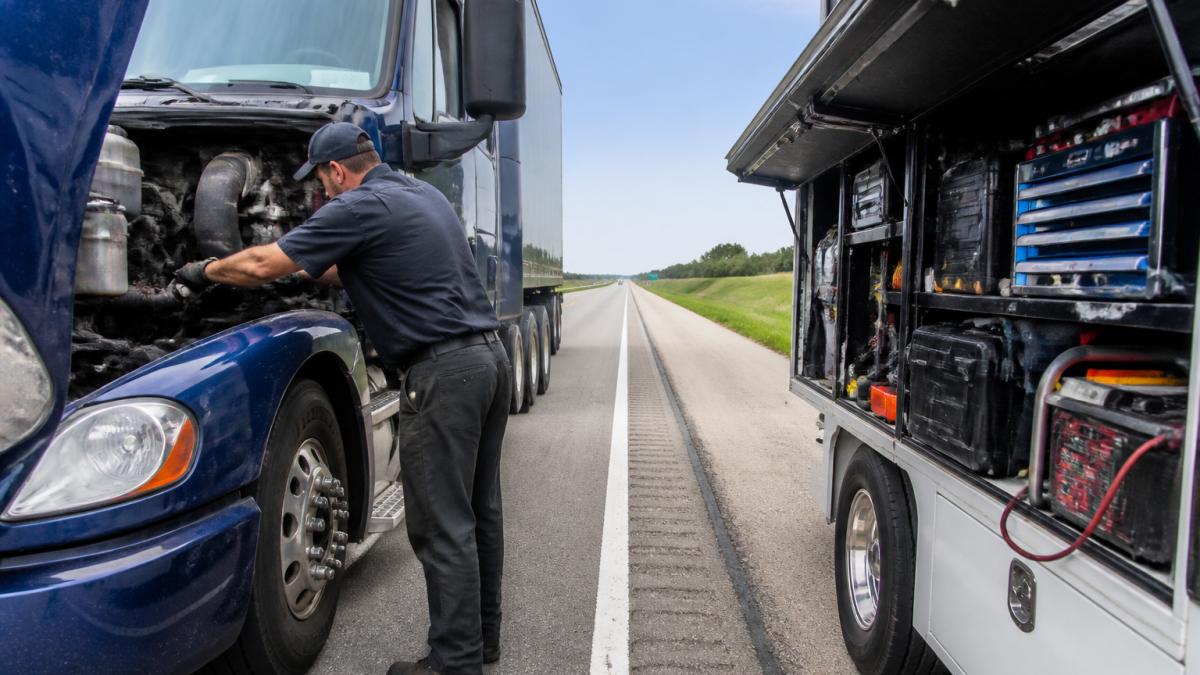
When stranded far from a dealer, towing consumes fuel, time, and your driver’s hours-of-service clock. Multi-day dealership repairs mean lost income. Mobile repair gets you back on the road in hours.
Mobile mechanics with modern computer diagnostics often isolate turbocharger issues, electrical faults, and sensor problems. If not covered by warranty, you avoid the tow and dealership diagnostic fee.
Cost impact depends on distance to the nearest dealer, breakdown nature, and warranty coverage. Beyond 50 miles from a dealership, mobile repair typically saves money and time.
Towing a vehicle under warranty without prior authorization from the dealership can void coverage on that repair. Always confirm coverage before choosing your repair path.
Mobile Mechanic Warranty Coverage: What’s Actually Protected
Your manufacturer warranty covers defects in materials and workmanship, but it doesn’t automatically cover repairs performed by a mobile mechanic.
Most manufacturers require repairs to be performed by authorized dealers to maintain coverage eligibility. A repair done by a mobile mechanic may void your warranty on that component, even if the repair itself is perfect.
Some manufacturers allow certified independent shops to perform warranty repairs if pre-authorized by the dealer. Check your warranty terms and contact your manufacturer before choosing mobile repair for a potentially covered component.
Extended warranties from third-party providers vary widely. Some allow ASE-certified mechanics to perform repairs; others require dealer service. Read your contract.
Manufacturer warranty typically requires dealer service. Third-party extended warranties may allow mobile repair. Out-of-warranty repairs have no location restriction.
For roadside breakdowns: if warranty-covered and requiring dealer authorization, mobile repair provides diagnostic accuracy and time savings before towing. If not covered, mobile repair saves the tow entirely.
Labor Costs, Parts Markup, and Overhead: Where the Savings Happen
Dealership service centers carry significant overhead, physical facility, large service team, waiting areas, and administrative staff, built into their labor rates.
Mobile repair operates with lower overhead: no physical location, no waiting room, no administrative layer. This efficiency translates to lower labor rates and faster turnaround.
Parts markup differs between services. Dealerships source OEM parts with markup for inventory and warranty support. Mobile mechanics may source OEM, aftermarket, or rebuilt components based on your approval, with significant cost variation.
Dealership service charges more per hour but includes parts warranty and manufacturer support. Mobile repair charges less per hour but leaves parts sourcing to you. Aftermarket parts approval can save substantially with mobile repair.
For routine maintenance and simple repairs, the labor-cost difference favors mobile service. For complex warranty claims or manufacturer-specific diagnostics, dealership service may be justified despite higher overhead costs.
The lowest hourly labor rate doesn’t guarantee the lowest total repair cost. Factor in parts sourcing, warranty coverage, and the cost of downtime to compare true out-of-pocket expense.
Getting a Mobile Diesel Repair Estimate vs Dealership Quote
When you request a repair estimate, the process differs significantly between mobile mechanics and dealerships.
A mobile mechanic typically arrives at your location, performs a diagnostic assessment, and provides an estimate for the identified repair. The diagnostic fee may be waived if you proceed with the repair, or charged and credited toward the repair cost. The estimate reflects the technician’s assessment and the parts required. Turnaround is often same-day or next-day.
A dealership quote requires you to bring or tow your vehicle to the facility. The service advisor documents your concern, the vehicle enters the diagnostic queue, and you receive a written estimate after the technician’s assessment. Turnaround depends on the service queue, typically 24-48 hours for the estimate alone.
CALL or TEXT NOW:712-827-0207 →
For mobile repair, the estimate process is faster and happens at your location. For dealership service, the estimate requires vehicle delivery and waiting.
The estimate itself reveals important information. A mobile mechanic’s estimate should itemize labor time, parts, and diagnostics. A dealership estimate includes the same but may also reference warranty coverage and manufacturer service bulletins. If warranty applies, the dealership estimate shows your out-of-pocket cost after the deductible.
When comparing estimates, verify that both include the same scope of work. A mobile mechanic may recommend a component replacement; the dealership may recommend repair of the same component. The estimates will differ not because of pricing but because of the recommended approach.
Request estimates from both before deciding. For warranty-covered repairs, the dealership estimate clarifies your actual cost. For non-warranty repairs, the mobile repair estimate often shows lower total cost when you factor in tow fees avoided.
Diesel Truck Downtime Repair Options: Choosing Speed Over Warranty Claims
Downtime is the hidden cost of roadside breakdowns. Every hour your truck is off the road, you’re losing revenue. For owner-operators and fleet managers, minimizing downtime is often more valuable than minimizing repair cost.
Mobile repair prioritizes speed. The technician arrives with diagnostic equipment and tools. Most repairs are completed on-site within hours. You’re back on the road before a tow truck could even arrive at your location.
Dealership service prioritizes warranty compliance and manufacturer support. The repair is performed correctly according to manufacturer specifications, and you have full warranty protection on the work. But the timeline is longer: tow time, service queue, repair duration, and return delivery.
For time-sensitive freight, emergency loads, or perishable cargo, mobile repair’s speed advantage is worth significant cost. For routine maintenance or non-urgent repairs, dealership service’s warranty protection may justify the downtime.
The choice depends on your business model. If you operate on thin margins and downtime directly reduces income, mobile repair’s speed is the primary benefit. If you run a fleet with backup vehicles, dealership service’s warranty coverage may be preferable even if it takes longer.
Consider also the repair complexity. Simple repairs, fuel filter replacement, sensor diagnostics, minor electrical fixes, are faster with mobile service. Complex repairs requiring specialized equipment or extended diagnostics may benefit from dealership resources, even if it means more downtime.
Owner-operators and small fleets running on tight schedules who need repairs completed in hours, not days. Mobile repair’s speed advantage directly translates to revenue protection.
When to Use Mobile Repair and When Warranty Service Makes Sense
The decision tree is straightforward once you understand the trade-offs.
Use mobile repair when:
- Your vehicle is out of warranty or the repair is not covered by warranty
- You need rapid diagnosis and repair to minimize downtime
- You’re stranded far from an authorized dealership
- The repair is routine or diagnostic in nature
- You have flexibility on parts sourcing (OEM vs. aftermarket)
- The total cost including tow fees and lost time favors on-site repair
Use dealership warranty service when:
- Your repair is covered under manufacturer warranty
- You need manufacturer-specific diagnostics or service bulletins
- The repair is complex and requires dealer-exclusive equipment
- Warranty coverage on the repair work is essential to your business
- You can afford the downtime and tow cost for warranty protection
- The dealership’s service history with your vehicle is valuable
In practice, the best approach combines both. A mobile mechanic diagnoses your roadside breakdown, identifies the problem, and determines whether warranty coverage applies. If covered, you arrange towing to the dealership for warranty service. If not covered, the mobile mechanic completes the repair on-site.
This hybrid approach gives you diagnostic speed, cost control, and warranty protection when applicable. You avoid unnecessary tows to dealerships for out-of-warranty repairs, and you preserve warranty coverage for repairs that qualify.
For owner-operators running I-80 and I-29 corridors, mobile repair eliminates the tow entirely for most breakdowns. For fleet managers, mobile repair on-site at your yard or terminal reduces service downtime compared to dealership visits.
Towing should be the exception, not the default.
Frequently Asked Questions
Can a mobile mechanic perform repairs covered by a vehicle warranty?
Yes, but with conditions. A mobile mechanic can perform warranty-covered repairs if they have manufacturer authorization. However, many vehicle owners choose dealership warranty service because the dealership handles the warranty claim directly. If a mobile mechanic performs the work, you must document the repair thoroughly and keep all receipts to preserve your warranty coverage. Some manufacturers require pre-authorization before independent work begins. Always verify coverage terms with your warranty provider before choosing a mobile mechanic for a covered repair.
Will using an independent mobile mechanic void my vehicle warranty?
Not automatically. Under federal law, a manufacturer cannot void your warranty simply because you used an independent mechanic or mobile repair service. However, the manufacturer can deny a specific claim if they prove that the independent repair caused the failure you’re claiming. This is why documentation matters: keep repair records, invoices, and diagnostic reports. If you use a mobile mechanic for a non-warranty repair and later file a warranty claim for an unrelated issue, the warranty remains valid. The risk comes only if the independent work directly caused the problem you’re claiming under warranty.
How do I compare a mobile diesel repair estimate with a dealership warranty estimate?
Request estimates from both sources for the same repair. A mobile diesel repair estimate should itemize labor time, parts needed, and travel or on-site service fees. A dealership warranty estimate will show what the dealership charges, but if the repair is covered, your out-of-pocket cost depends on your deductible and coverage limits. Compare total out-of-pocket expense, not just the repair cost. Ask the mobile mechanic about warranty preservation, whether they’ll document the work in a way that protects your coverage. Also ask the dealership whether the repair is fully covered or if you’ll owe a deductible.
What happens if a mobile mechanic diagnoses a problem that needs parts ordered?
The mobile mechanic will perform the diagnostic on-site and identify what parts are needed. For simple repairs, many mobile mechanics carry common parts or can source them quickly. For specialized diesel components, ordering may take 24-48 hours or longer depending on availability. Once parts arrive, the mobile mechanic can return to complete the repair at your location, whether on the roadside, at your yard, or at a loading dock. This avoids the dealership delay of waiting in a service queue. Discuss parts availability and lead times during the estimate call so you understand the full timeline before committing.