

Table of Contents
- Why Verifying Mobile Mechanic Certifications Matters for Warranty Work
- How to Verify ASE Certification
- Step 1: Request the Technician’s Full Name and ASE ID Number
- Step 2: Look Up the Credential in the ASE Registry
- Step 3: Confirm the Certification Scope Matches Your Repair
- Step 4: Verify Expiration Dates and Continuing Education
- Step 5: Cross-Check Identity and Documentation
- What ASE Certification Does Not Prove
- Mechanic Warranty Repair Requirements You Need to Know
- Questions to Ask a Mobile Mechanic Before Warranty Work
- Documents to Keep for Warranty Repairs
- Red Flags: When a Mobile Mechanic’s Credentials Don’t Add Up
- Frequently Asked Questions
Last Updated: October 8, 2026
Why Verifying Mobile Mechanic Certifications Matters for Warranty Work
When your diesel engine fails on the highway, you need repair work that holds up, and your warranty depends on it. To verify mobile mechanic certifications isn’t just about peace of mind.
Many fleet managers and owner-operators skip this step.
Shops and mobile repair services may hold general certifications, but warranty work demands specific credentials. A technician might be ASE-certified in general diesel repair yet lack the manufacturer-specific authorization your warranty requires.
This guide walks you through exactly what certifications matter, how to verify them, and what documents you need to protect your warranty coverage.
How to Verify ASE Certification
ASE (Automotive Service Excellence) certification is the baseline credential for automotive technicians in the United States, but holding an ASE card does not automatically mean a mobile mechanic is qualified for your specific warranty repair. ASE tests broad automotive categories; diesel repair, RV systems, and manufacturer-specific work require additional credentials beyond basic ASE certification.
Here is a practical, step-by-step workflow to verify ASE credentials before you authorize any warranty repair.
Step 1: Request the Technician’s Full Name and ASE ID Number
Ask for the exact name on the certification and the ASE ID number. A legitimate mobile mechanic will provide both without hesitation. This is not confidential information; it is proof of qualification. If they refuse or claim it is “on file somewhere,” treat that as a red flag.
Step 2: Look Up the Credential in the ASE Registry
Visit the official ASE website and use their credential verification system. Enter the technician’s name and ASE ID number. The registry shows:
- Current certification status (active or expired)
- Which specific certifications the technician holds, listed by test series code
- Renewal dates and expiration information
- Any disciplinary actions on record
This takes about five minutes and confirms whether the technician actually holds the credential they claim. Many mobile mechanics display outdated certifications or exaggerate their qualifications. The registry cuts through that immediately.
Step 3: Confirm the Certification Scope Matches Your Repair
ASE breaks down into specific areas such as diesel engines, electrical systems, brakes, and transmissions. A general ASE certification does not cover everything. Check that the technician’s active certifications align with the system your repair involves. For example, a warranty repair on a turbocharger or aftertreatment system requires expertise in diesel engine performance, not just general automotive knowledge.
Step 4: Verify Expiration Dates and Continuing Education
ASE certifications must be renewed every five years through additional testing. An expired certification does not count. Check the exact expiration date in the registry. If the technician claims Master Technician status, verify that the registry reflects the multiple certifications required for that designation.
Step 5: Cross-Check Identity and Documentation
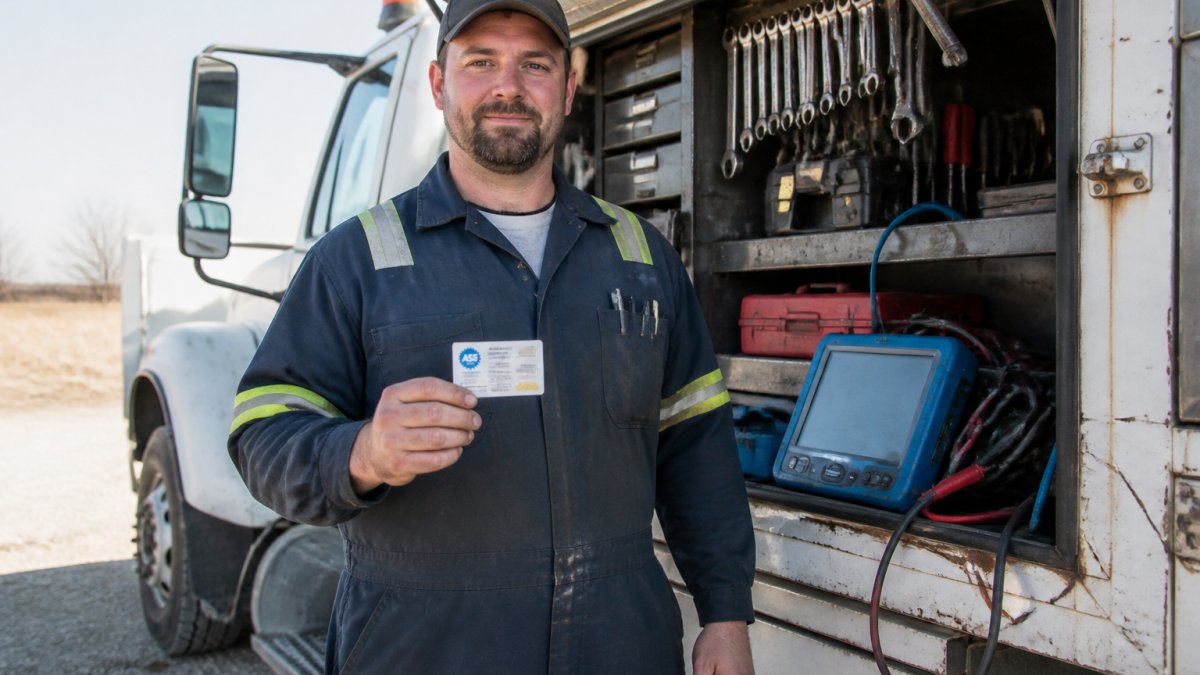
Ask the technician to show a photo ID matching the name in the ASE registry. Mismatched names, unverifiable certificate numbers, or refusal to provide documentation are concrete warning signs of credential fraud. Legitimate technicians are proud of their credentials and share them readily.
Save a screenshot or PDF of the ASE registry result with the date you verified it. If a warranty dispute arises later, you have a timestamped record of the technician’s credentials at the time of repair.
What ASE Certification Does Not Prove
A general ASE credential does not establish competence for every repair, vehicle system, manufacturer, or warranty program. It is a baseline, not a blanket authorization. Warranty work often requires manufacturer-specific training and authorization that ASE certification alone does not provide. Always confirm both the ASE credential and the warranty authorization separately.
Mechanic Warranty Repair Requirements You Need to Know
ASE certification is just the foundation. Warranty work has additional requirements that go beyond general automotive certification, and the most common mistake is assuming a certified technician is automatically authorized to perform warranty repairs. You must verify mobile mechanic certifications separately from warranty authorization.
Manufacturers often require specific authorization before a repair counts as warranty-covered work. This is separate from ASE certification. A technician might be fully ASE-certified but not authorized by the manufacturer to perform warranty repairs on your specific vehicle. When you submit a warranty claim, the manufacturer reviews who performed the work.
How to Confirm Warranty Authorization Before Work Begins
Use this practical workflow to verify authorization and protect your claim:
- Identify the warranty administrator. This may be the vehicle manufacturer, an extended warranty company, or a parts manufacturer. The administrator is who must approve the repair, not the mechanic.
- Ask the mobile mechanic for their authorization number or provider ID with that specific warranty program. Legitimate authorized providers can supply this immediately.
- Call the warranty administrator directly to confirm the technician or their business is an approved provider for your vehicle and repair type. Ask them to note the authorization in your claim file.
- Request written pre-authorization before any work begins. This should include the covered repair, the approved labor time, and any parts allowances.
- Confirm the named technician who will actually perform the work is the one authorized, not just the business.
Written Warranty Approval and Documentation
Verbal assurances are not enough. Obtain written confirmation from the warranty administrator before repairs. The approval should specify:
- The covered repair and diagnostic findings
- Approved labor hours and parts
- The authorization or claim number
- Any conditions or exclusions
After the repair, retain a complete documentation package: the estimate, the final invoice, the diagnostic report, parts details and receipts, the warranty authorization, and the technician’s credentials. Store these in a dedicated folder for each vehicle, with digital backups. This documentation trail proves the repair was performed by a qualified, authorized technician, which is what administrators require to approve claims.
Certification Scope and Limits
Different manufacturers have different requirements:
- Diesel engine manufacturers often require specific training and authorization for warranty repairs on engines, turbochargers, and aftertreatment systems.
- RV manufacturers may require certification from the RV industry association or the specific coach builder.
- Transmission specialists need manufacturer-specific training for certain transmission repairs.
- Electronic diagnostics demand advanced training because modern diesel engines rely heavily on computer systems.
A general ASE credential does not cover all of these. Always confirm the technician’s certification scope matches your specific repair and that they hold the required warranty authorization.
If a mobile mechanic guarantees warranty coverage without checking your specific vehicle’s requirements or refuses to provide written documentation, that is a serious red flag. A denied claim can cost far more than the time spent verifying authorization upfront.
Questions to Ask Before Authorizing Warranty Work
- Are you authorized by [manufacturer or warranty administrator name] for this repair?
- What is your provider or authorization number?
- Can you provide written pre-authorization from the administrator?
- What training have you completed for this specific vehicle system?
- Will you provide complete documentation for the warranty claim?
If the mechanic cannot answer these clearly, they are not the right choice for warranty work. You need someone who understands both the technical repair and the warranty authorization requirements.
CALL or TEXT NOW:712-827-0207 →
Questions to Ask a Mobile Mechanic Before Warranty Work
Asking the right questions protects your warranty and your investment. Don’t skip this conversation.
Experience and Certification Questions
Start by understanding the technician’s background and qualifications:
- How long have you been performing diesel repairs?
- What certifications do you currently hold, and what are their expiration dates?
- Have you worked on this specific vehicle make and model before?
- Can you walk me through your diagnostic process for this type of repair?
- Do you have references from other fleet managers or owner-operators?
These questions reveal whether the mobile mechanic has genuine expertise or just basic certifications. Experience matters. A technician with current certifications is reliable.
Warranty-Specific Questions
Now focus on warranty coverage:
- Will you provide written documentation of the repair for warranty purposes?
- Are you authorized by [manufacturer name] to perform warranty repairs?
- What’s your process for ensuring this repair is covered under warranty?
- Will you obtain pre-authorization from the manufacturer if required?
- What warranty do you provide on your own work if the manufacturer claim is denied?
These questions ensure the repair will actually be covered. Many mobile mechanics do excellent work but lack manufacturer authorization, which means your warranty claim gets rejected regardless of repair quality.
Documents to Keep for Warranty Repairs
After the repair is complete, collect and organize these documents. They protect you if a warranty dispute arises.
Essential Documents:
- Repair Invoice: Shows exactly what was repaired, parts used, labor hours, and cost
- Technician Credentials: Copy of ASE certification and any manufacturer authorization
- Warranty Authorization: Pre-authorization documentation from the manufacturer (if required)
- Parts Documentation: Receipts or documentation for any parts installed
- Diagnostic Report: The initial diagnostic findings that justified the repair
- Work Order: Detailed description of the work performed and timeline
- Warranty Claim Form: Completed and submitted to the manufacturer with supporting docs
Store these in a dedicated folder for each vehicle. Digital copies are helpful, but keep originals in case the manufacturer requests them.
When you file a warranty claim, include:
- The repair invoice with technician name and credentials
- Proof that the technician was authorized for warranty work
- The diagnostic report showing the problem existed before repair
- Any manufacturer pre-authorization documentation
This documentation trail proves the repair was performed by a qualified, authorized technician, which is what manufacturers require to approve warranty claims.
Red Flags: When a Mobile Mechanic’s Credentials Don’t Add Up
Some warning signs suggest a mobile mechanic isn’t legitimate or isn’t properly credentialed:
Credential Red Flags:
- The technician refuses to provide ASE certificate numbers or claims they’re “on file” somewhere else
- ASE registry verification shows expired certifications
- They claim to be “Master Technician” but can’t provide documentation
- Their certifications don’t match their claimed expertise (claims diesel expertise but only has general automotive certification)
- They have disciplinary actions listed in the ASE registry
Warranty Authorization Red Flags:
- They can’t explain the difference between ASE certification and manufacturer authorization
- They guarantee warranty coverage without understanding your specific vehicle’s requirements
- They refuse to provide written documentation of the repair for warranty purposes
- They pressure you to skip the warranty authorization process to “save time”
- They claim manufacturer authorization but can’t provide proof
Work Quality Red Flags:
- They won’t provide a written estimate before starting work
- They can’t explain their diagnostic process or findings
- They refuse to provide references from other customers
- They pressure you to pay in cash to “avoid paperwork”
- They won’t guarantee their own work if the warranty claim is denied
Trust your instincts. If something feels off about a mobile mechanic’s credentials or process, find someone else. The cost of a warranty claim denial far exceeds the time spent verifying credentials upfront.
Frequently Asked Questions
How can I verify a mechanic’s ASE certification online?
Visit the official ASE website and use their credential verification tool. Enter the technician’s name or certificate number to confirm active status. ASE certifications expire every five years, so verify the expiration date is current. Request the certificate number directly from the mechanic if they don’t provide it, legitimate technicians keep this information readily available.
Does a mobile mechanic need special authorization to perform warranty work?
Yes. Beyond ASE certification, a mobile mechanic performing warranty repairs must be authorized by the vehicle manufacturer or warranty administrator. This authorization is separate from general ASE credentials. Before authorizing work, ask the mechanic if they’re registered with your vehicle’s manufacturer warranty program and request written confirmation of their authorization status.
What documents should I request before a mobile mechanic starts warranty work?
Request a written repair estimate, the technician’s credential verification (ASE certificate number and status), proof of manufacturer warranty authorization, and details about insurance coverage for the repair. After work is completed, keep the invoice, service records, parts list, and warranty documentation. These records protect you if issues arise and prove the repair was performed by a qualified, authorized technician.
What are red flags that a mobile mechanic’s credentials might not be legitimate?
Avoid mechanics who can’t provide a certificate number, refuse to verify credentials through ASE, claim they’re ‘ASE-trained’ without actual certification, or can’t explain their warranty authorization. Legitimate technicians carry current credentials, have verifiable work history, and carry proper insurance. If a mechanic avoids questions about certification or seems evasive about warranty work eligibility, seek another provider.
When you need warranty-protected diesel repair on the highway, verification isn’t optional, it’s essential. At Mudhollow Diesel Mechanics, we maintain current ASE certifications and manufacturer authorization across our entire team. We provide complete documentation for every repair and stand behind our work with written warranties. Call or text 712-827-0207 to get a mobile mechanic with verified credentials to your location fast.