Table of Contents
- Mobile Mechanic vs Towing to Shop: Key Differences at a Glance
- Common Roadside Semi Truck Failures and Repair Options
- Cost of Heavy Duty Towing vs On-Site Mobile Repair
- Mobile Truck Repair Diagnostic Tools: What You Get On-Site
- When to Choose Mobile Repair and When Towing Is Necessary
- Insurance, Liability, and Warranty Considerations
- Conclusion: Making the Right Call for Your Operation
- Frequently Asked Questions
Last Updated: August 28, 2026
Mobile Mechanic vs Towing to Shop: Key Differences at a Glance
When your diesel engine fails on I-80 at 2 AM, you face an immediate choice: call a mobile mechanic or arrange a tow to the nearest shop. The decision hinges on three factors: repair complexity, your location, and how much downtime costs you. A mobile mechanic vs towing comparison reveals that mobile repair wins for roadside emergencies and preventive maintenance, while traditional shops remain necessary for complex engine work and warranty enforcement. At Mudhollow Diesel Mechanics, we’ve helped owner-operators and fleet managers understand when each option makes sense, and the financial difference can be substantial.
Mobile mechanics eliminate expensive tow truck fees and shop queue time, but they’re constrained by what diagnostic equipment and specialized tools fit on a service truck. Traditional shops have unlimited diagnostic power and can handle multi-day repairs, but you’ll pay for overhead costs, tow fees, and dead time waiting in line.
| Aspect | Mobile Mechanic | Towing to Shop |
|---|---|---|
| Response Time | Rapid response across I-80 and I-29 | 1-3 hours (includes tow) |
| Roadside Fixes | Air lines, batteries, fuel issues | Not applicable |
| Complex Diagnostics | Modern service trucks with computer diagnostics | Full dealer-grade scanners |
| Tow Truck Fees | Eliminated | Required (often $500+) |
| Warranty Coverage | Varies by provider | Dealership warranty standard |
| Preventive Maintenance | Yes, at your yard/terminal | Yes, at shop facility |
| Best For | Emergency roadside, simple repairs | Complex engine work, warranty claims |
Common Roadside Semi Truck Failures and Repair Options
Air line failures, frozen fuel lines, battery issues, and trailer brake chamber problems account for roughly 60% of all breakdowns on the interstate (fmcsa.dot.gov). These are precisely the repairs mobile mechanics excel at, they carry spare parts, diagnostic scanners, and the right tools on every call.
A frozen fuel line in January stops you cold. The fix requires thawing, flushing, or replacing the line, work that takes 30-60 minutes roadside. A mobile mechanic with proper heating equipment resolves this on-site. Towing means a 2-3 hour wait for a truck, then another 1-2 hours at the shop. Roadside repair costs you 1 hour; towing costs you 5-6 hours plus tow fees.
Starter replacements and alternator failures present a harder choice. Some are straightforward part swaps; others involve complex diagnostic work. A mobile mechanic with a quality diagnostic scanner can often pinpoint the issue and carry common replacement parts. But if the problem is buried in the engine control module or requires specialized calibration, you’ll end up towing anyway.
Trailer brake chamber failures and air suspension issues are mobile-friendly repairs. The mobile technician can replace chambers, reset air systems, and verify function without leaving the roadside. Towing for these is overkill.
If the repair falls into the “common roadside failure” category, mobile repair saves you 4-6 hours and eliminates tow fees. If it’s complex electrical or engine management work, mobile diagnostics narrow the problem but you’ll likely still need shop resources.
Cost of Heavy Duty Towing vs On-Site Mobile Repair
Towing a semi-truck isn’t cheap. Base tow fees for heavy-duty recovery typically run between $500 and $1,500 depending on distance and complexity. A 50-mile tow to a major repair facility can easily exceed $1,200. Then you’re paying shop labor rates, often $150-$200 per hour for diesel specialists, while your truck sits in queue (ase.com).
Mobile repair eliminates the tow fee entirely. You pay for the service call and labor, but the math shifts dramatically in your favor for roadside fixes. A 45-minute mobile repair costs significantly less than the tow fee alone.
Mobile pricing depends on your location and repair complexity. Mudhollow Diesel Mechanics provides upfront pricing before service begins. For a detailed quote on your specific situation, contact the team directly.
The hidden cost of towing is opportunity loss. If you’re hauling freight on a schedule, every hour in queue is revenue lost. A 6-hour shop visit costs you not just the repair bill but also freight contract penalties and customer dissatisfaction. Mobile repair’s speed advantage often justifies the service call cost within the first hour.
Fleet managers running three or more trucks see the pattern clearly: one tow per month at $1,200 each plus 6 hours of downtime adds up fast. Preventive maintenance through mobile mechanics, scheduled at your yard during off-hours, prevents most roadside emergencies entirely.
Towing to a distant shop can trap you in a multi-day repair cycle if the shop discovers secondary issues during diagnostics. Mobile diagnostics catch these early, but complex repairs then require towing anyway, now you’ve paid twice.
Mobile Truck Repair Diagnostic Tools: What You Get On-Site
Modern mobile service trucks carry computer diagnostics that rival many traditional shops. Mudhollow Diesel Mechanics equips every service truck with advanced diagnostic scanners capable of reading engine codes, performing DPF regenerations, and running live data streams.
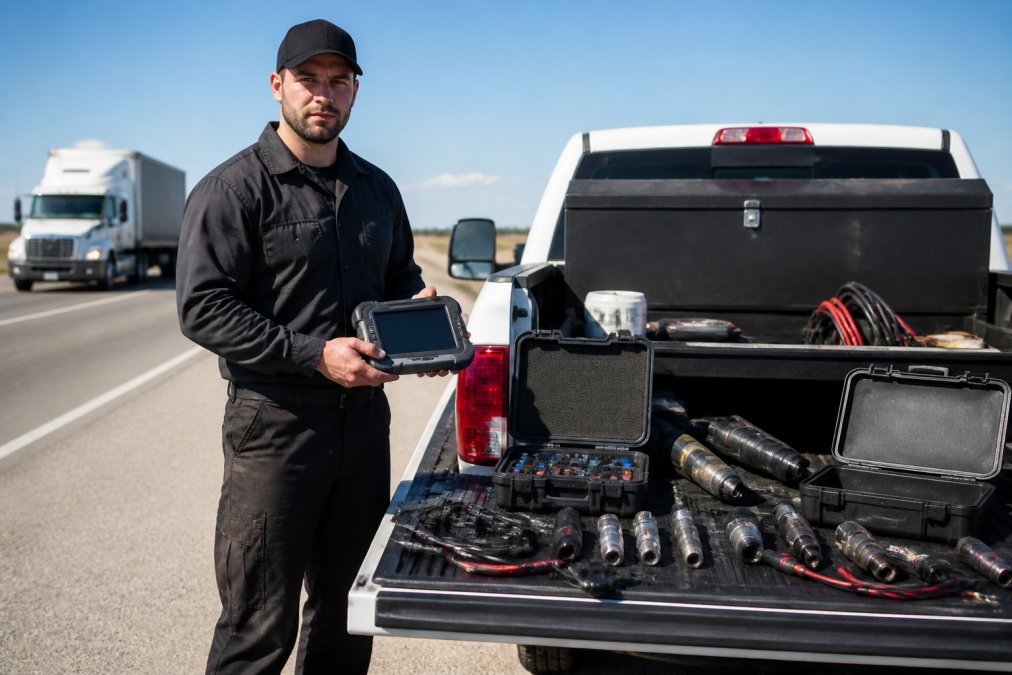
The TOPDON ArtiDiag HD represents the class of diagnostic tools mobile mechanics deploy. It handles full-system coverage for over 60 heavy-duty truck brands, performs essential maintenance functions like DPF regens and urea resets, and includes live data and freeze frame capabilities. These are professional-grade tools costing $600-$700 that require expertise to interpret correctly (peer-reviewed research).
What a mobile mechanic cannot do is access dealer-level proprietary systems. Peterbilt, Cummins, and Volvo maintain closed diagnostic networks requiring dealership access. If your truck needs factory-level reprogramming or dealership-specific calibration, mobile diagnostics identify the need but can’t complete the work.
A mobile mechanic can diagnose most roadside failures and resolve many on-site. They identify the remaining issues and advise whether to tow or attempt a temporary fix. This triage function alone saves time and money.
Common on-site diagnostics mobile mechanics handle: air system faults, fuel system pressure anomalies, electrical circuit failures, transmission error codes, and engine management issues. They can often clear codes, reset systems, and verify the fix before you leave the roadside.
Equipment limitations matter. A mobile service truck can’t perform engine teardown, transmission rebuilding, or frame-level welding. Weather and environmental constraints also limit mobile work, heavy rain or extreme cold can complicate diagnostics requiring precision.
Request a mobile technician’s diagnostic report before authorizing any tow. A detailed diagnostic readout tells you whether the repair is fixable roadside or requires shop resources, preventing unnecessary towing.
When to Choose Mobile Repair and When Towing Is Necessary
Choose mobile repair when: the failure is a common roadside issue (air lines, batteries, fuel system, brake chambers), you’re stranded on a major corridor where response times are fast, the repair can be completed in 1-2 hours, and you want to avoid tow fees and shop queue time.
Choose towing when: the failure involves complex engine management or transmission work, you suspect multiple related failures, the repair requires specialized equipment or multi-day work, the truck is damaged or unsafe to move, or the repair falls under a warranty requiring dealership service.
Real-world scenario: Your truck’s air compressor fails on I-80. A mobile mechanic can diagnose the issue, often carry a replacement compressor, and have you rolling in 45 minutes. Towing adds 3-4 hours of dead time before the shop even starts work. Mobile repair is the obvious choice.
Different scenario: Your engine management system throws an unfamiliar code and the truck feels sluggish. Diagnostics show a fuel injection system problem. A mobile mechanic can read the code and run live data, but the actual repair might require injector replacement, calibration, or software updates. A shop with full diagnostic capability becomes necessary.
The decision also depends on your location. If you’re 40 miles from the nearest shop but a mobile mechanic can reach you in 20 minutes, mobile repair is almost always the right call. If you’re 5 miles from a major repair facility but a mobile mechanic is 90 minutes away, towing might be faster.
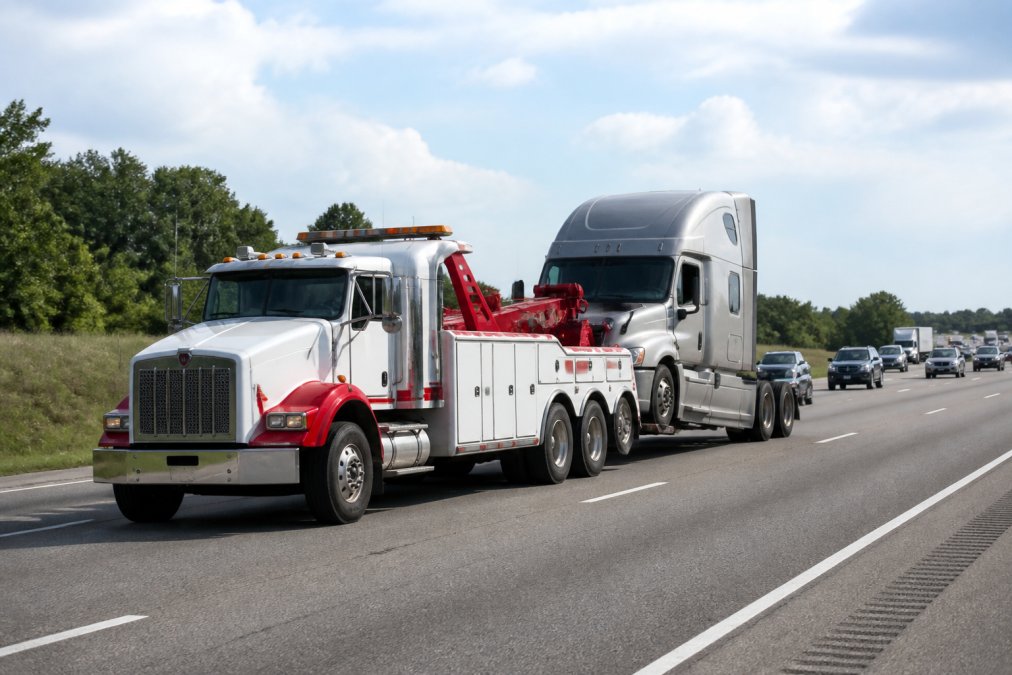
Fleet operators should establish a protocol: call mobile repair first for roadside emergencies. Let them diagnose and attempt the fix. If they determine a tow is necessary, they’ll recommend it, and you’ve already paid for the diagnostic work, which the shop will credit toward the repair bill.
Insurance, Liability, and Warranty Considerations
Mobile repair and traditional shop work have different liability and warranty implications. Understanding them prevents expensive disputes.
When you authorize roadside repair from a mobile mechanic, you’re entering a service agreement with that technician or company. The liability for the work performed rests with the mobile repair provider, who should carry commercial general liability insurance and workers’ compensation. Verify this before authorizing work. A reputable mobile mechanic like Mudhollow Diesel Mechanics carries full insurance coverage and stands behind the work performed.
Warranty coverage differs sharply between mobile and shop repairs. A mobile repair typically includes a warranty on the specific work performed, usually 30-90 days. Dealership repairs provide manufacturer warranty coverage that extends beyond the repair itself. Mobile mechanics generally warrant their specific work, not systemic interactions.
This matters most for complex repairs. If a mobile mechanic replaces your alternator and three weeks later your battery drains repeatedly, the root cause might be a wiring issue the mobile repair didn’t address. The mobile mechanic warrants the alternator replacement but not the broader electrical system.
For fleet operations, the liability question is critical. If a mobile repair fails and causes an accident or cargo damage, who’s liable? Insurance coverage, indemnification clauses, and the specific terms of the service agreement determine this. Always review the service agreement before authorizing work and confirm that the mobile repair provider carries adequate liability insurance.
If your truck is under manufacturer warranty and you authorize non-dealership repairs, you might void coverage on related systems. Check your warranty terms before choosing mobile repair for warranty-period vehicles.
Use mobile repair for roadside emergencies and simple fixes, knowing warranty coverage is limited to the specific work performed. Use dealership or factory-authorized shops for complex work, warranty-period repairs, and situations where you need broad coverage of related systems.
Conclusion: Making the Right Call for Your Operation
The choice between mobile mechanic and towing isn’t binary, it’s situational. Mobile repair excels at speed and cost-efficiency for roadside emergencies, while traditional shops provide diagnostic depth and warranty protection for complex work. Most operators benefit from both: mobile repair for immediate roadside fixes and preventive maintenance at your yard, traditional shops for complex engine work and warranty claims.
Mudhollow Diesel Mechanics specializes in rapid roadside repairs and on-site diagnostics across I-80 and I-29, with modern service trucks equipped with computer diagnostics and heavy-duty tools. For roadside emergencies, preventive maintenance, or complex diagnostics, call or text now: 712-827-0207. We provide transparent upfront pricing, rapid response times, and work backed by full insurance coverage and professional warranty terms. Get back on the road quickly and keep your operation moving.
Frequently Asked Questions
Q: What’s the typical response time when my truck breaks down on I-80 or I-29?
A: Response times depend on your location and current demand. Mudhollow Diesel Mechanics provides rapid response times across I-80 and I-29. Call or text immediately when you break down, the sooner you report the issue, the sooner a fully equipped service truck can reach you. Delays can increase if you’re in a remote area or during peak incident periods. Always confirm the expected arrival window before hanging up.
Q: How does the cost of a mobile mechanic compare to towing fees and shop labor?
A: Heavy-duty towing typically costs $500 to $2,000+ depending on distance, vehicle weight, and time of day. Mobile repair eliminates tow truck fees entirely and often completes fixes on-site in the time a tow would take to reach a shop. However, total cost depends on the repair itself, parts, labor hours, and complexity all factor in. Mudhollow Diesel Mechanics provides upfront pricing before service begins. Request upfront pricing before authorizing any roadside work so you know the full cost before committing.
Q: Can a mobile mechanic handle complex engine diagnostics, or are they limited to basic roadside fixes?
A: Modern mobile repair trucks, like those at Mudhollow Diesel Mechanics, carry advanced diagnostic equipment capable of reading fault codes, live data, and freeze frames on diesel engines. This allows technicians to identify electrical gremlins, sensor failures, and transmission issues on-site. However, some repairs, transmission rebuilds, major engine overhauls, or frame damage, require a shop facility. A qualified mobile mechanic will tell you upfront if your truck needs shop-level work and can recommend the next step.
Q: What happens if a mobile mechanic diagnoses a repair that requires parts to be ordered?
A: If diagnostics reveal a failed component that isn’t stocked on the service truck, the mechanic will explain your options: wait for parts delivery while staying at the location, arrange a tow to a nearby shop with parts inventory, or schedule a return visit once parts arrive. Some mobile operations partner with parts suppliers for same-day delivery in certain areas. Discuss part availability and lead times before authorizing the diagnostic work.
Q: Is my insurance coverage the same for mobile mechanic repairs versus shop repairs?
A: Insurance coverage depends on your policy and whether you’re claiming roadside assistance, breakdown coverage, or repair costs. Most commercial truck insurance covers roadside labor through a roadside assistance rider. Mobile repairs may fall under this coverage, while towing is often a separate benefit. Shop repairs are typically covered as standard repair claims. Review your policy or contact your agent to confirm coverage limits and whether mobile mechanic services are included before an emergency occurs.
When your truck breaks down, speed and expertise matter. Mudhollow Diesel Mechanics brings both to your location. Our fully equipped mobile service trucks carry advanced diagnostics and common replacement parts, resolving most roadside failures in under an hour. For scheduled preventive maintenance at your yard or emergency roadside support, we eliminate the need for expensive tows and long shop wait times. Call or text 712-827-0207 to request service or a quote.
This article was written using GrandRanker